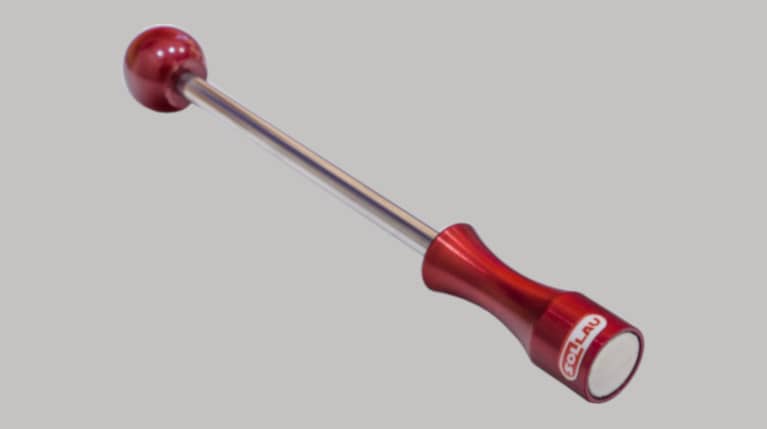
Inspection magnets KS
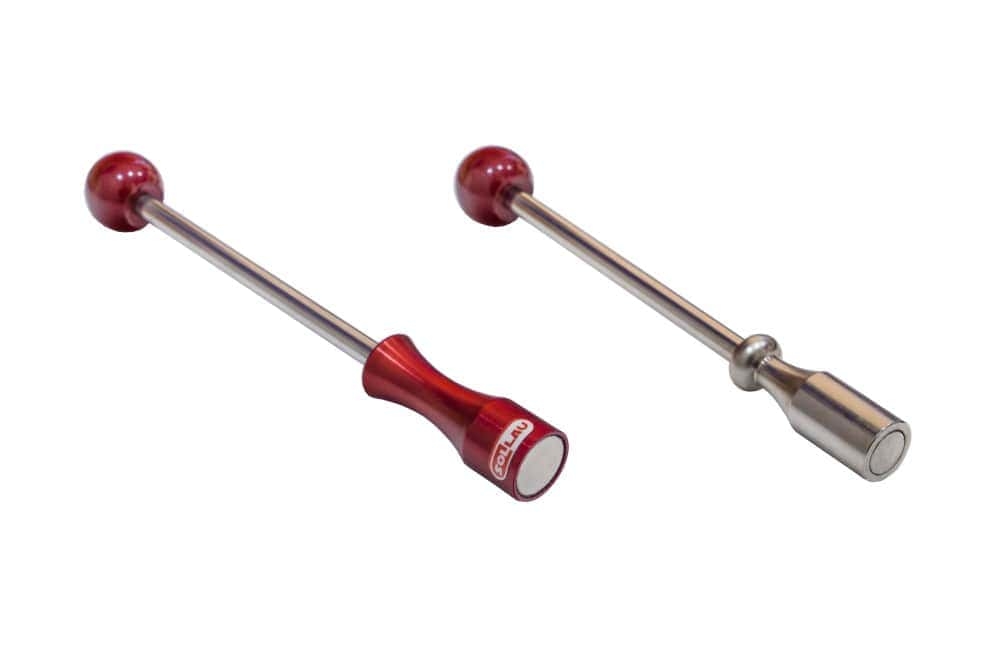
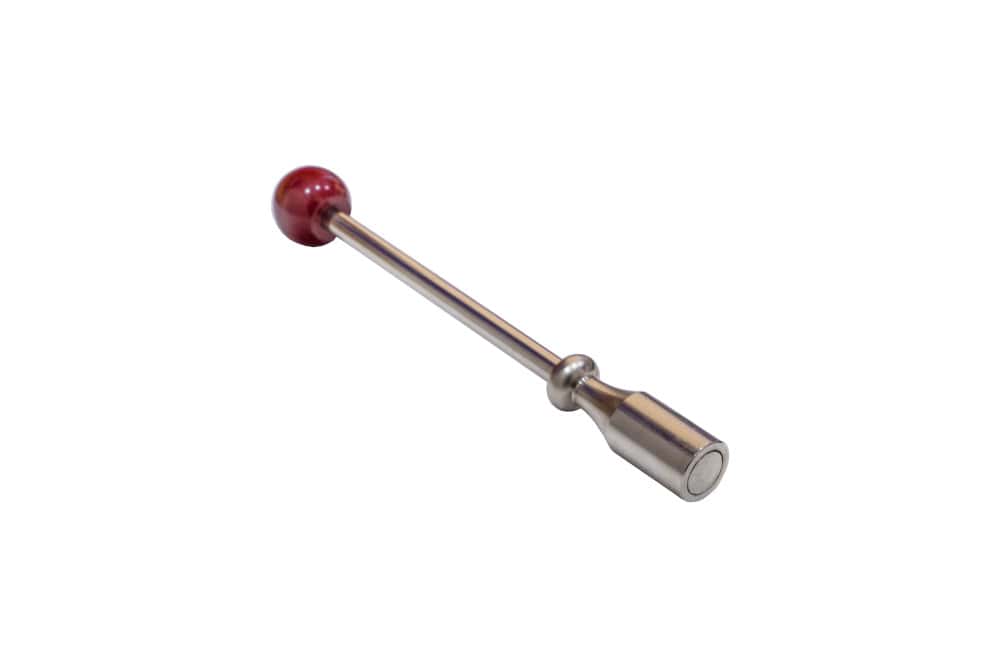
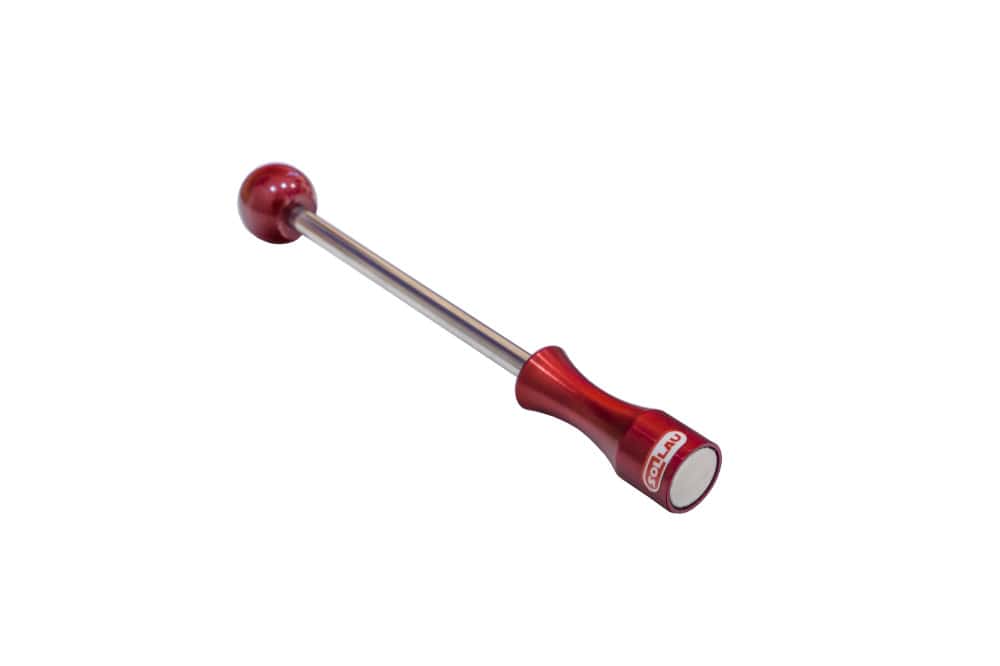
The magnetic pendulum is fitted with very strong neodymium NdFeB magnets (with the diameter of 10 mm).
How is the inspection magnet used?
The magnetic pendulum KS is used to detect ferrous particles e. g. in purchased non-ferrous metal scrap or waste paper. Both the seller and buyer save money by the magnetic inspection and testing:
- seller's material will not be rejected by the buyer (because of unwanted ferrous contamination) and it will not be necessary to move the rejected material back, resort and rebale it
- the buyer will avoid purchasing contaminated materials
Just insert the control magnet into the tested material in several locations and remove it slowly to check for ferrous contaminants.
Another advantage of the conical sorting magnet
Thanks to the long metal rod it is possible to remove ferrous particles from the product in hard-to-reach zones.
Dimensions of the magnetic pendulum
Standard length of the control magnet is 140 mm (handle not included). The checking magnet can be produced in various lengths according to customer requirements.
Easy ordering at the e-shop
The inspection magnet KS is a handheld inspection tool for the quick identification of magnetic metals in incoming material — typically at scrap metal or waste paper purchasing points. Unlike the MK, which is suspended on a stainless steel chain with a snap hook, the KS is mounted on a rigid steel rod. This makes it ideal where more precise targeting or access to harder-to-reach areas is required.
The operator places the cone magnet against the incoming material — scrap, bales of paper or other raw materials — and observes whether metal particles or objects are attracted to the magnet. The presence of attracted material immediately signals unwanted magnetic contaminants in the sample, giving the purchasing manager grounds to reject or reprice the delivery before processing begins.
Thanks to its long, robust steel rod, the KS can also be used to retrieve stuck or hard-to-reach magnetic objects — for example from deep containers, machines or crevices. The chain-mounted MK lacks this capability. The rigid rod also provides greater precision when applying the magnet to a specific inspection point.
At the core of the KS is an extra-strong neodymium NdFeB magnet with a 10 mm diameter in a durable conical housing, mounted on a robust steel rod. The standard length is 140 mm without handle; the KS can be manufactured in any length — if your workplace requires a longer or shorter version, we are happy to produce a custom KS.
The KS is designed as a field orientation tool for the quick detection of the presence of magnetic metals — not as a precision analytical instrument. For more detailed and reliable inspection of bulk materials, granules or regranulates, we recommend the MTH or MTV test rods; the KS and the rods complement each other.
The KS is found primarily in scrap collection and recycling facilities, where it is used for rapid inspection of incoming deliveries. It is also used in industrial operations where it is necessary to quickly verify the absence of magnetic contaminants in material or to retrieve stuck metal objects from machines and equipment.
The KS is in stock and available for immediate dispatch — it can be ordered directly from the e-shop. If you need a non-standard length or larger quantity, or are interested in combining the KS with other inspection magnets from our range (MK, MTH, MTV, SKM), we are happy to prepare a tailored offer.
Which industrial branches can the sorting magnets be used in?
The magnetic pendulum can be used for quick detection of ferrous metals in various industrial branches.