WHERE IN MINING, QUARRIES AND THE PRODUCTION OF BUILDING MATERIALS WILL YOU FIND OUR MAGNETIC SEPARATORS?
Primary conveying of run-of-mine rock and aggregate – crusher protection
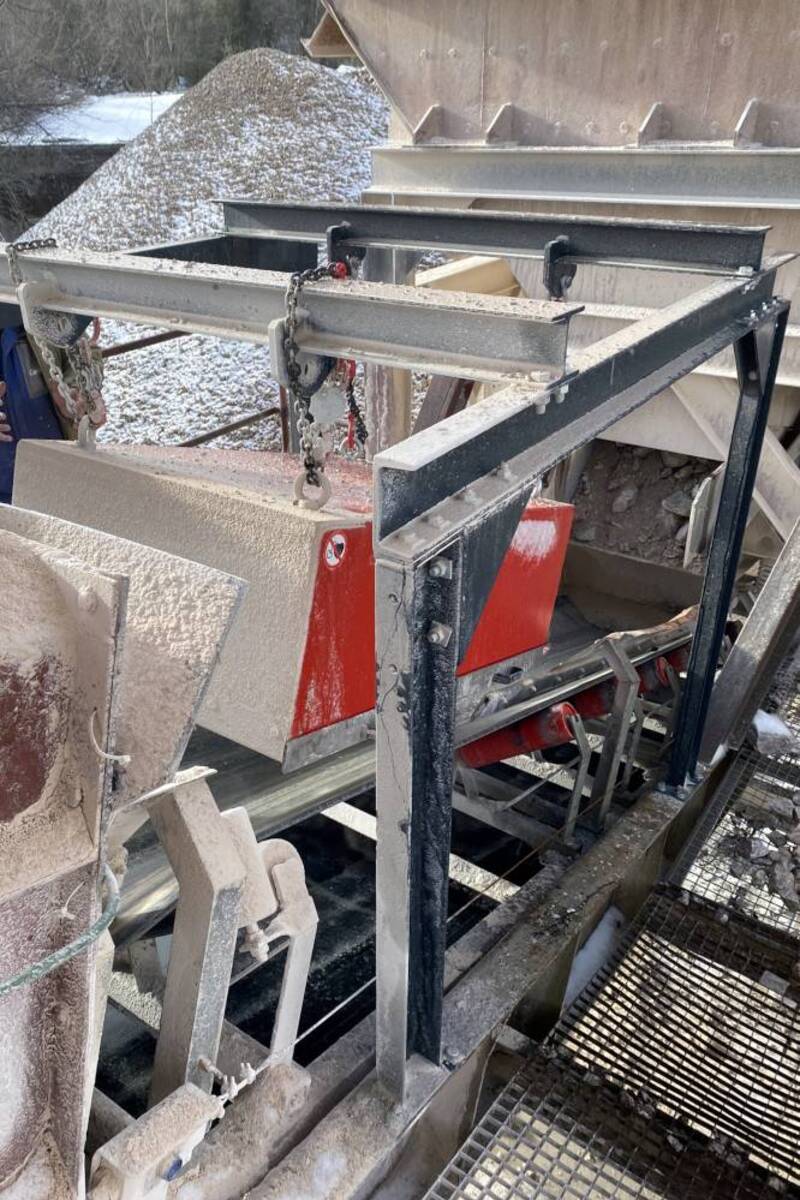
The extracted raw material (run-of-mine rock, limestone, aggregate, gravel) travels on a belt conveyor to the primary crusher or to a screen. This is exactly where the strongest magnetic protection belongs – large pieces of steel on a fast belt must be captured before they fly into the jaws of the crusher.
The following equipment is most commonly used in primary conveying and crusher protection:
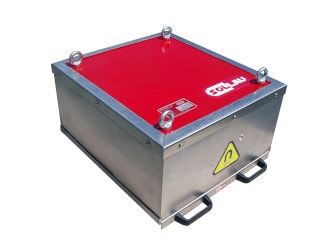
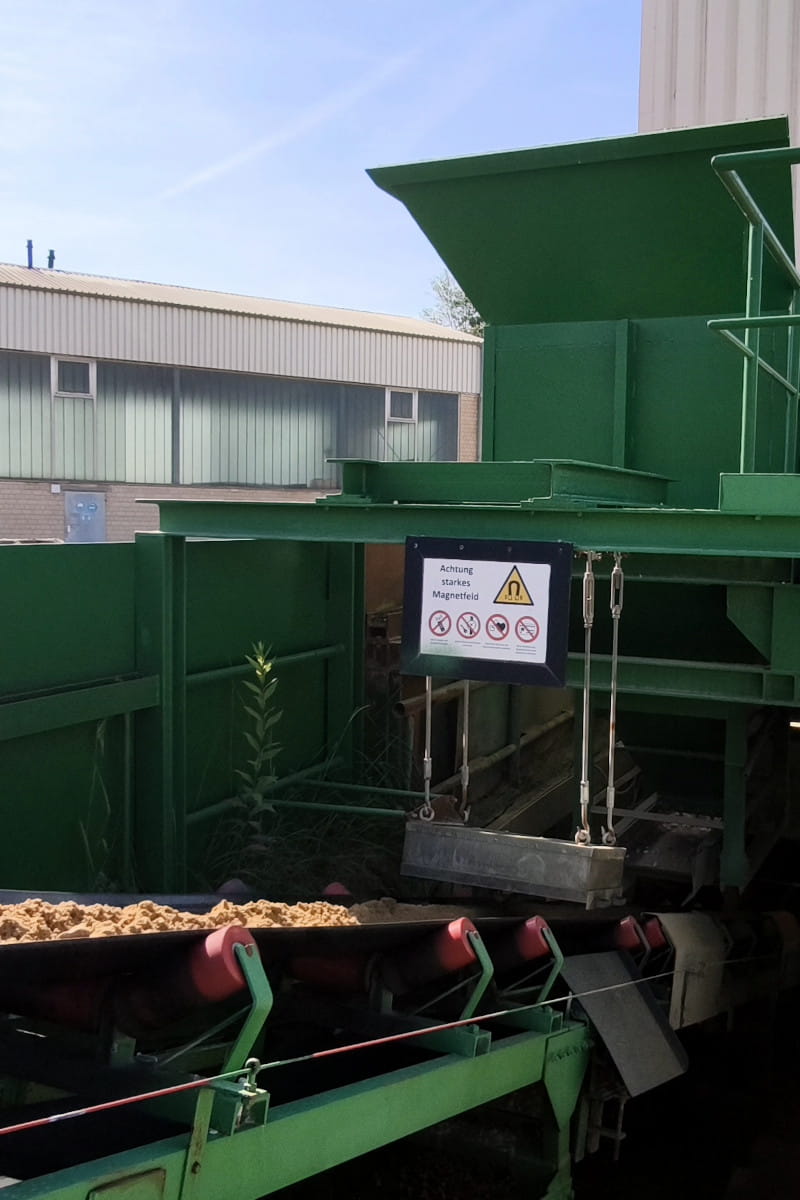
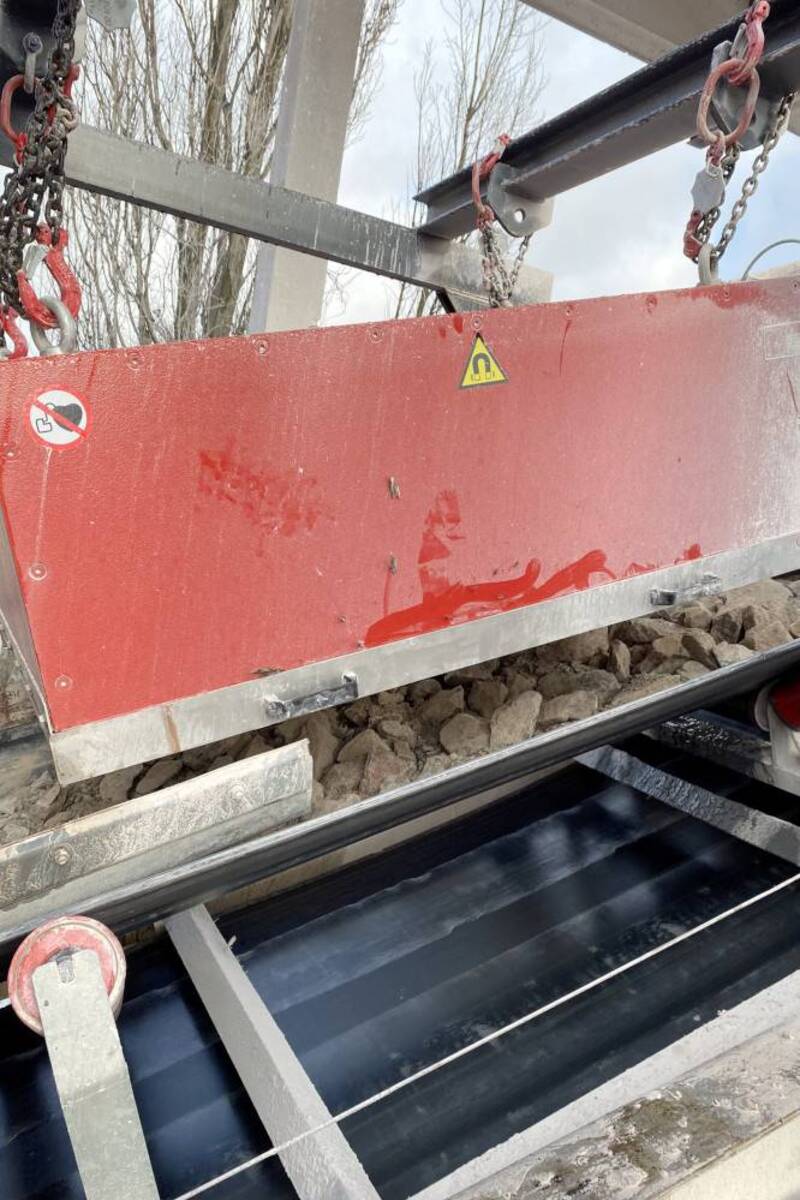
The self-cleaning overband plate is installed crosswise above the belt, or lengthwise above the discharge point (head pulley), where the material layer opens up and the field penetrates deeper – for lengthwise installation we recommend replacing the head pulley with a non-magnetic one so that it does not become magnetised and the efficiency increases. Ferrite DND-AC plates work from an installation height of up to 500 mm (the BEAST series), neodymium ones up to 380 mm (WOLF); for the highest tonnages and deep layers, deploy the DND-AC E electromagnet with a field of up to 600 mm (MAMMOTH) and the option to deactivate the field at any time for servicing or safety.
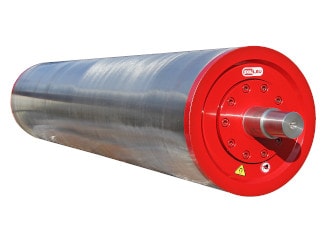
To strengthen the quality of magnetic separation, we recommend installing a magnetic pulley, which replaces the existing conveyor pulley and thus creates a second separation stage. Thanks to this we are able to capture even metals that are in the lower part of the material on the conveyor and cannot be captured by suspended separators.
Advantages of the DND-AC overband plates:
- Ferrite BEAST series: strong field from an installation height of up to 500 mm; DND-AC E electromagnet up to 600 mm
- Capture of ferromagnetic particles 0.5–300 mm (from 0.5 mm neodymium / from 1 mm ferrite), belts up to a width of 2000 mm
- Automatic cleaning without interrupting the flow, 10-year warranty
Mobile crushers and screeners
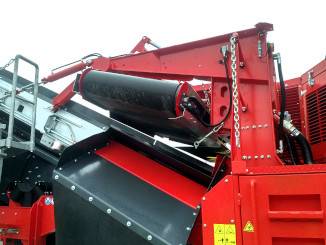
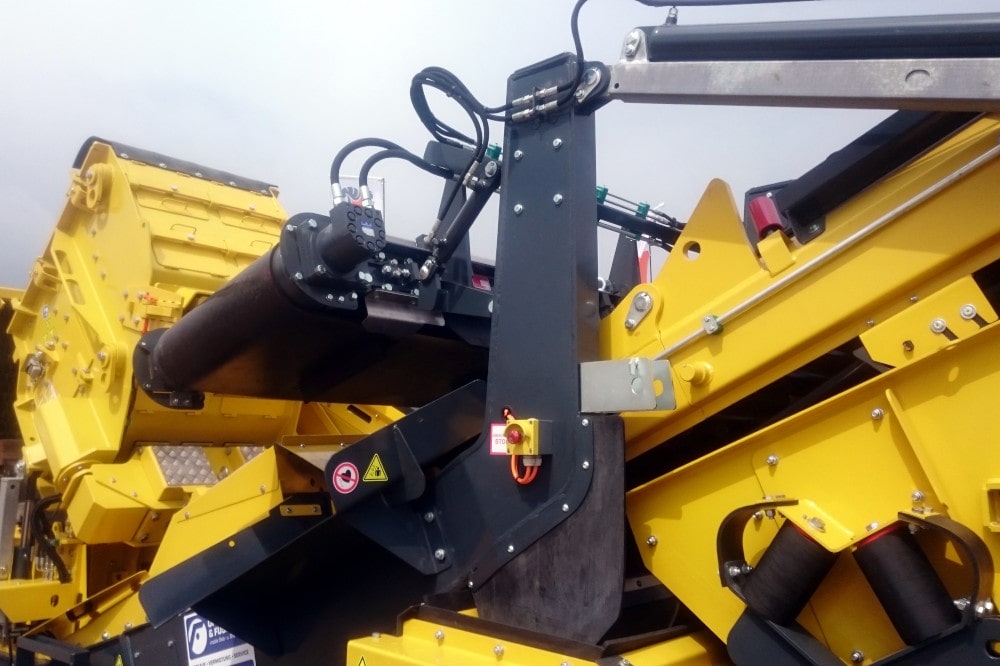
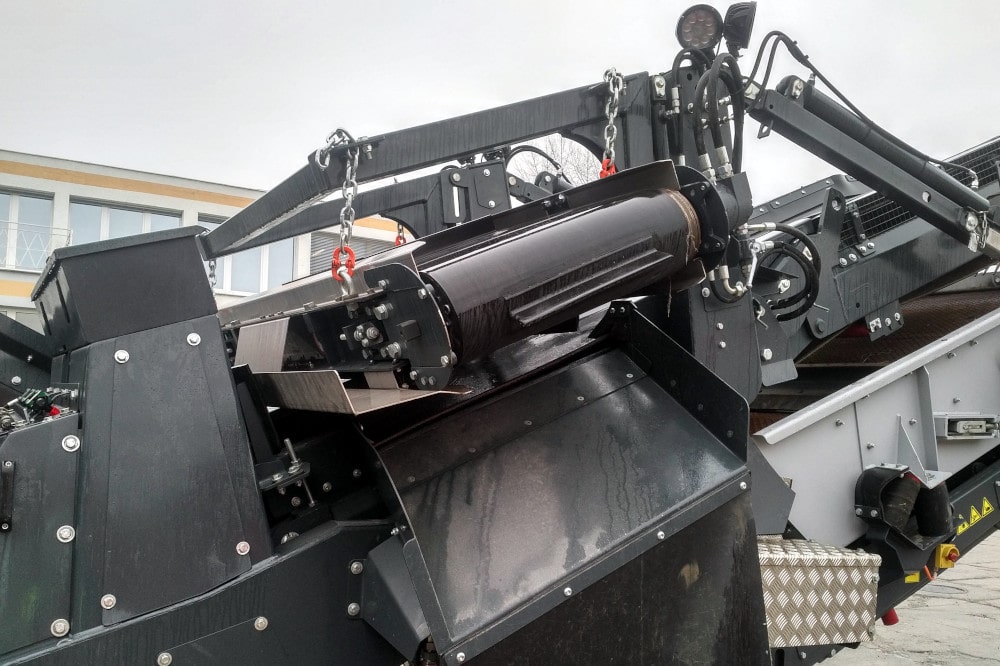
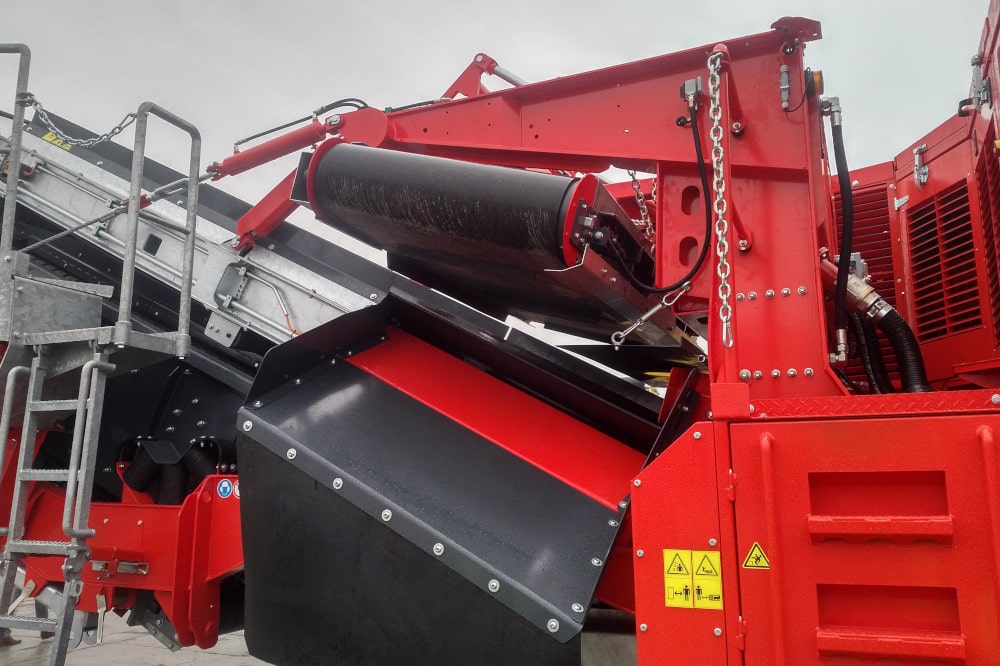
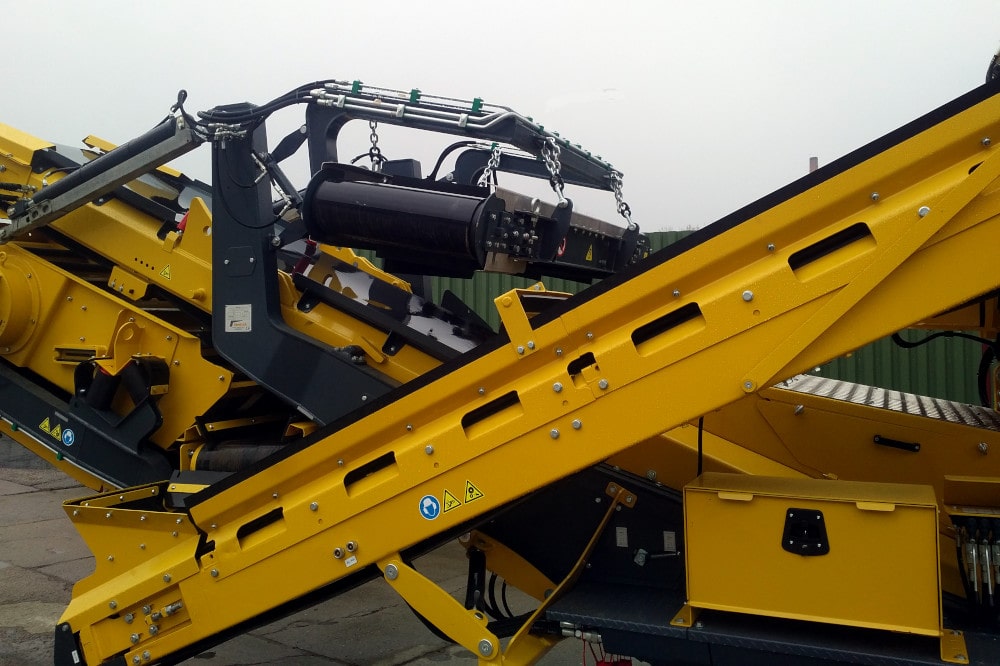
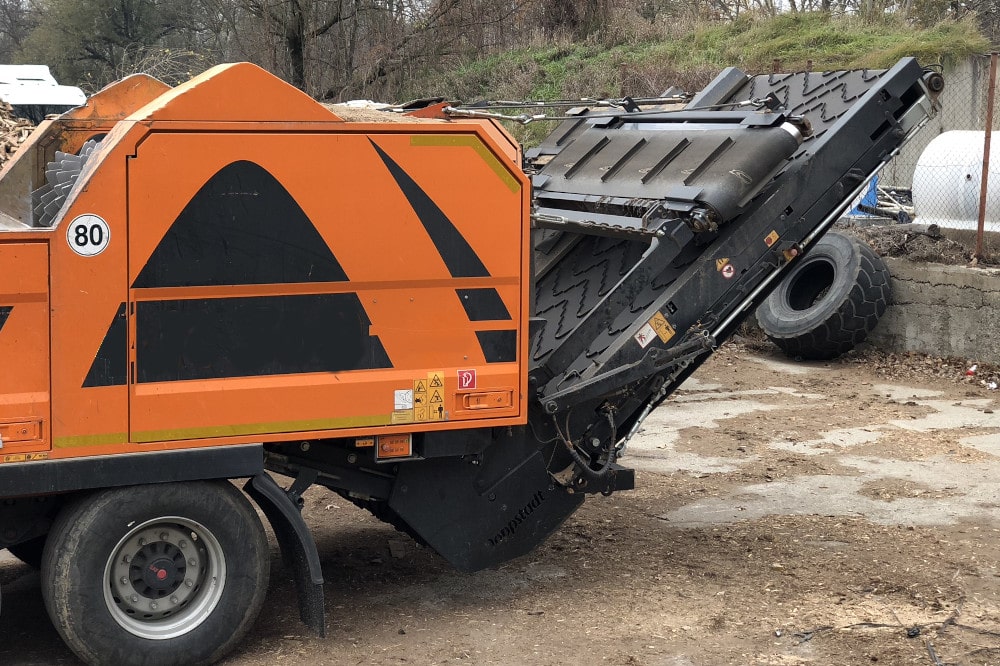
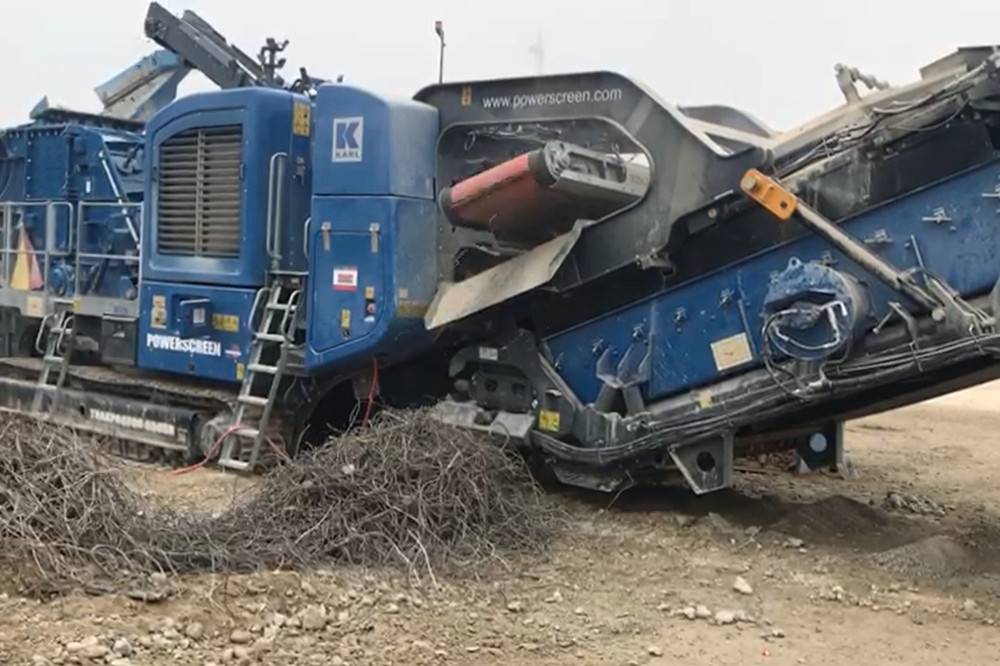
Mobile crushing and screening units in quarries, at stockpiles and in recycling have one particular feature: weight is critical. A heavy ferrite magnet would burden the boom of the machine, which is why strong but light neodymium separators are suitable here.
The following equipment is most commonly used for mobile machines:
The plate is installed crosswise above the discharge belt of the mobile machine and is fully compatible with the mobile line. The neodymium WOLF series and the compact JACKAL / JACKAL II deliver a strong short field at minimal weight; the JACKAL II series is permanently in stock (immediate availability and quick installation).
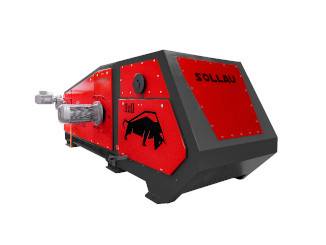
We strengthen separation in mobile crushers by installing a magnetic pulley and especially by using an eddy current separator, which can also sort out non-magnetic metals (aluminium, copper, etc.), thereby significantly improving the yield from recycling. We supply ECS separators in a light mobile version.
SOLLAU is a supplier of magnetic technologies to leading manufacturers of mobile crushers.
Cement plants and lime works
Limestone, clinker and dolomite contain metal contaminants that damage crushers and mills (including vertical roller and ball mills); fine iron and rusty particles in turn reduce the quality of the ground product. For input raw materials, DND-AC plates above conveyors serve the purpose; for the fine dusty product, MBZ magnetic drums and MSSJ-AC HD SCORPION self-cleaning grate separators (up to 16,000 G on the core) with a minimal installation height for enclosed screw conveyors.
A separate page, Cement plants and lime works, is devoted to this segment in detail.
Silica and glass sand – high SiO₂ purity, low Fe₂O₃
With glass and foundry sand, hundredths of a percent of Fe₂O₃ determine the quality. Only such a small contamination is acceptable – coloured bottle glass tolerates approx. 0.05–0.15 %, clear float glass ≤ 0.03 %, premium ≤ 0.015 %. The problem, however, is the high abrasiveness of these materials.
The following equipment is most commonly used in sand processing:
For the separation of silica and glass sand we primarily use high gradient VMSV separators (multi roll magnetic separators), which effectively remove even very weakly magnetic and paramagnetic contaminants such as hematite, limonite, biotite or ferruginous silicates.
Another proven technology is magnetic drums with a magnetic induction of up to 8,000 G, intended for the continuous separation of larger volumes of material. For abrasive materials we also supply them with a manganese steel shell, which increases wear resistance several times over and extends the service life of the equipment.
High-quality magnetic separation is essential in the glass industry, because iron admixtures can cause defects during glass melting and reduce both the quality of the product and the purchase price of the raw material.
Kaolin, feldspar and ceramic raw materials
Even micron-sized iron particles cause colour spots in porcelain and ceramics in kaolin and feldspar after firing. For dry raw materials, MSSJ-AC TARANTULA grate separators and MSS-MC drawer separators serve the purpose (up to 18,700 G on the core, capture of Fe from 1 µm); for liquid suspensions, glazes and ceramic body, MX-MC MANTA matrix separators and MSP-S pipeline filters (capture from 1 µm, pressure up to 10 bar).
A separate page, Production of ceramics and porcelain, is devoted in detail to kaolin, glazes and ceramic body.
Recycling of construction rubble – reinforcement and non-ferrous metals
The recycling of concrete and demolition rubble into recycled aggregate (RCA) rests on two-stage metal separation: first steel reinforcement by magnet, then non-ferrous metals via ECS. The order must be observed – roughly 70 % of metal contaminants are magnetic metals, which must disappear first, otherwise the eddy current separator does not work efficiently.
The following equipment is most commonly used in rubble recycling:
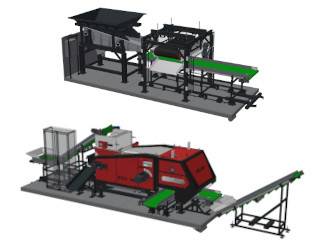
In the recycling of construction rubble, the ideal solution is to deploy a mobile sorting line directly at the demolition site or the recycling plant, where it enables the fast and efficient sorting of valuable metal fractions out of the waste.
The crushed material is dosed into a hopper, where two-stage magnetic separation of ferrous metals takes place by means of a self-cleaning magnetic plate and a magnetic drum; subsequently an eddy current separator sorts out aluminium, copper and other non-ferrous metals. Thanks to the mobile design on roll-off platforms, the line can easily be relocated directly to the demolition or recycling site, which reduces transport costs and increases the value of the sorted raw materials.
You will find more about recycling on the page Recycling and waste processing.
Handling of the separated metal
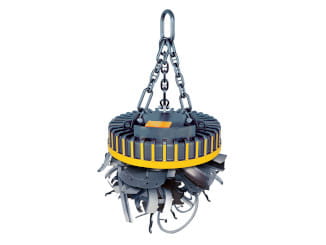
The separated steel and reinforcement needs to be transferred and loaded – at the stockpile, in the recycling operation and in the downstream steelworks and foundries. Scrap electromagnets EMG-SM suspended from a crane hook serve this purpose.
The following is used for metal handling:
The EMG-SM has a solid cast-iron body with cooling fins and a reinforced bottom plate; it is suspended via a universal suspension system on a gantry, overhead or mobile manipulator (compatible with Sennebogen, Fuchs, Liebherr, Caterpillar, Hitachi, Volvo and others).
Diameters 850–2000 mm, duty cycle 75 % (24/7), design for hot material up to 650 °C, in stock and available for hire, 2-year warranty.
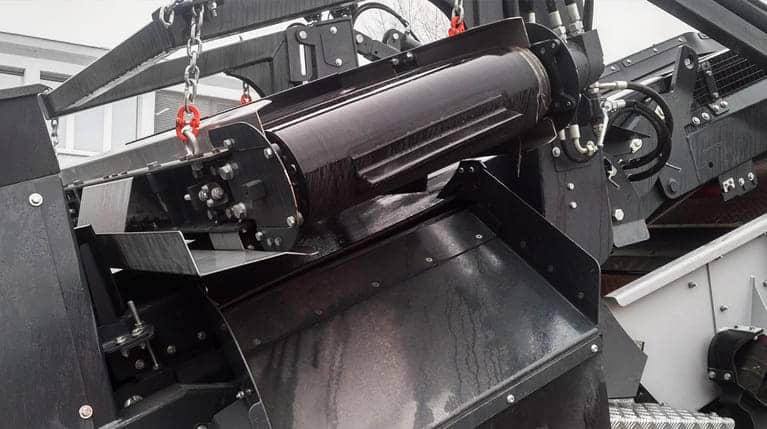
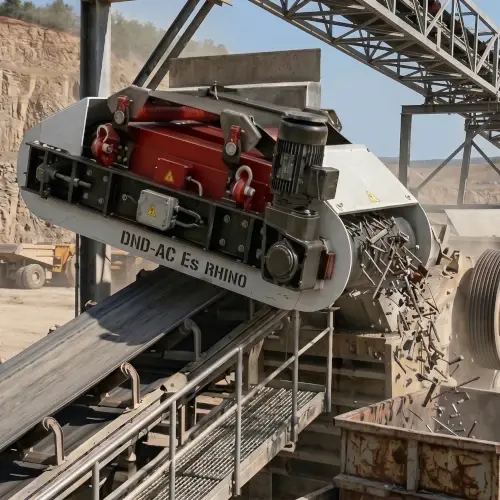 Mining, quarries and the production of building materials process enormous tonnages of abrasive material – run-of-mine rock, limestone, aggregate, gravel and sands – and increasingly also recycled aggregate from demolition rubble. Everything travels on fast conveyors through jaw, cone and impact crushers, mills and screens. And almost always it carries tramp metal along with it: pieces of steel, teeth from excavator buckets, drill rods, reinforcing bar, bolts and wear parts from crushers.














 +420 773 323 773
 petr.zbranek@sollau.cz