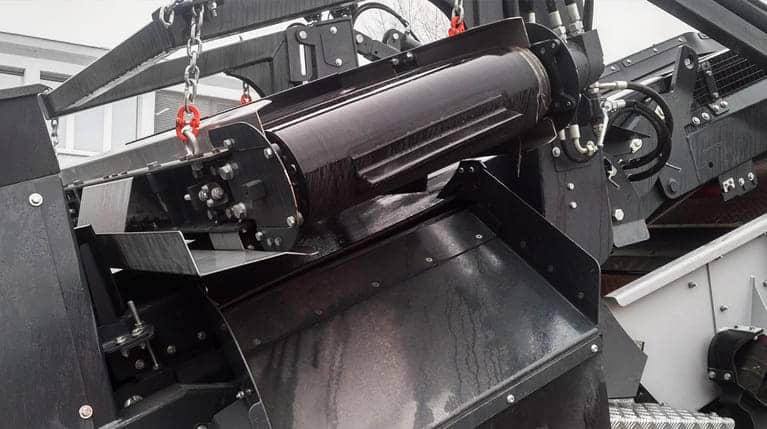
FIELD OF APPLICATION – TOBACCO MANUFACTURING AND PROCESSING
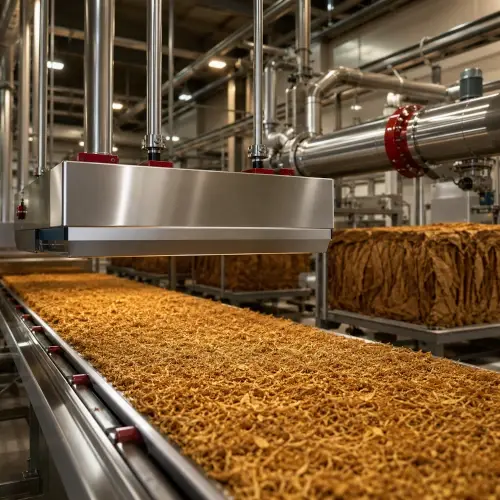 Tobacco manufacturing and processing covers the entire chain, from the intake of pressed bales of tobacco leaves through threshing the leaf lamina from the stems (GLT), cutting, drying and casing all the way to high-speed cigarette manufacturing, smokeless products and nicotine pouches. It is complemented by the production of reconstituted tobacco and the recycling of tobacco waste.
Raw tobacco is a natural material and arrives from all over the world – and it brings along non-tobacco related material (NTRM): wires and strapping from baling, clips from crates, small stones or plastics. Further metals arise from machine wear and chipped cutting knives. With the growing demands of major buyers on product purity, magnetic separation and metal detection have become an essential standard in tobacco production.
Did you know...? One tonne of unprocessed tobacco contains on average 100 grams of foreign materials and around 1,000 non-tobacco particles – and cutting increases their number to as many as 10,000. Without preventive measures, every seventh pack of cigarettes would contain a non-tobacco particle!
WHY ARE MAGNETIC SEPARATORS AND METAL DETECTORS USED IN TOBACCO MANUFACTURING AND PROCESSING?
The tobacco process flow involves dozens of transfer points, pneumatic and vibratory conveying systems, dryers and high-speed machines – and in every one of them metal contamination can be introduced or created. A magnetic separator physically removes the metal and thus protects the machines, while a metal detector also reveals non-magnetic metals and rejects the contaminated material. That is why the two technologies are combined.
Protection of machinery
Fragments of wire and strapping from bales and metal wear debris destroy tobacco cutters, threshers and high-speed cigarette makers producing up to 20,000 cigarettes per minute. Metal hitting the cutter blade means damaged knives and downtime for replacement and sharpening – a magnetic separator installed right in front of the machine prevents this.
Quality and safety of the final product
Metal in a cigarette, smokeless product or nicotine pouch means complaints, a batch recall and brand damage. Major tobacco buyers require documented NTRM control at every processing step. Metal detectors capture even small non-magnetic metals and reject them automatically with minimal loss of good product.
Improved production process efficiency
When a cigarette maker detects metal, it rejects up to ten cigarettes at once – a needless loss of tobacco, paper and filters. Capturing metal already in the raw material = fewer rejected products, less downtime, smooth production and higher profit!
SOLLAU
Manufacturer of magnetic separators for the tobacco industry
We are the manufacturer of these separators. We produce them in our plant in the Czech Republic, which allows us to guarantee the highest quality and to adapt them to your requirements.

WHERE WILL YOU FIND OUR MAGNETIC SEPARATORS IN TOBACCO MANUFACTURING AND PROCESSING?
Intake and unpacking of tobacco leaf bales
Tobacco arrives pressed in bales weighing around 200 kg and in crates, secured with steel strapping, wires and clips. During unpacking and discharge onto the intake conveyor, fragments of strapping and clips easily enter the material flow – and would travel through the entire process.
The following equipment is most often used for tobacco intake:
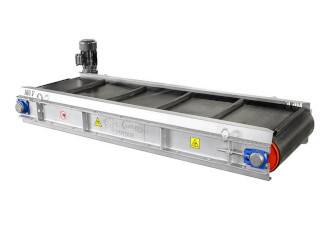
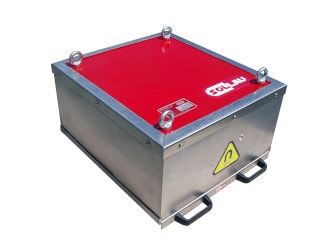
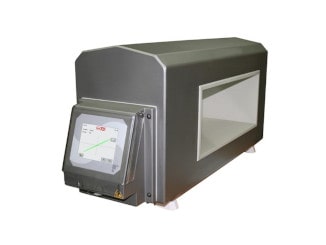
Above the first intake belt, immediately after unpacking, a suspended magnet DND-MC is hung – where larger quantities of metal are captured, the self-cleaning DND-AC version requires no operator intervention. Non-magnetic and stainless metals (aluminium, brass) are then revealed by a tunnel metal detector installed on the conveyor in a metal-free zone.
What problems it solves: fragments of strapping and wire from bales = damaged threshers and cutters in the subsequent processing. Benefit for the customer: a clean input into the entire process with a single separation and detection point right at the start.
GLT – threshing the leaf lamina from the stems
In the GLT (Green Leaf Threshing) line, steamed tobacco leaves are separated into lamina and stems using threshers, air classifiers and vibrating conveyors. Machine wear releases metal particles that must be captured before the sorted tobacco is pressed and dispatched.
The following equipment is most often used in GLT lines:
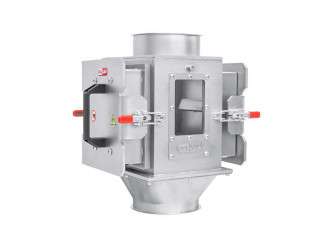
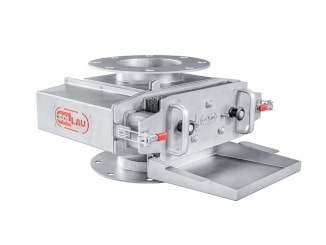
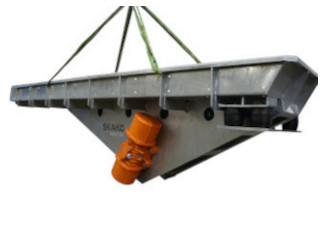
Into gravity chutes and transfer points between threshers and classifiers, chute magnets ML are installed – tobacco leaves pass through them freely and the magnets do not obstruct the flow. Where the material falls through well, finer particles are captured by a magnetic grate separator in housing MSS-MC. Vibrating conveyors ensure gentle spreading and transport of the leaves between operations.
What problems it solves: metal wear debris from threshers = contamination of lamina and stems before dispatch. Benefit for the customer: higher-quality sorted tobacco and compliance with the purity requirements of major buyers.
Primary processing – cutting, drying and expanding tobacco
After conditioning and casing, the tobacco heads to the cutters – the most sensitive point of the entire process. Metal that reaches the knife damages the blade and forces a shutdown. The cutter is followed by a dryer, where dry tobacco and its dust represent a fire and explosion risk.
The following equipment is most often used for cutting and drying tobacco:
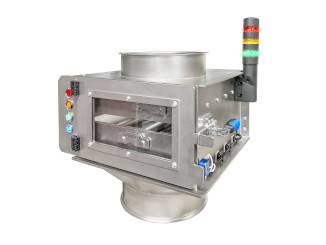
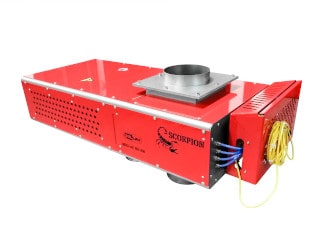
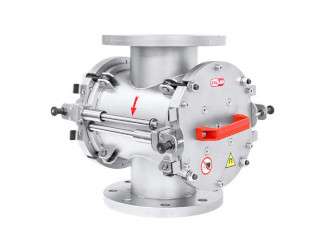
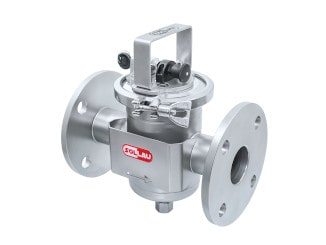
The grate separator is placed in the chute immediately before the cutter inlet – the ALARM version signals saturation of the grate, while the self-cleaning MSS-AC suits plants with higher contamination and continuous operation. The pneumatic conveying of cut tobacco to the dryer is guarded by the pipeline separator MSP-S (capturing ferromagnetic particles from as small as 1 µm); pipe runs at risk of clogging call for the chute magnet ML-P with magnets on the sides of the flow. For dusty and explosive environments we supply equipment in ATEX design.
What problems it solves: metal hitting the cutter knives = downtime for replacement and sharpening; sparking metal in the dryer = risk of fire and tobacco dust explosion. Benefit for the customer: longer knife service life, fewer unplanned shutdowns and higher operational safety.
Pneumatic, belt and vibratory conveying of tobacco
Between operations, tobacco is conveyed by belts, pneumatically (both pressure and vacuum) and by vibration – vibratory conveying is preferred because it is gentle on the cut tobacco filler and preserves its filling power.
The following equipment is most often used for conveying tobacco:
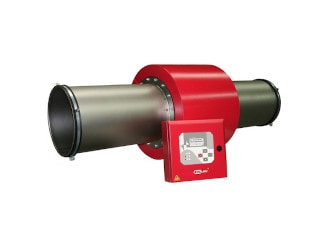
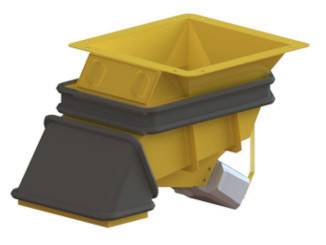
MSP-S separators are installed in vertical and inclined sections of pneumatic pipelines and continuously capture fine ferromagnetic particles from pipe wear. The metal detector for pneumatic conveying also reveals non-magnetic metals and automatically rejects the contaminated section of material via a diverter valve without stopping the conveying. Vibrating conveyors and feeders with stepless output control ensure gentle inter-operational transport and precise dosing of cut tobacco.
What problems it solves: fine metal wear debris in closed conveying lines = gradual contamination of the entire production. Benefit for the customer: continuous product protection without interfering with production continuity, and gentle conveying without crushing the filler.
Cigarette manufacturing – protecting the makers
High-speed makers form the tobacco rod and cut cigarettes from it – modern machines produce up to 20,000 cigarettes per minute. The maker does have its own detection, but when metal is captured it rejects up to ten cigarettes at once. It therefore pays to stop the metal before it ever reaches the machine.
The following equipment is most often used ahead of the maker:
Packing and final product inspection
The final inspection of packed cigarettes, cigars, pipe and snuff tobacco or nicotine pouches is the last control point before dispatch – and often a contractual requirement of buyers and retail chains.
The following equipment is most often used for final inspection:
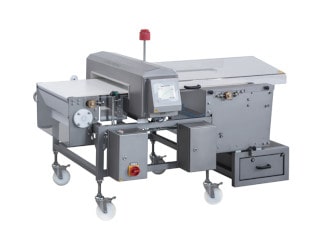
The tunnel detector METRON 07 CI is installed on the outfeed conveyor of the packing line in a metal-free zone – it inspects packed products in non-metallic packaging and records every detection for a documented batch inspection report. A complete solution with its own conveyor and rejection system is offered by the TRANSTRON detector.
What problems it solves: metal in the final product = complaints, a batch recall and brand damage. Benefit for the customer: protection of the consumer and of the manufacturer's good name and compliance with the QA requirements of buyers.
FREQUENTLY ASKED QUESTIONS
For pneumatic conveying pipelines we recommend MSP-S separators or ML-P chute magnets, and for chutes and transfer points MSS-MC magnetic grate separators in housing. The chute magnet design has magnets on the sides of the flow, so it does not clog with the light tobacco filler.
At four key points: above the intake conveyor after bale unpacking, in the chute immediately before the cutter, in the pneumatic pipeline before the dryer, and on the feed line ahead of the cigarette maker. A combination of several separation points captures metal before it can cause damage.
Immediately before the cutter inlet, a magnetic grate separator MSS-MC (or the self-cleaning MSS-AC) is installed to capture ferromagnetic particles from both the raw material and machine wear. Non-magnetic metals are revealed by a metal detector placed before or after the separator.
Magnets do not capture non-magnetic metals (aluminium, brass, stainless steel) – these are revealed by metal detectors, e.g. the free-fall QUICKTRON 05 A with a high-speed reject flap, or the tunnel METRON 07 CI on the conveyor. Rejection is automatic and the loss of good product is minimal.
Yes – dry tobacco dust is demonstrably explosive (maximum explosion pressure up to 6.7 bar) and a metal particle in pneumatic conveying or in the dryer can strike a spark. That is why metals are captured before the dryer and pneumatic conveying, and we supply both separators and detectors in ATEX design.
Metal detector METRON 05 PowerLine for pneumatic conveying – it is installed directly on the pipeline and rejects the contaminated section of material via a diverter valve without stopping the conveying.
We manufacture every device to measure according to the pipe diameter, conveyor width, line capacity and the requirement for ATEX design, so the price varies with the configuration. We will test your material free of charge within 3 days and recommend the optimal solution; request a non-binding quote.
CONTACTS
Do you have questions about our products? Don't hesitate to contact us!
Our sales team is ready to provide you with full support and help you find the best solution for your needs in the field of magnetic separation. We offer not only standard solutions but also custom-made solutions, so you don't need to worry even about more complex technical challenges. Just get in touch and we will be happy to help you.
You can contact us by phone, email or through our web form.

 +420 773 323 773
 petr.zbranek@sollau.cz