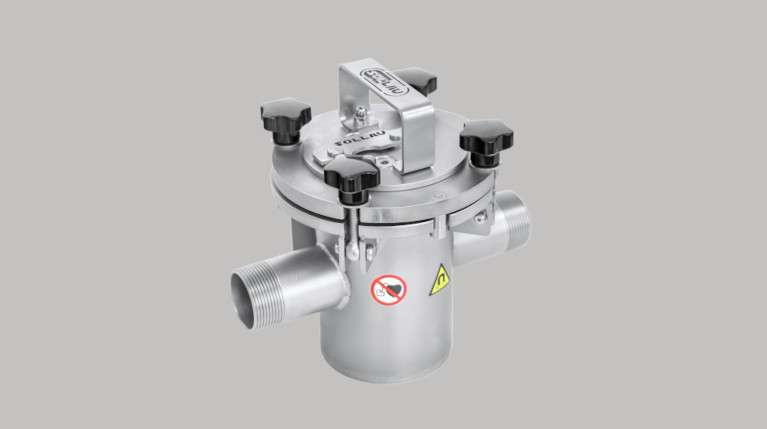
Tank magnetic separators MSP-C
Trap magnets for tank trucks are designed to separate ferromagnetic particles from bulk and liquid materials transported by tank trucks. Many raw materials (in the food industry, agriculture, building industry etc.) are carried by tank trucks and a great emphasis is put on the purity of these materials. Therefore, we recommend that you apply our tank magnetic separator to clean your products. Our tank magnetic separator can be easily connected to a pipe or hose (used for unloading or loading of the transported material by air pressure), as we may fit it with fire hose couplings or other connectors compatible with the tank outlet/inlet. During unloading the final phase of magnetic separation is performed (as the last step of the transport chain). The haulier can thus guarantee to the customer that the raw material is free of ferrous contaminants.
Benefits of using the magnetic trap
- Material without ferromagnetic particles
- Guarantee to the customer that the transported raw material is free of ferrous substances
- Easy installation and operation = drivers' willingness to use the separator
SOLLAU 5 year warranty
We can vouch for the quality of our magnetic separators and that is why why we provide a 5 year warranty on them! Our magnetic separators can be relied on! We are a specialist in the field of magnetic separation.
We produce the tank magnetic separator in connection diameters from 80 to 150 mm as standard. However, we can adjust the connection dimensions and the connection mode (fire hose couplings, flange, screw connections, special connectors etc.) according to your wishes as well.
We are the manufacturer of these magnetic filters. We guarantee a top technical design and a favorable price.
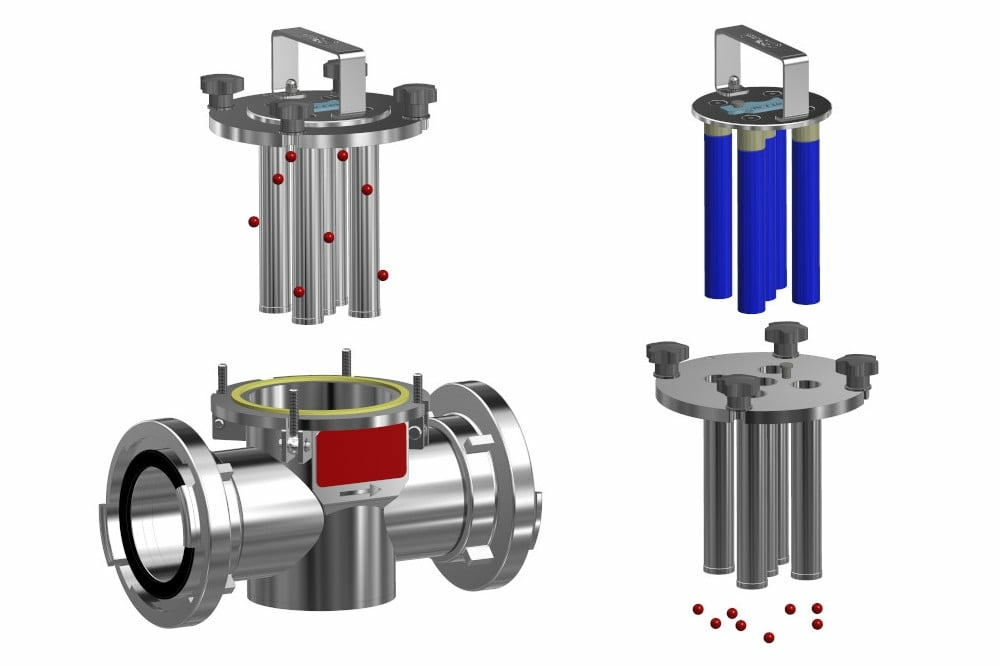
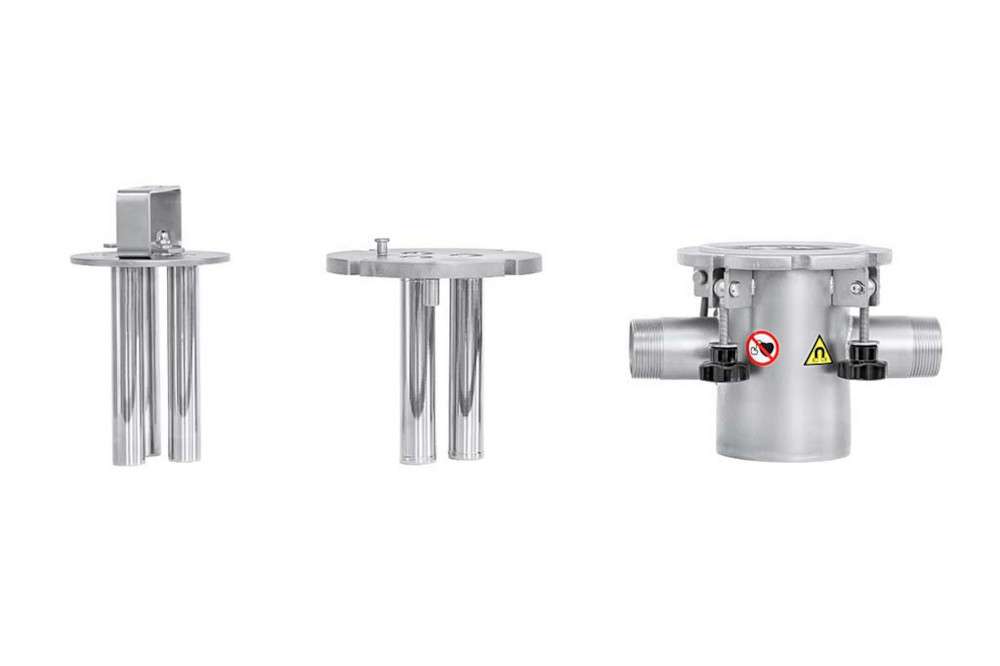
The magnetic filter for tank trucks includes several parts:
- Magnetic component
- Magnetic core
- Stainless steel tubes
- Separator body
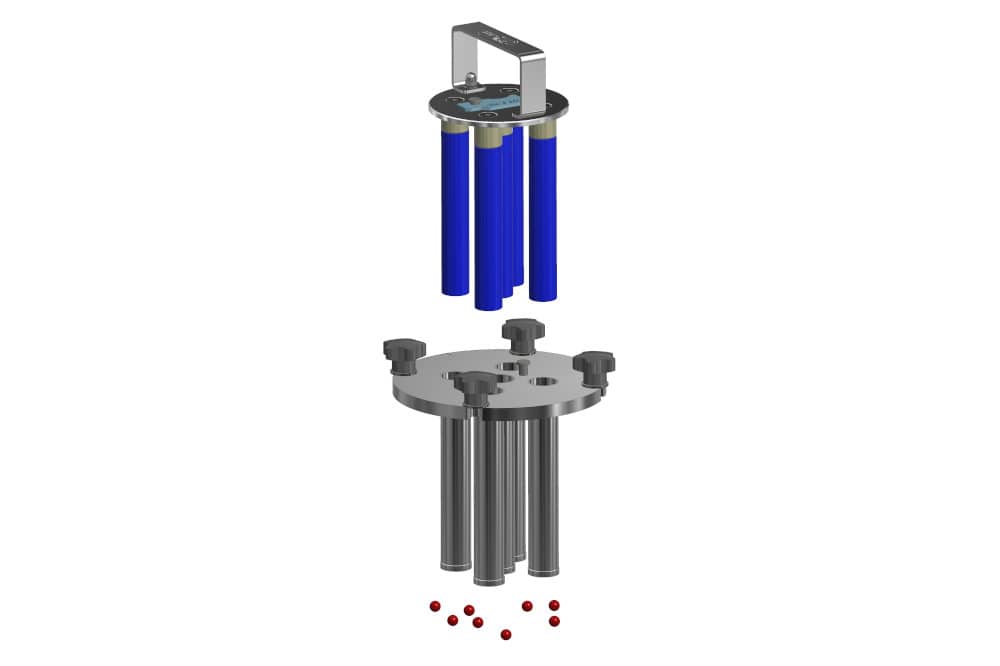
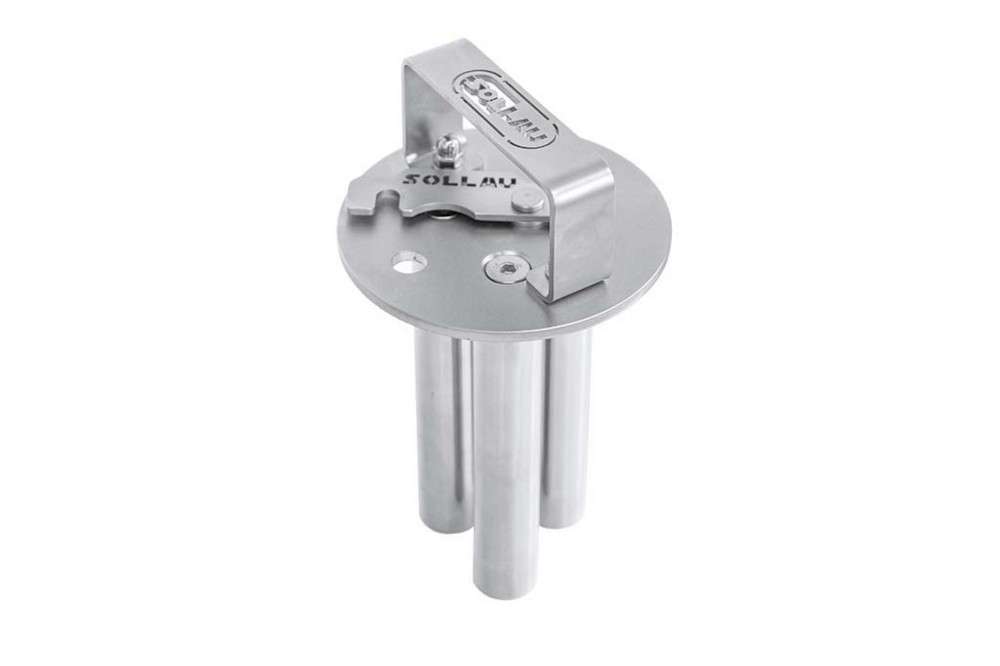
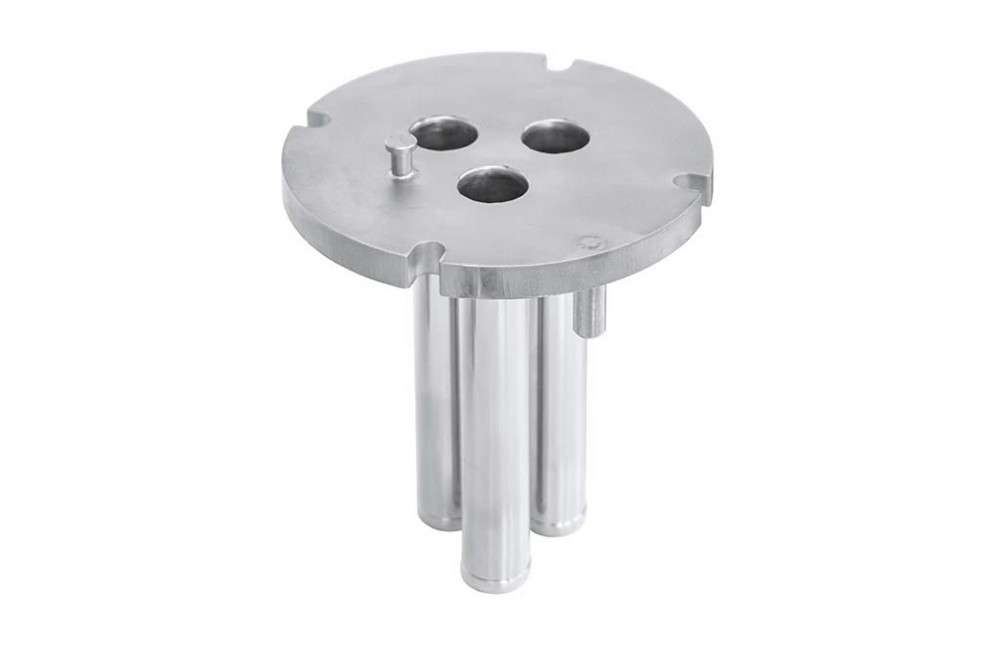
The magnetic core consists of magnetic rods, placed in stainless steel protective tubes. Thanks to this "tube in tube" system, the magnetic rods are protected and their lifetime is significantly extended. This also eliminates the risk of flaking off a piece of magnet or its nickel plating and subsequent contamination of the cleaned material.
The magnetic component is equipped with magnetic rods, formed with the strongest neodymium magnets. These magnetic rods create an ingenious labyrinth so that the medium to be cleaned is in contact with several magnetic rods when being pumped from the tank. Thanks to this cleaning labyrinth and the applied strong neodymium magnets, the maximum efficiency of the magnetic separator is ensured - we can capture ferromagnetic impurities starting with 1 µm!
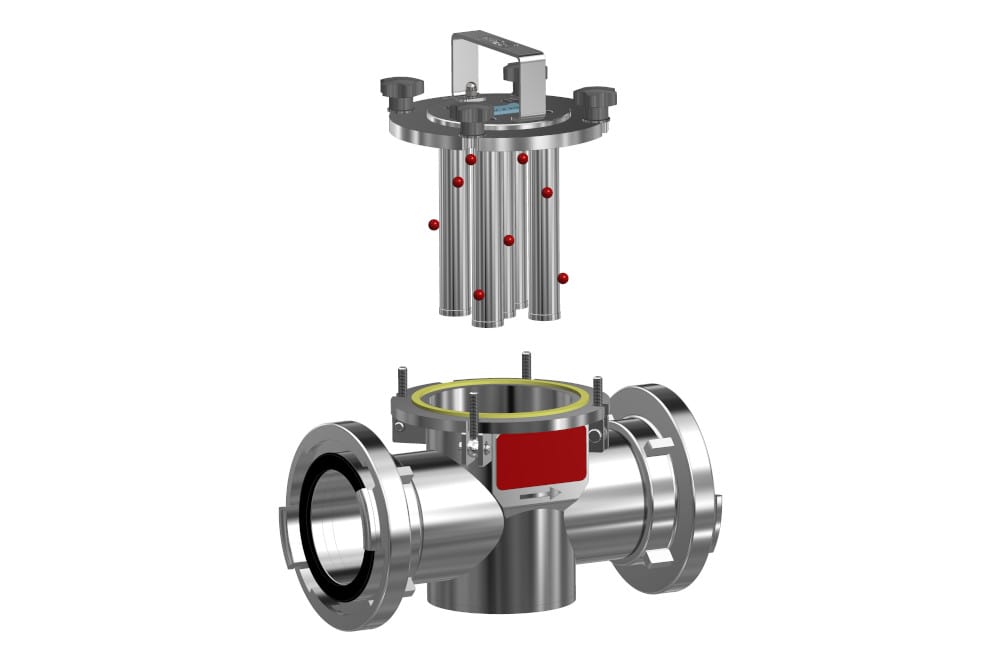
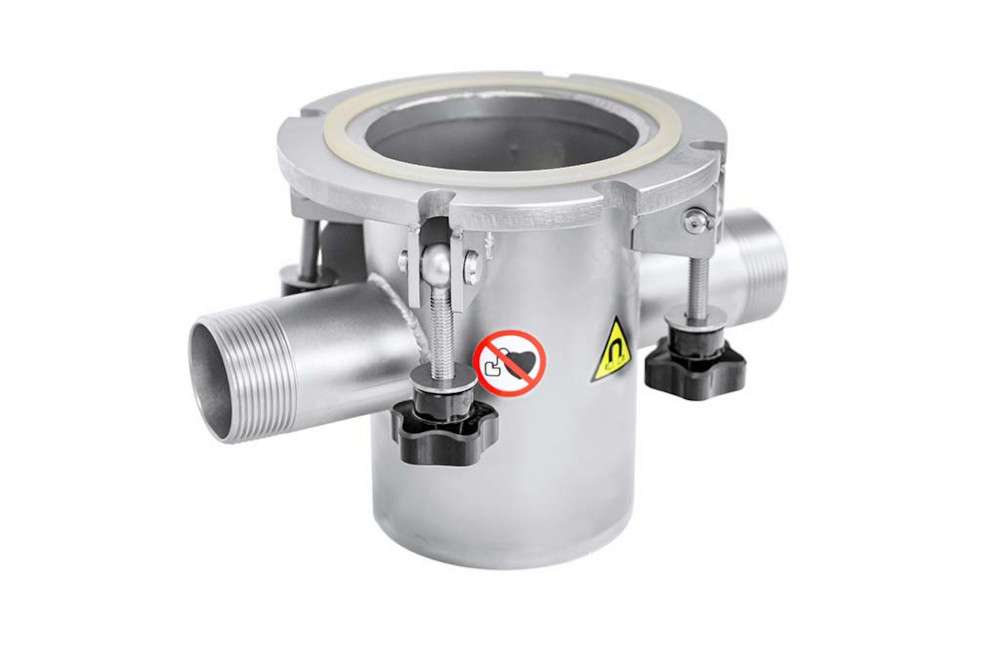
The magnetic component is fixed to the separator body with 4 hinge screws with wing nuts, which make the withdrawal of the component from the separator body very easy.
How will the magnetic filter be cleaned?
Cleaning the separator is very easy and fast. It is performed in several steps:
- Pulling the magnetic component out of the separator body
- Removing the magnetic cores from the stainless steel protective tubes (metal particles fall off)
- Reverse assembly
How is the trap magnet for tank trucks used in practice?
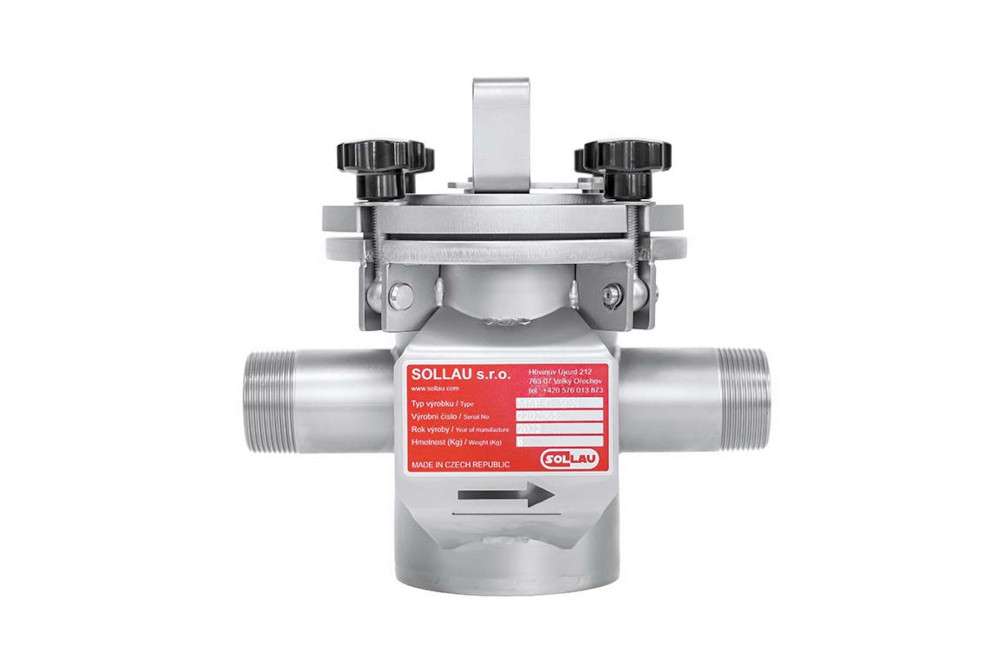
The separator is usually stored in a transport box of the tank truck. The operator (driver) connects the separator to the pipeline (hose) through which the material flows from the tank at the place of unloading. In the standard version, the separator is provided with a thread on which the needed connecting piece (usually a fire hose coupling) can be screwed in (so that the connection to the tank is quick and comfortable). We manufacture these magnetic separators and can therefore adapt them to your requirements.
We also often encounter a situation where the separator is firmly installed at the material entry (e.g. when receiving material into a silo).
SOLLAU – our products are welded by real professionals!
SOLLAU certifications:
Authorization to perform welding on pressure equipment according to PED 2014 / 68 / EU
Pressure welder certificate according to EN-ISO 3834 - 2, EN 1090 - 2, EN 13480 - 1 to 5, EN 13445 - 1 to 5
 Exchange of magnetic rods
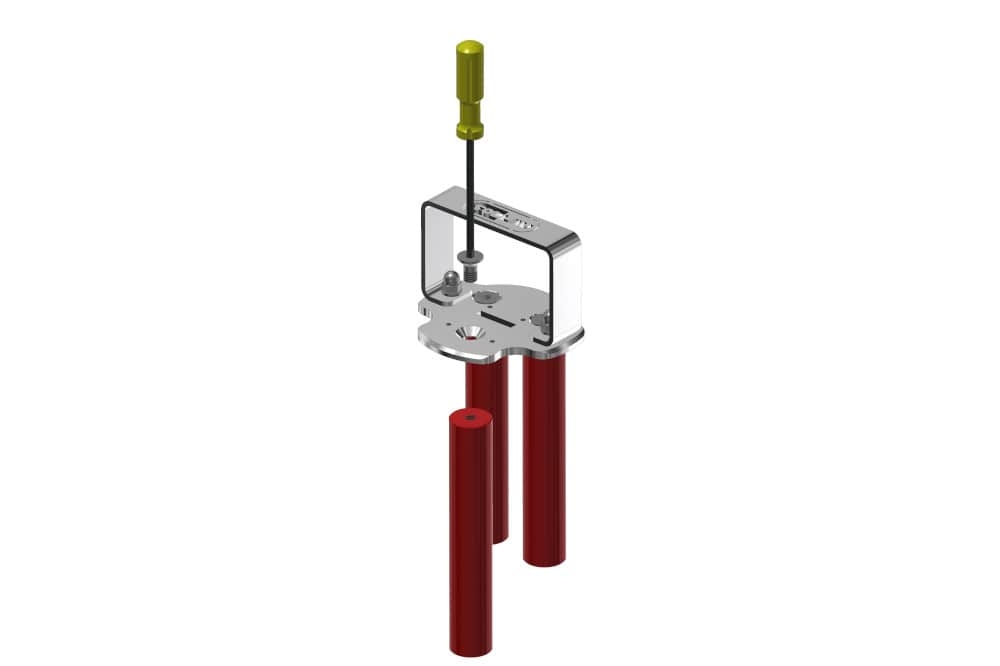
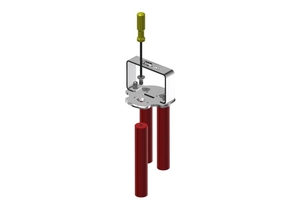
The design of the magnetic filter allows for easy replacing of the magnetic rods (damaged e.g. by improper handling). This exchange is really easy - just loosen one screw and replace the rod. Therefore, no manufacturer's service intervention is required.
MSP-C
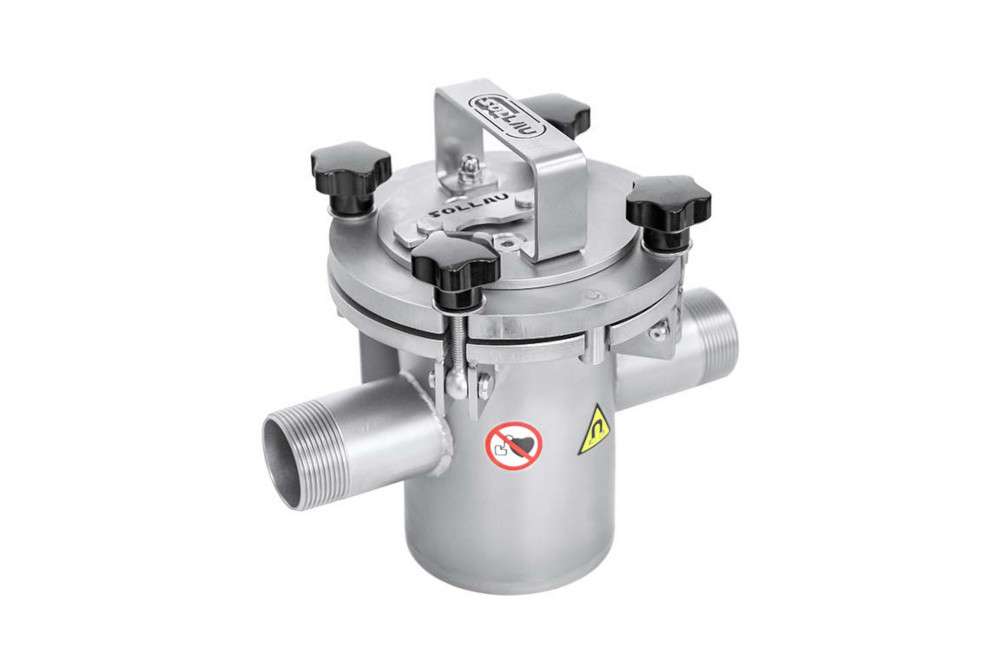
- Possibility of using various pipe connectors (e. g., fire hose couplings - G3", G4" and others, fittings, flanges etc.)
- Low weight = easy handling
- 11 500 Gauss in contact with the treated material
- As standard, we produce these separators with connecting diameters of DN 80, DN 100, and DN 150
- Possibility of tailor-made production
- Heavy duty stainless steel design
- Option – the separator can be equipped with a sieve to capture non-magnetic particles
| Product | Input/output diameter (mm) | Datasheet |
|---|---|---|
| MSP-C 80 N | 80 | display PDF |
| MSP-C 100 N | 100 | display PDF |
| MSP-C 150 N | 150 | display PDF |

The MSP-C is a tank magnetic separator designed to capture ferromagnetic contaminants from bulk and liquid materials transported by tanker trucks — typically flour, sugar, cement, or agricultural raw materials. It connects to a hose or pipe during tanker unloading by compressed air, allowing the carrier to guarantee the customer that the raw material is free of ferromagnetic impurities.
The magnetic rods are made of neodymium magnets and form a flow-through labyrinth — the separated medium is in contact with several rods simultaneously during pumping. We supply a standard induction of 11,500 G at the point of contact with the separated medium; we capture ferromagnetic particles from as small as 1 µm.
The separator is standardly fitted with a thread onto which the customer screws the required type of coupling — most commonly a fire hose coupling G3" or G4" — so connection takes only a few seconds. The separator can be stored in a transport box on the tanker or permanently installed at the material intake, for example at a silo.
Cleaning takes place in three steps: pulling the magnetic component out of the separator body (secured by four hinged screws with wing nuts), removing the magnetic core from the protective stainless steel sleeve — captured metals fall off on their own — and reassembling. The entire process is quick and requires no tools.
We standardly manufacture in connection diameters DN 80, 100 and 150 mm; connection dimensions and connection type — thread, fire hose couplings, flange or special connectors — can be adapted to the customer's requirements. As an option we also offer a screen insert for capturing non-magnetic contaminants.
The magnetic core is housed in a protective stainless steel sleeve that protects it from damage and eliminates the risk of contaminating the separated material with a detached piece of magnet. This design also allows individual magnetic rods to be easily replaced when needed — simply loosen one screw.
We provide a 5-year warranty on the MSP-C; the separator is used in food processing, agriculture, construction and cement plants — wherever raw materials are transported by tanker trucks. We also carry out free tests of your material on our separators before purchase.