WHERE IN THE PHARMACEUTICAL INDUSTRY WILL YOU FIND MAGNETIC SEPARATORS?
Receipt and inspection of input raw materials (API and excipients)
Active ingredients, lactose, cellulose, starch, magnesium stearate and other excipients arrive at the plant in bags, big bags or tankers. Already at receipt they may contain metal impurities from production, transport and handling – and this is precisely where it is cheapest to stop them.
The following magnetic separators and equipment are most frequently used at the receipt and inspection of input raw materials:
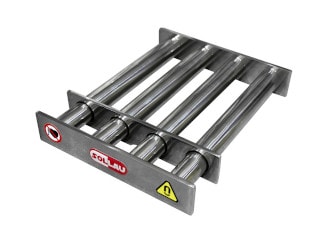
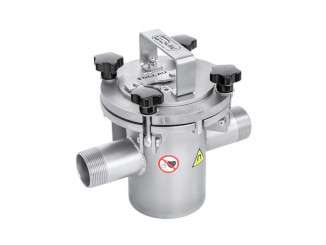
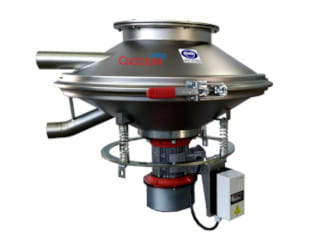
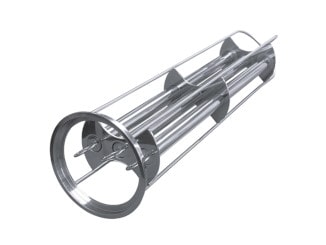
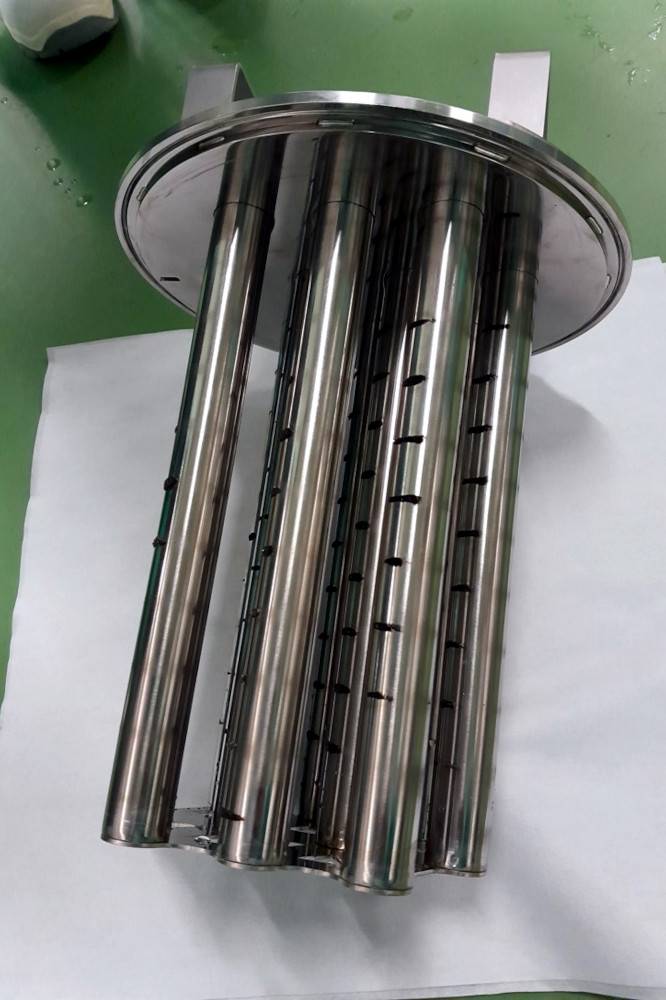
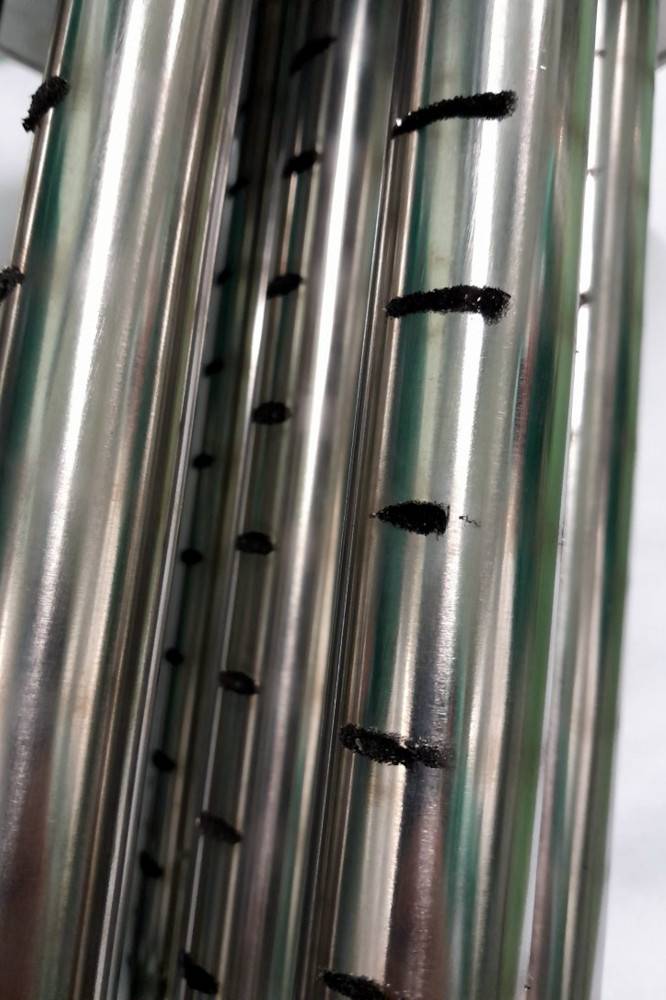
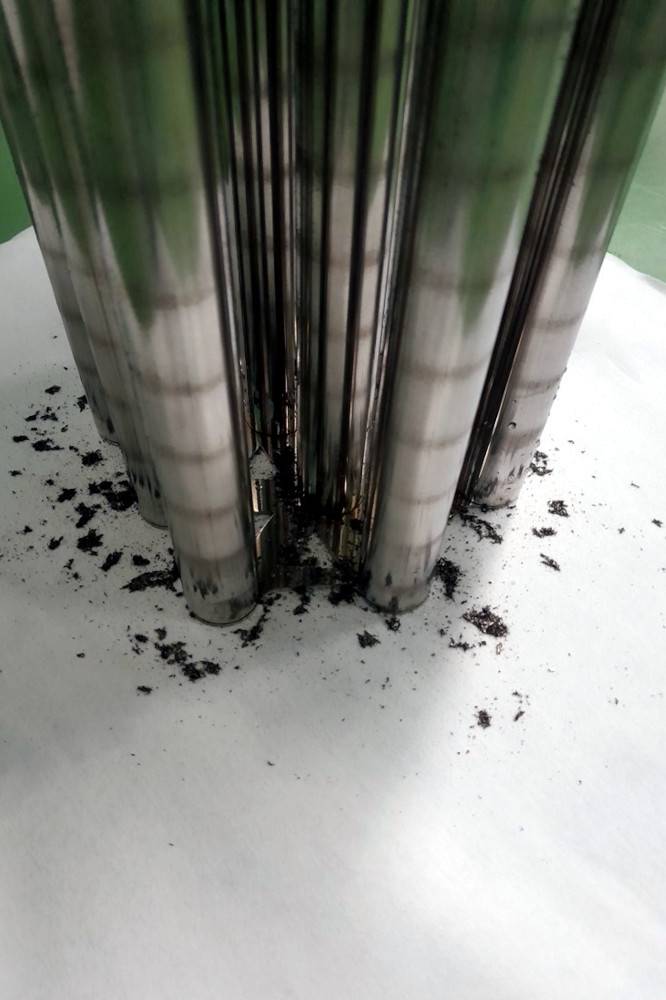
Magnetic grate separators in housing are installed under emptying and bagging stations and under big-bag discharge outlets. The material falls through several rows of magnetic bars with an induction of up to 18,700 G, which capture even fine ferromagnetic wear debris. The ALARM variant signals grate saturation to the operator – so cleaning always takes place in time. When decanting raw materials from tankers, the technology is protected by the tank separator MSP-C fitted directly into the discharge pipeline. The vibrating sieve C-line simultaneously performs control (protective) screening – it removes lumps, agglomerates and coarse impurities before storage in silos.
Benefit for the customer: contamination is captured right at the inlet, does not reach the silos and does not spread throughout production. The input inspection also has a documentable course for GMP audits.
Pneumatic conveying of powders and granulates
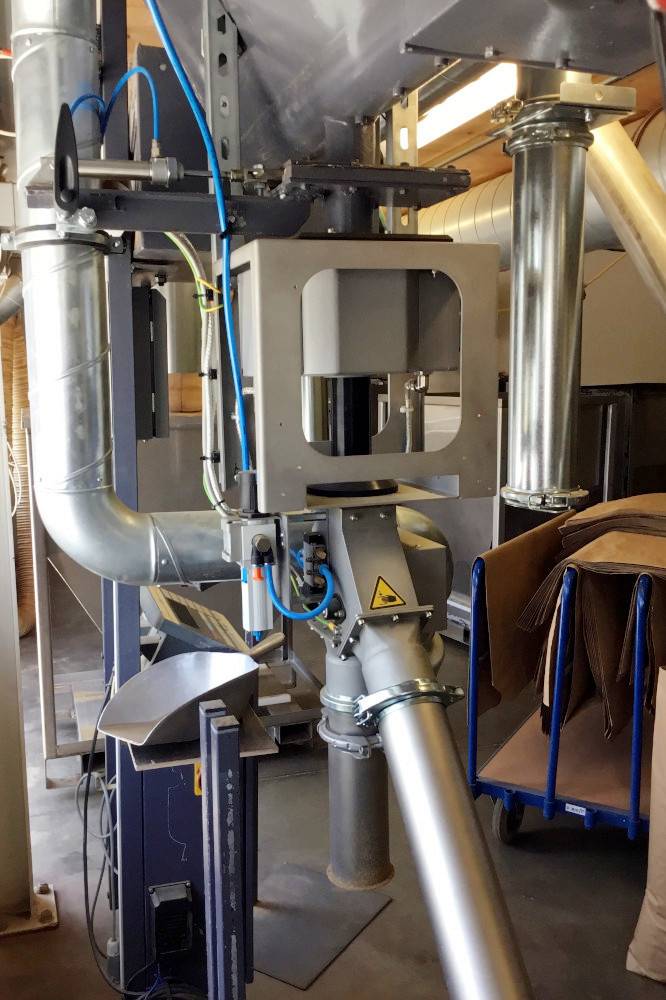
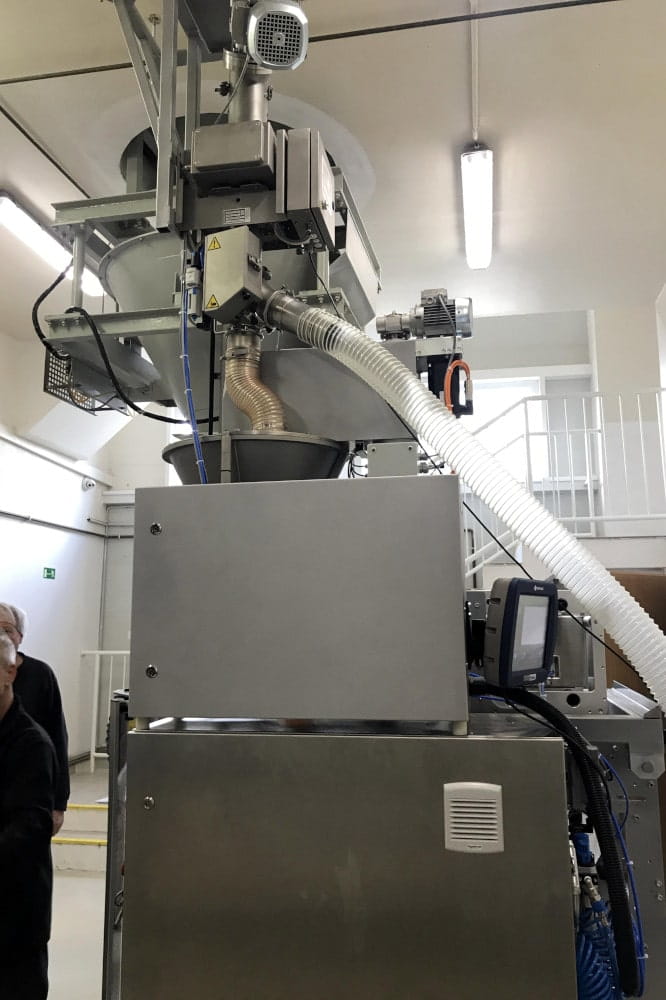
Powders are conveyed between silos, hoppers and production stages by pressure or vacuum pneumatic conveying. Pipes, elbows and rotary feeders gradually wear and the released metal particles travel with the product.
The following magnetic separators and metal detectors are most frequently used for pneumatic conveying:
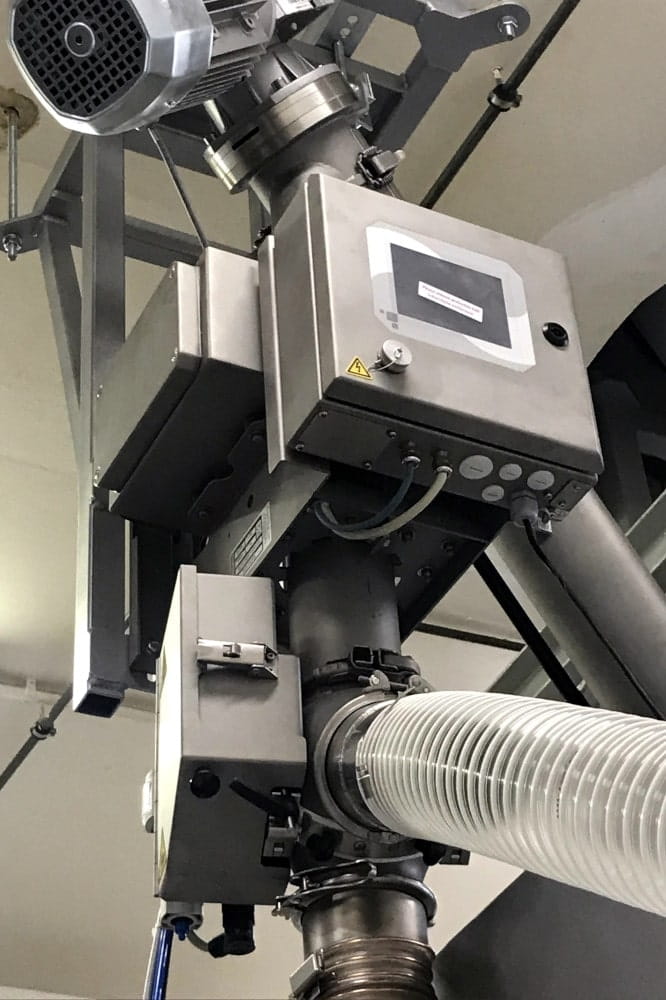
MSP-S separators are inserted directly into the pressure or vacuum pipeline (they withstand the usual operating pressures of pneumatic conveying) – most often before the filling of silos and before entry into weighing stations.
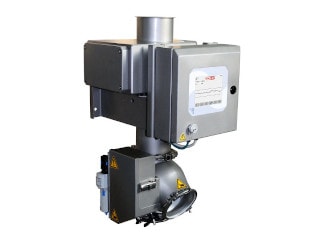
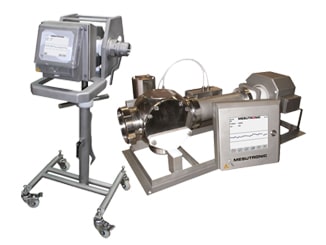
The pipe metal detector P-TRON 05 GM V2 in a hygienic design then also guards against non-magnetic metals (aluminium, brass, stainless steel) – it detects particles from 0.4 mm at speeds of up to 30 m/s and automatically rejects them via a diverter.
Benefit for the customer: continuous product protection in a closed conveying line without interfering with the smoothness of production.
Milling, micronisation and screening of powders
Mills and micronisation jet mills work with high energy and abrasion – they are therefore one of the main sources of metal wear debris in pharmaceutical production. The subsequent screening ensures the prescribed particle size (PSD), which determines the solubility and bioavailability of the medicine.
The following equipment is most frequently used in milling and screening:
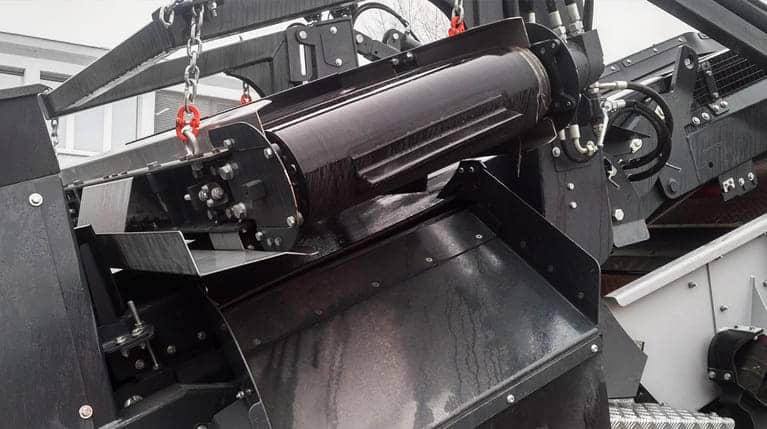
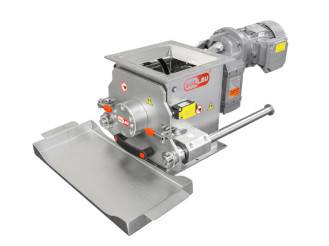
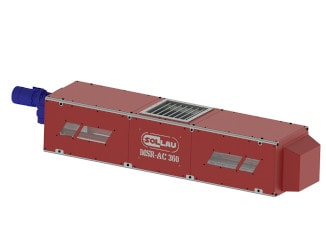
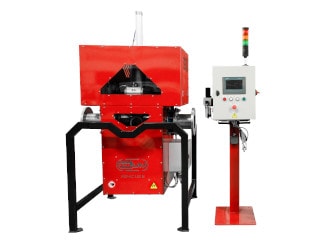
Pharmaceutical powders (lactose, cellulose, starch) have poor flowability and a tendency to bridge. It is precisely for them that the rotational magnetic separators MSR are intended, whose rotating magnetic grates simultaneously fluff up the material and prevent the formation of bridges. They are installed after the mill outlet or above the sieve inlet.
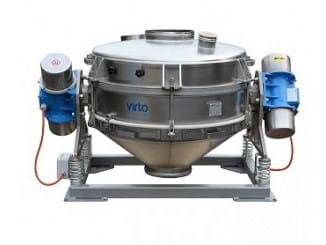
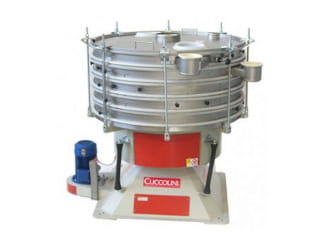
Multi-frequency vibrating sieves X-line handle even hard-to-screen fine fractions (micronised API), and tumbler sieves T-line gently sort powders into several fractions at once.
Benefit for the customer: guaranteed particle size, removal of metal wear debris directly at its source and smooth flow even with non-free-flowing powders.
Granulation, drying and homogenisation of mixtures
Wet or dry granulation, fluid-bed drying and final blending (mixing) give the tableting mixture its final form. Agitators, granulators and compactors touch the product metal to metal – each cycle can release microscopic particles.
The following magnetic separators and metal detectors are most frequently used in granulation and homogenisation:
Magnetic grates MR are inserted into hoppers and intermediate bulk containers (IBC), and housing separators MSS-MC into gravity chutes between the granulator, dryer and mixer. Everything is made of stainless steel for pharmaceutical operations, without dead corners, with easy and quick cleaning between batches – an essential requirement with frequent product changeovers.
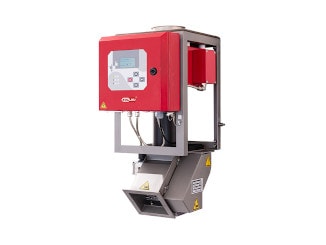
The gravity metal detector after the dryer reveals even nonmagnetic metal particles before entry into the final mixture; the QUICKTRON 07 RH HyQ Clean variant is designed directly for hygienic applications with quick tool-free disassembly.
Benefit for the customer: a clean tableting mixture, validatable control points at every process stage and short downtime during sanitation.
Tableting and capsule filling
The tablet press is the most critical point of the entire production of solid dosage forms. Punches and dies work under enormous pressure – a metal impurity in the mixture can damage them, and punch fragments then travel directly into the tablets. The same risk applies to capsule fillers.
The following equipment is most frequently used in tableting and capsule filling:
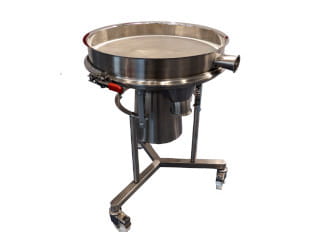
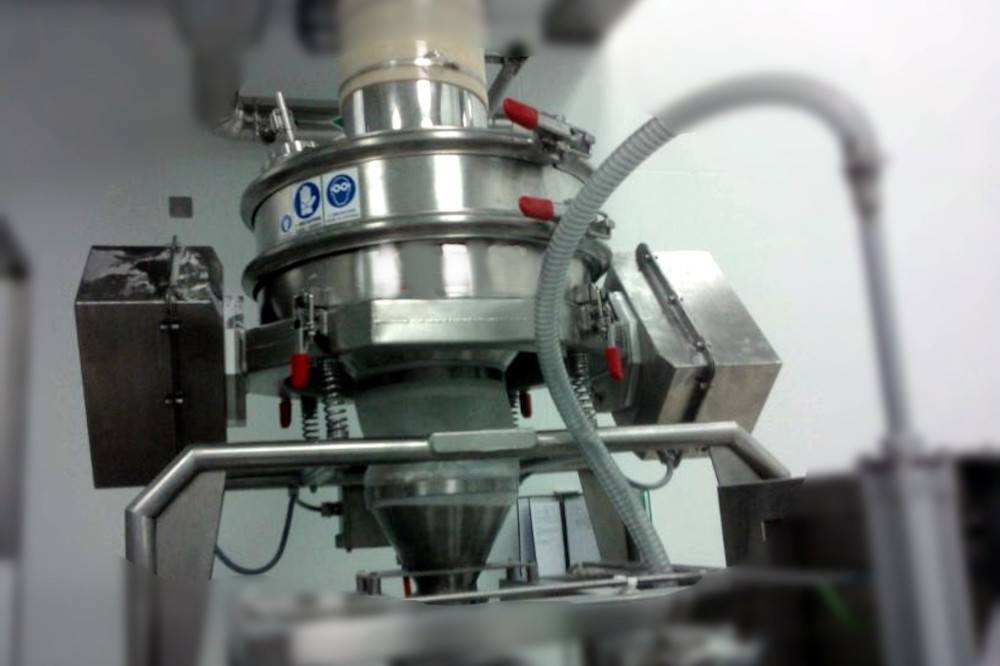
Safety screening of the tableting mixture is provided by the pharmaceutical vibrating sieve VPF (mobile version on a trolley) or VPF2 (inline integration into the line) – both made of AISI 316 stainless steel and meeting FDA standards. The last magnetic grate belongs directly in the hopper of the tablet press or capsule filler – it is the last chance to capture a ferromagnetic particle before compression.
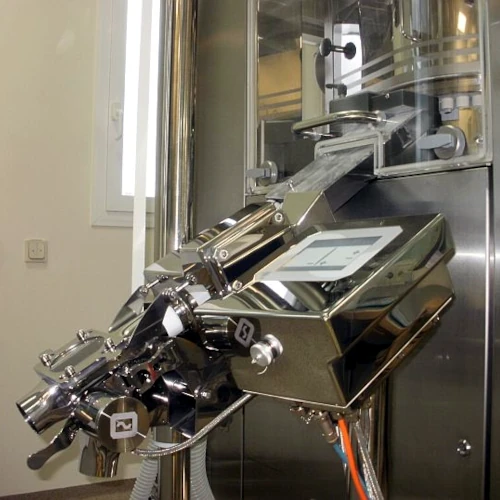
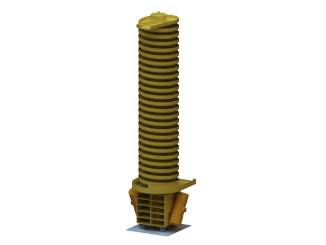
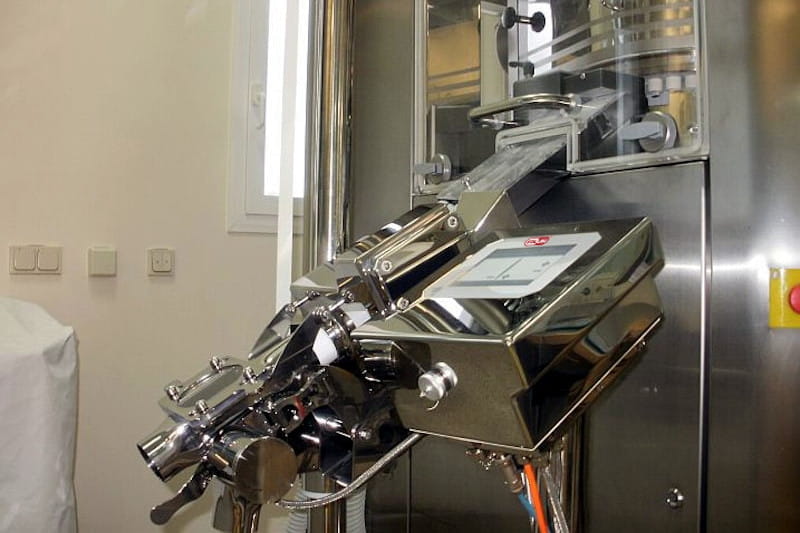
After the press outlet, ideally after the tablet deduster, a highly sensitive gravity detector PHARMATRON 07 HQ is installed, which checks every tablet and automatically rejects contaminated pieces via a diverter – without stopping production. The mobile version allows quick relocation between lines and easy validation. Spiral conveyors transport finished tablets and capsules gently, without damaging the edges and without wear, unlike belt conveyors they require virtually no maintenance and are easy to clean.
Advantages of the PHARMATRON 07 HQ metal detector:
- Sensitivity down to 0.2 mm – detection of ferrous, stainless and non-ferrous metals
- Capacity of up to 2,000,000 tablets per hour
- FDA-compatible contact parts, tool-free disassembly
- Minimal loss of good product during rejection
Benefit for the customer: protection of the most expensive parts of the line (punches and dies), 100% inspection of every tablet and demonstrable GMP compliance during audits.
Production of liquid and semi-solid dosage forms
Syrups, suspensions, emulsions, gels, ointments and solutions (e.g. glucose and infusion) pass through pumps, mixers and homogenisers, whose wear releases very fine steel and stainless steel particles into the product. In sterile and high-purity production, the purity requirements are the strictest.
The following magnetic separators are most frequently used in the production of liquid dosage forms:
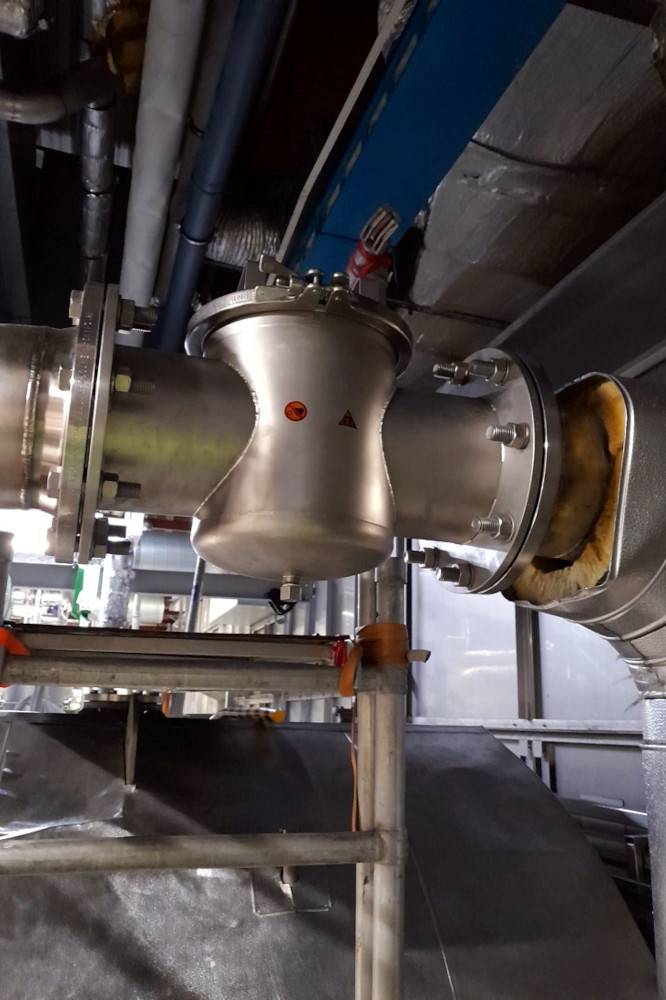
The MSP flow magnetic filters are fitted into the pressure pipeline after pumps, homogenisers and before filling lines. The magnetic core with an induction of up to 18,700 G captures ferromagnetic and slightly magnetic particles from as little as 1 µm – i.e. far below the resolution of metal detectors. The stainless steel construction allows CIP sanitation; for operations with higher contamination we deploy the self-cleaning MSP-AC variant for unattended operation. MSF magnets are inserted into existing bag filters and increase their efficiency by a magnetic stage. The metal detector for paste-type masses then checks the product pumped into the filling line.
Of interest: for a manufacturer of intravenous medicines, we supplied into a DN 200 pipeline with hot glucose (up to 150 °C, 230 m³/h) the magnetic filter MSP-S 200 N OCTOPUS, which captures ferromagnetic impurities of 1 micron in size – see the case study below.
Benefit for the customer: magnetic purity of liquid products verifiable at the micron level, full integration into CIP sanitation and protection of filling nozzles against damage.
Production of food supplements and nutraceuticals
Vitamins, mineral supplements, herbal mixtures, teas and protein powders are processed with technology similar to that of medicines – and dried herbs or mineral raw materials tend to be contaminated with metal even more than pure pharmaceutical raw materials.
The following equipment is most frequently used in the production of food supplements:
The vibrating sieve + magnetic separator + metal detector arrangement in sequence gradually removes coarse impurities, ferromagnetic particles and non-magnetic metals. For herbal teas and spices, housing grate separators under discharge outlets and conveyor metal detectors on packaging lines have proven effective.
Benefit for the customer: the product meets the limits for foods and food supplements and passes the inspections of retail chains as well as certifications (IFS, BRC, HACCP).
Packaging, final inspection and operational cleanliness
The last control point lies between production and dispatch – after the blister machine, vial filler or sachet machine. At the same time, metal impurities must not enter the clean rooms even on employees' footwear or with office supplies.
The following equipment is most frequently used in packaging and final inspection:
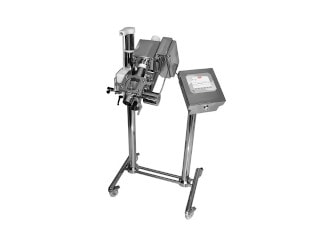
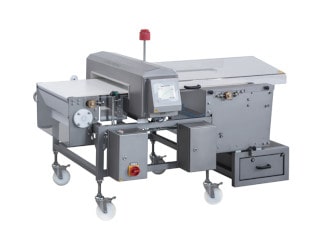
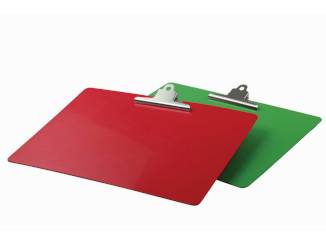
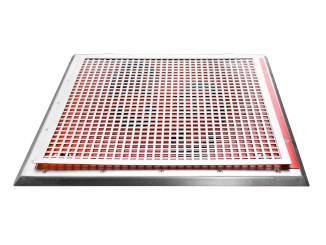
The belt metal detector checks packaged products (blisters, boxes, sachets) and automatically rejects defective pieces. Detectable pens, detectable markers and other writing instruments and tools used in production are fully detectable by a metal detector – if a fragment of them enters the product, the line reliably reveals it. Magnetic mats at the entrances to production areas capture ferromagnetic impurities from the soles of footwear, which workers would otherwise carry into the clean rooms.
Benefit for the customer: a final independent inspection before dispatch and systematic prevention of introducing metals into production – exactly what GMP and HACCP auditors want to see.
 The pharmaceutical industry is one of the most strictly regulated manufacturing sectors in the world. The production of medicines – from active pharmaceutical ingredients (API) and excipients through tablets, capsules and powders to syrups, ointments and infusion solutions – is subject to the rules of Good Manufacturing Practice (GMP), the HACCP critical control point system and the requirements of pharmacopoeias as well as FDA or EMA audits.













 +420 773 323 773
 petr.zbranek@sollau.cz