Our company is a specialist in field of magnetic separation
We develop, produce and apply devices for magnetic separation. Our magnetic separators are designed and manufactured exactly in a made-to-measure way as per your needs.
FIELD OF APPLICATION – METAL RECYCLING
Metal recycling covers the purchase and processing of ferrous scrap, shredding of end-of-life vehicles and mixed metal waste, separation of non-ferrous metals (aluminium, copper, brass), recycling of cables, e-waste and metal machining chips, as well as processing of slag from incinerators and smelters. It is a field where profit is decided by the purity and yield of the individual metal fractions.
Metals can be recycled practically indefinitely – and demand for quality scrap is growing with the push toward low-emission steel and aluminium production. Steelworks and smelters, however, penalise contaminated deliveries: copper in steel scrap or iron in the aluminium fraction lowers both the purchase price and the usability of the material. Multi-stage magnetic separation is therefore the foundation of every modern recycling line.
Did you know…? Copper is a so-called unremovable harmful element for steel – it cannot be removed from the melt by oxidation or vacuum processing. From as little as 0.1 % copper there is a risk of so-called hot shortness, cracking of the steel surface during hot rolling. The purity of the scrap must therefore be resolved before melting – by magnetic separation.
WHY ARE MAGNETIC SEPARATORS USED IN METAL RECYCLING?
The standard layout of a recycling line is repeated all over the world: a vibrating feeder spreads the material → a magnetic separator removes the iron → an eddy current separator (ECS) recovers the non-ferrous metals. Each stage protects the next, and each creates a separately tradeable fraction.
Yield and value of metal fractions
Recovering non-ferrous metals is the economic core of every recycling line – aluminium, copper and brass are among the most valuable components of scrap. Every kilo of non-ferrous metal that ends up in the residual fraction is a direct loss. A correctly assembled cascade of magnets and ECS separators gets the maximum out of the material.
Clean fractions = higher purchase price
Steelworks require a low copper content in steel scrap and aluminium smelters a minimal iron content – contaminated deliveries mean penalties or rejection. Multi-stage separation (plate → drum → ECS → stainless steel separator) creates clean fractions that sell at the best prices.
Operational efficiency and safety
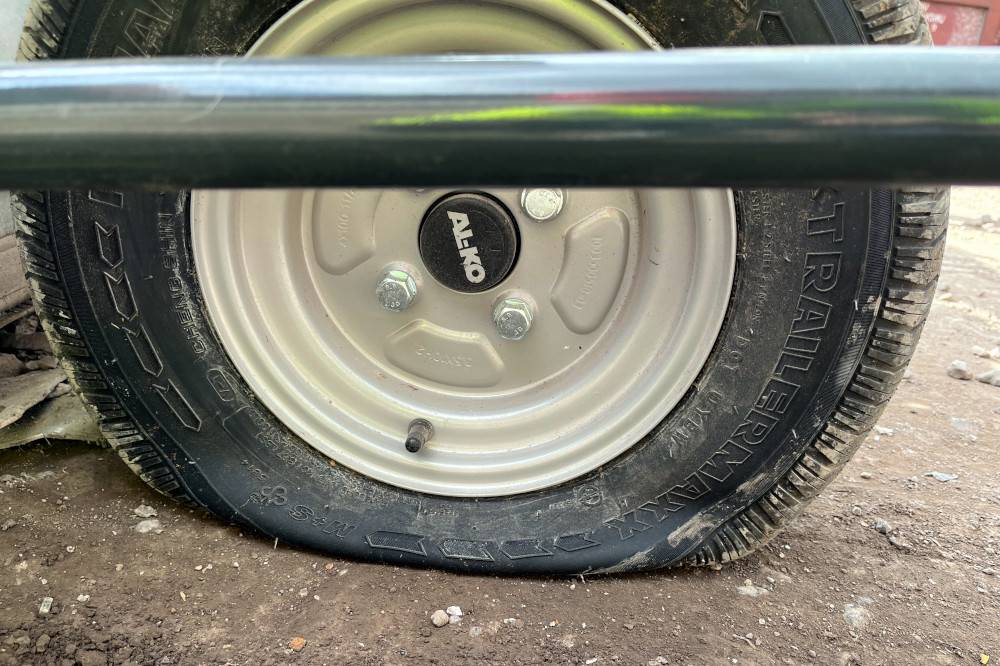
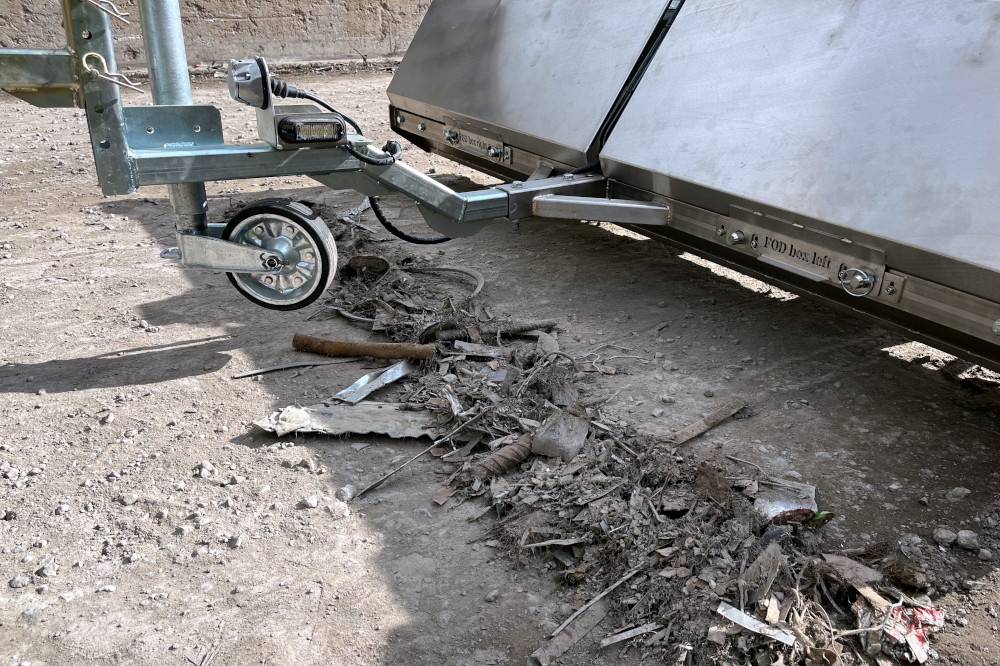
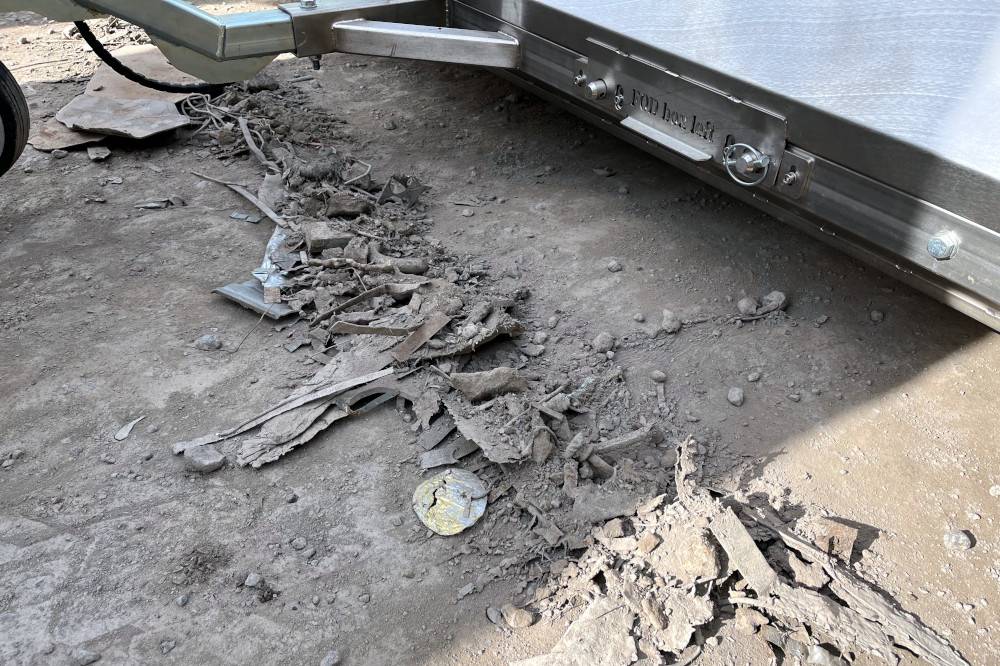
The scrap electromagnet speeds up loading and unloading, while magnetic sweepers clear nails and wires from the ground that puncture the tyres of handling equipment. Fewer defects and faster handling = smooth operation and higher profit!
Introducing multi-stage magnetic separation into metal recycling increases both the yield and the purity of ferrous and non-ferrous fractions and protects shredders and ECS separators. This has a direct impact on purchase prices, profitability and operational efficiency.
SOLLAU Manufacturer of magnetic separators for metal recycling
We are the manufacturer of these separators. We produce them at our plant in the Czech Republic, which allows us to guarantee the highest quality and to adapt them to your requirements.
WHERE IN METAL RECYCLING WILL YOU FIND OUR MAGNETIC SEPARATORS?
Handling and loading of scrap in the scrapyard
In scrapyards, scrap-metal facilities and smelters, tonnes of ferrous scrap, chips and charge material are moved every day. Manual handling is slow and risky, and the grab loses fine material.
The following equipment is most often used for handling scrap:
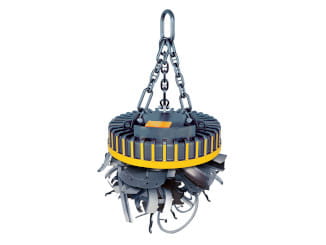
The scrap electromagnet EMG-SM is suspended from a crane, excavator or material handler and manages the loading of scrap, chips and ingots. Its solid cast-iron body with cooling fins allows a 75 % duty cycle for continuous operation and handling of material at temperatures up to 650 °C. The product range covers diameters from 850 to 2000 mm.
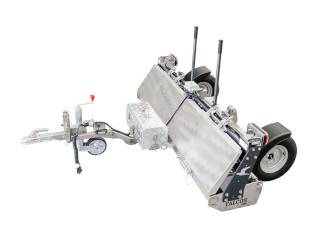
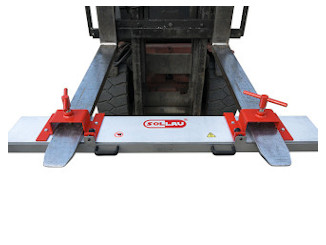
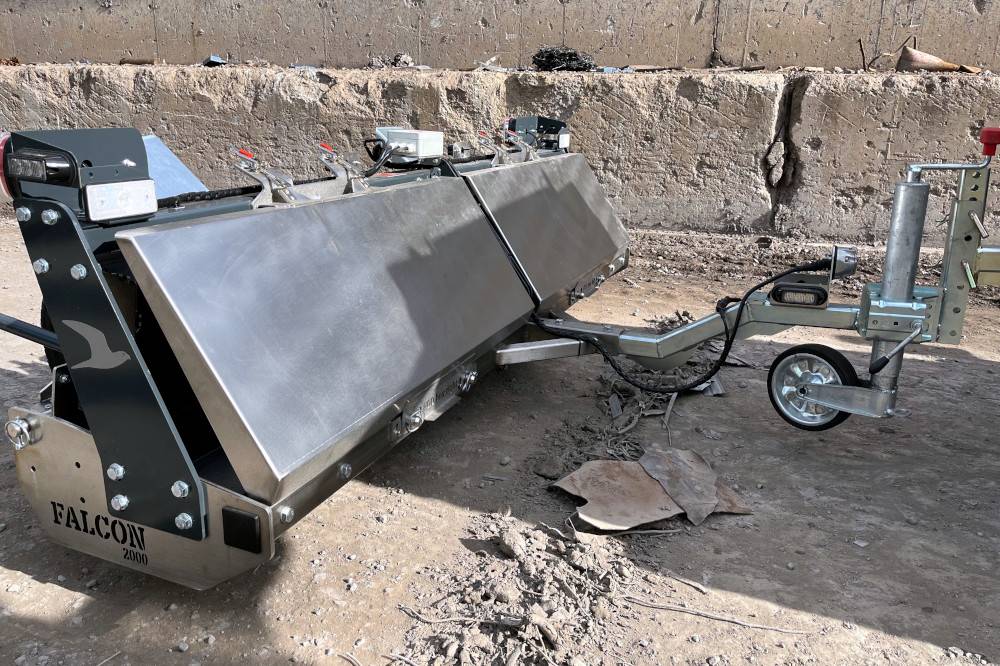
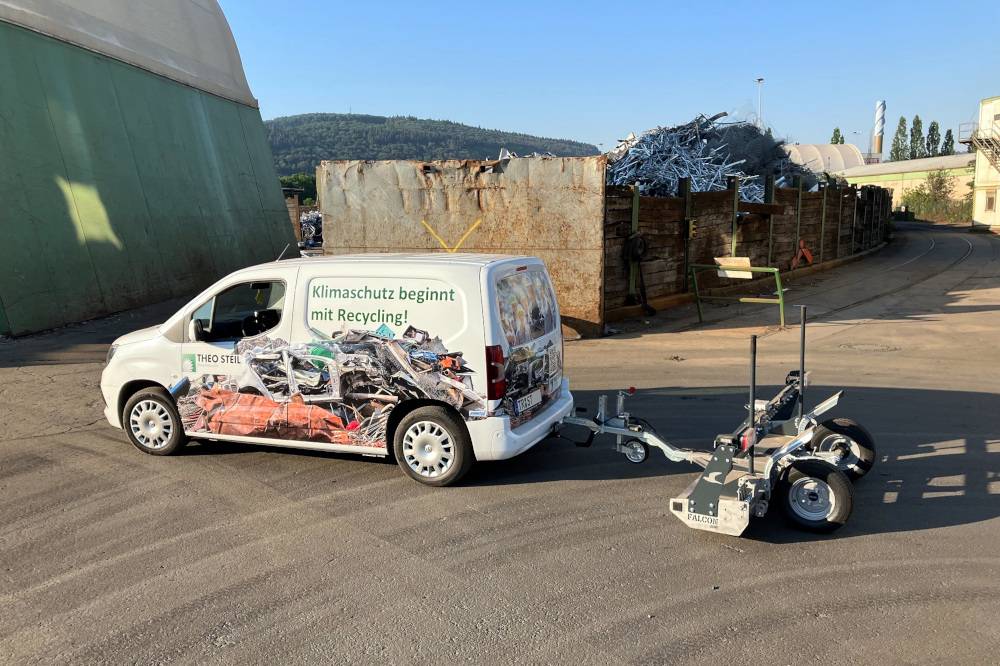
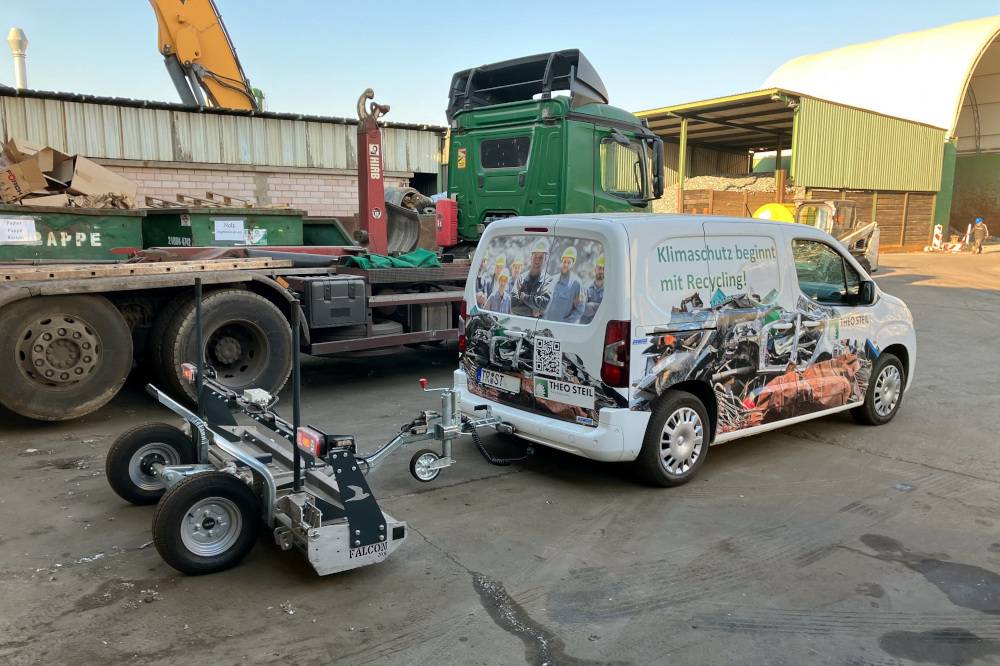
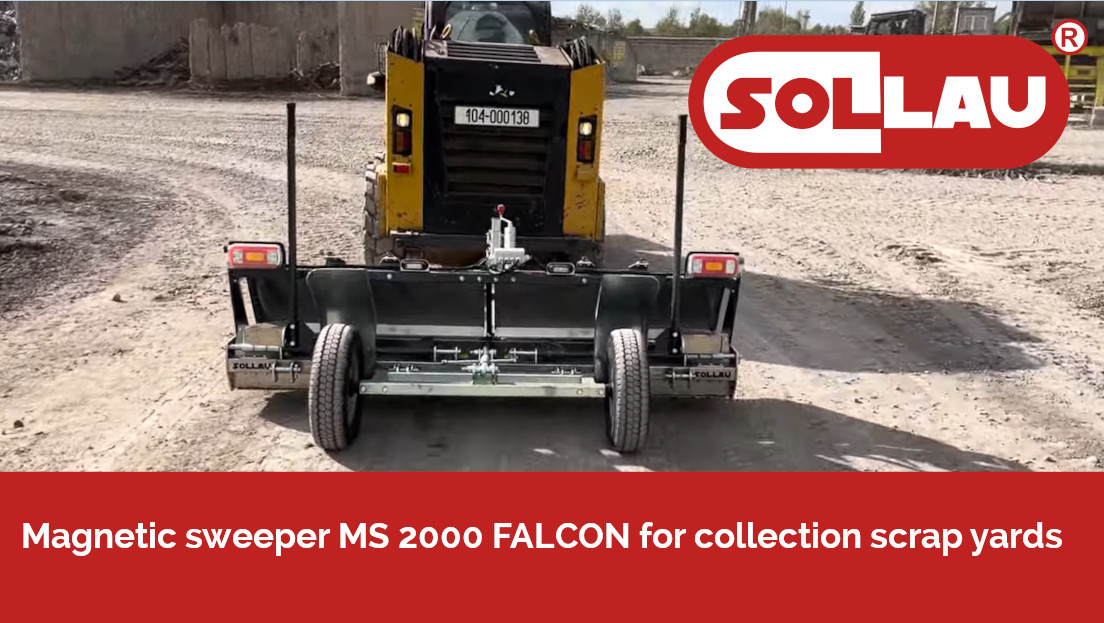
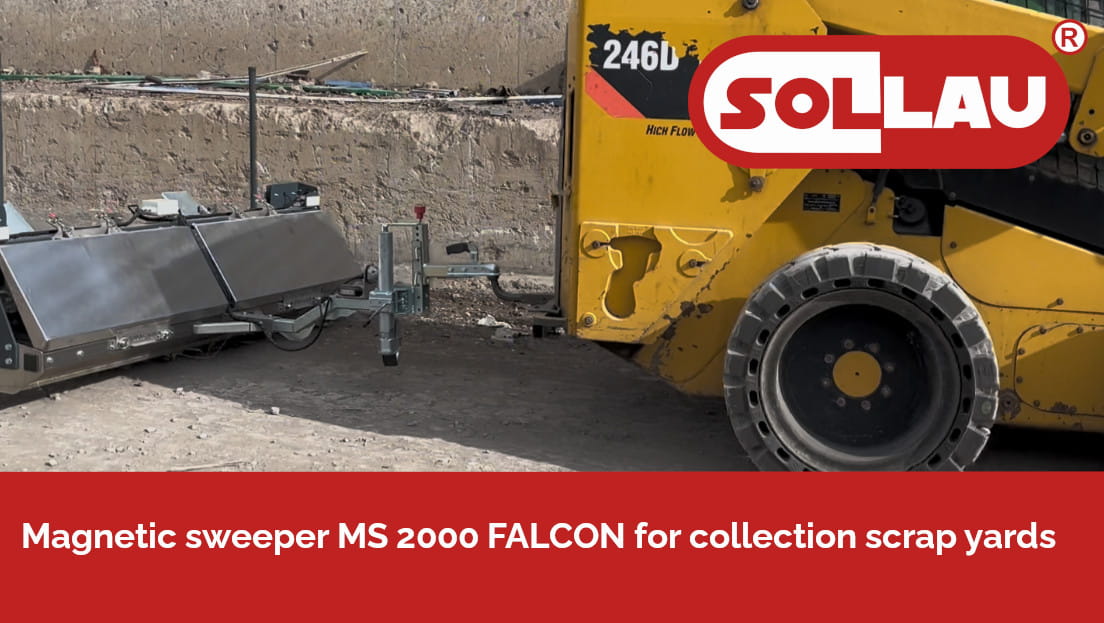
Magnetic sweepers continuously collect nails, wires and other sharp metal objects from the yard surface that can cause a tyre puncture.
What problems it solves: slow manual handling = a bottleneck for the whole operation; loose metal = punctured loader tyres.
Customer benefit: faster loading of wagons and containers, greater safety and a clean surface free of tyre defects.
PHOTOS FROM PRACTICE
VIDEO FROM PRACTICE
Primary iron separation on the belt conveyor
After the crusher or shredder, a mixture of metals and non-metals travels along the belt – and the first task is to remove the coarse iron from the flow. This protects all downstream stages and forms the basis of the steel fraction.
The following equipment is most often used for primary iron separation:
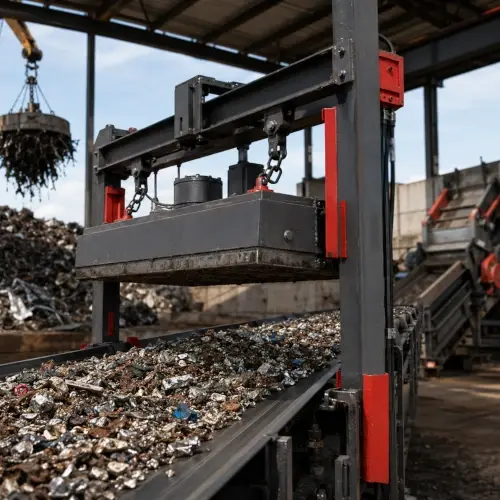
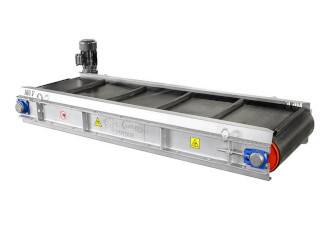
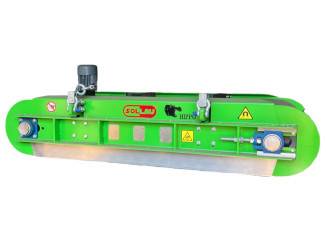
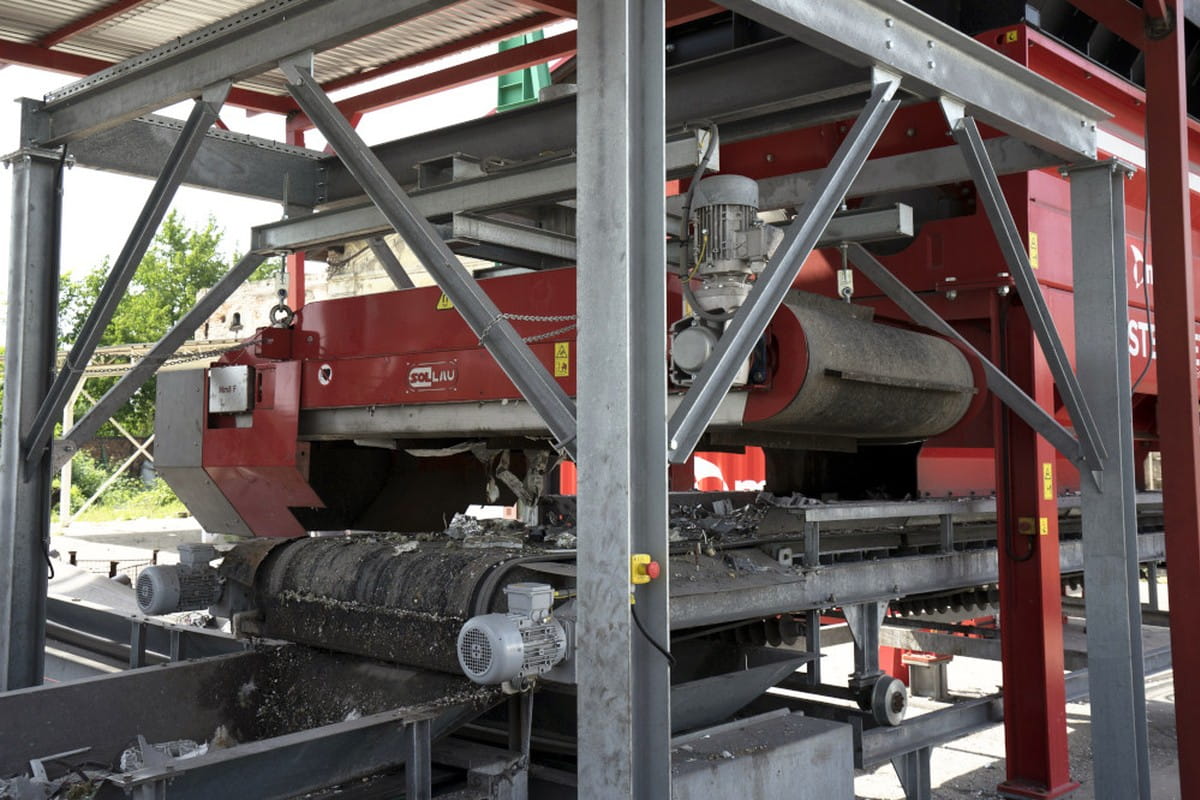
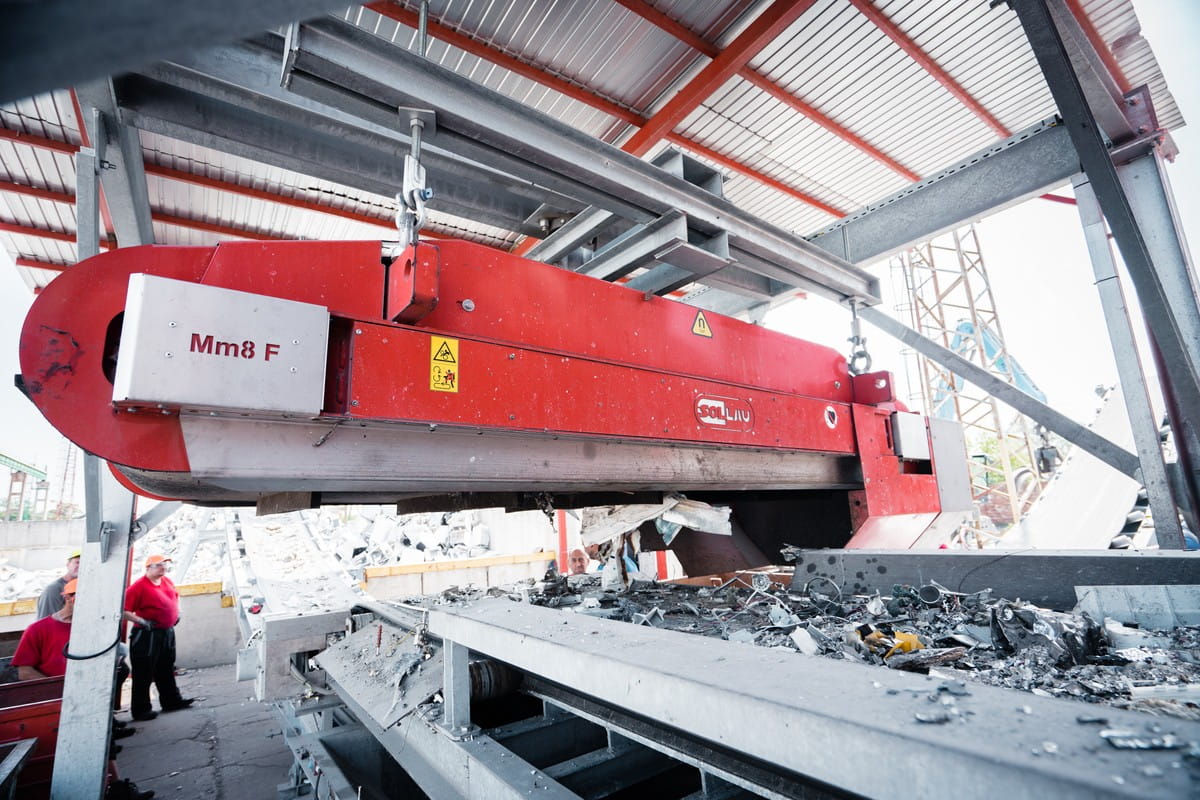
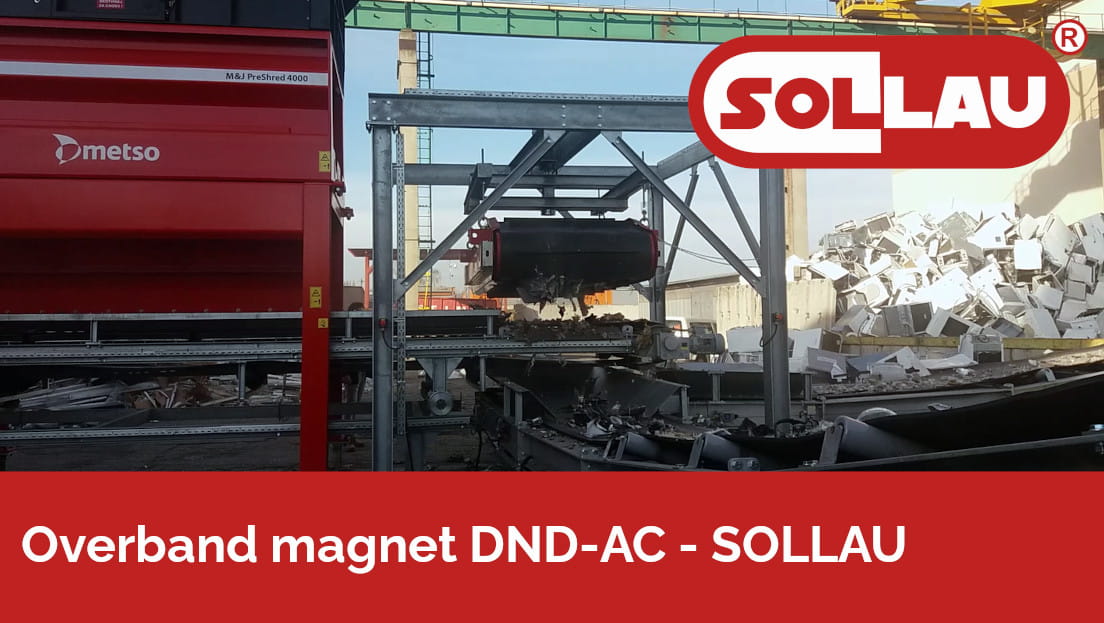
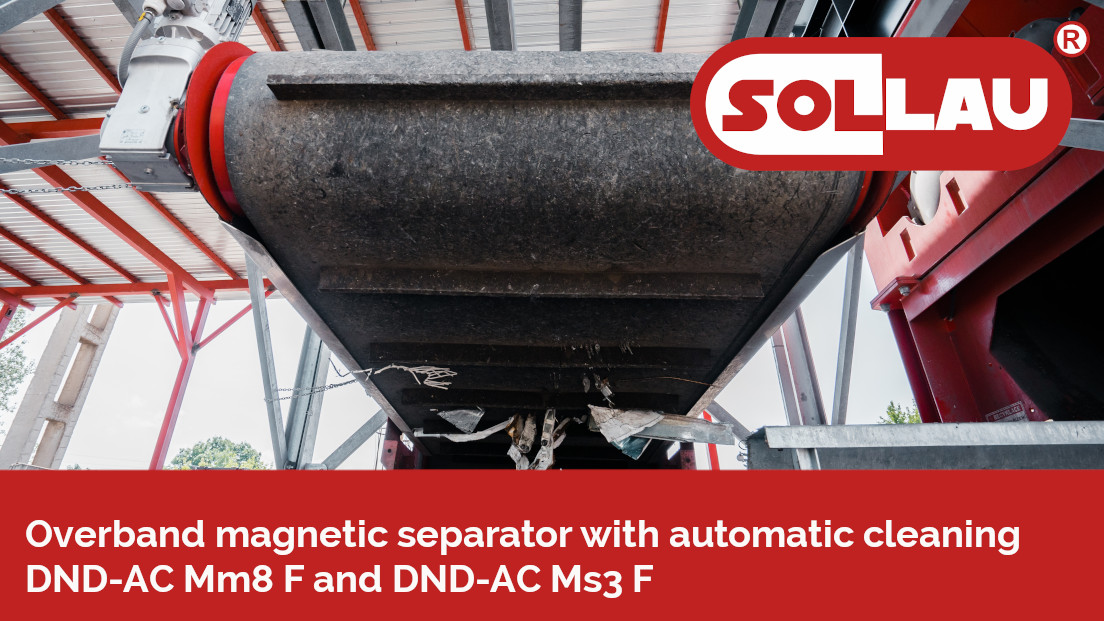
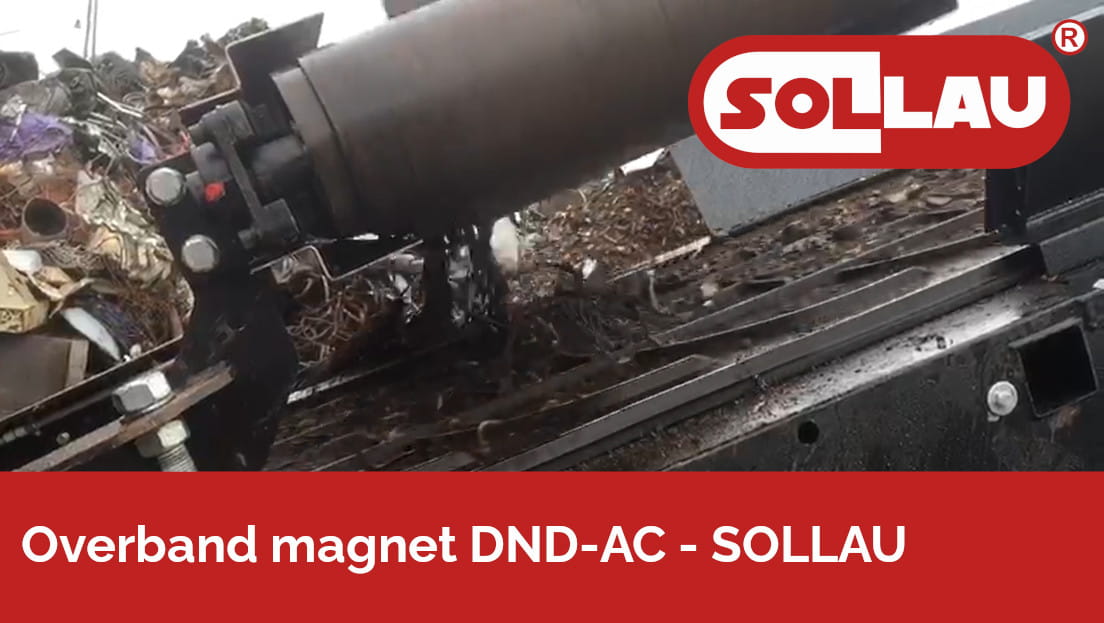
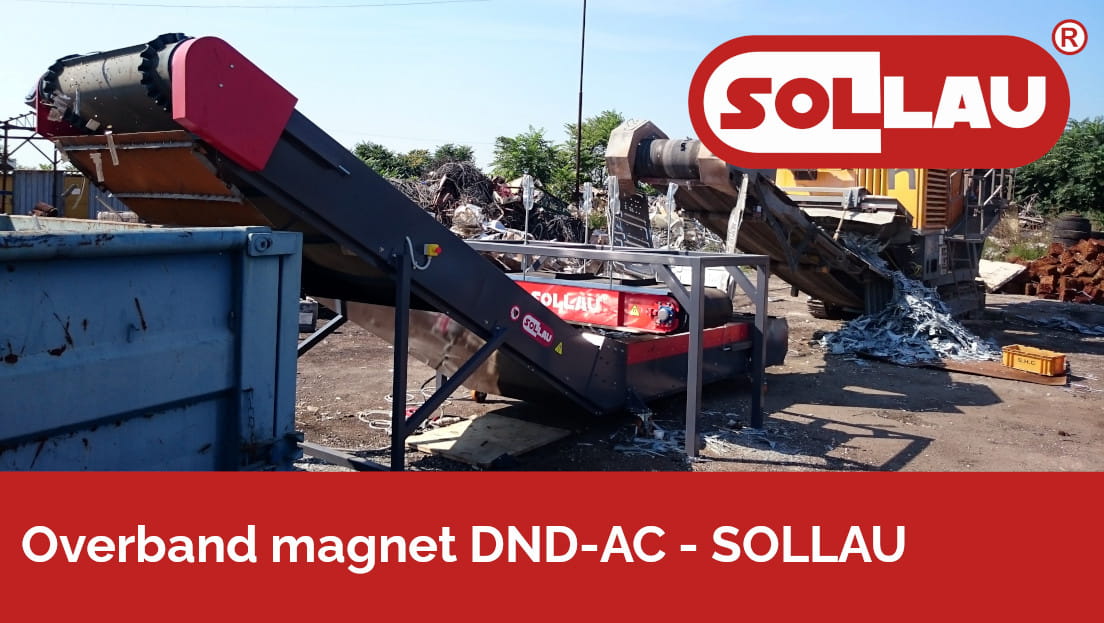
The self-cleaning plate DND-AC is suspended crosswise or lengthwise above the belt and continuously carries the captured iron off the conveyor – the ferrite version works with an installation height of up to 500 mm. For a high material layer and heavy pieces of iron, the suspended electromagnet DND-AC-E with a deeper and stronger field is more suitable. Where metal appears only occasionally, the manually cleaned DND-MC version is sufficient.
What problems it solves: coarse iron in the flow = a destroyed ECS rotor and damaged downstream machines; low purity of the steel fraction = penalties at the steelworks.
Customer benefit: a cleaner non-magnetic fraction for further separation and fewer unplanned shutdowns.
PHOTOS FROM PRACTICE
VIDEO FROM PRACTICE
Cleaning up the iron fraction – magnetic drums and rollers
After the first stage, finer iron particles that escaped the suspended plate remain in the material. They are cleaned up in free fall at the conveyor discharge or directly in the conveyor.
The following equipment is most often used for cleaning up the iron fraction:
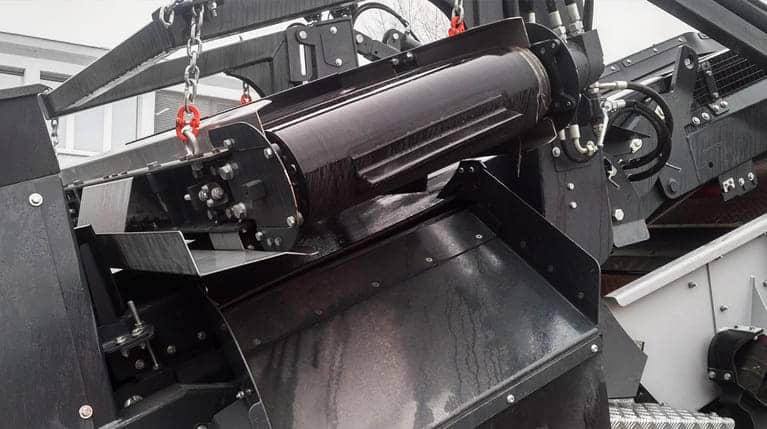
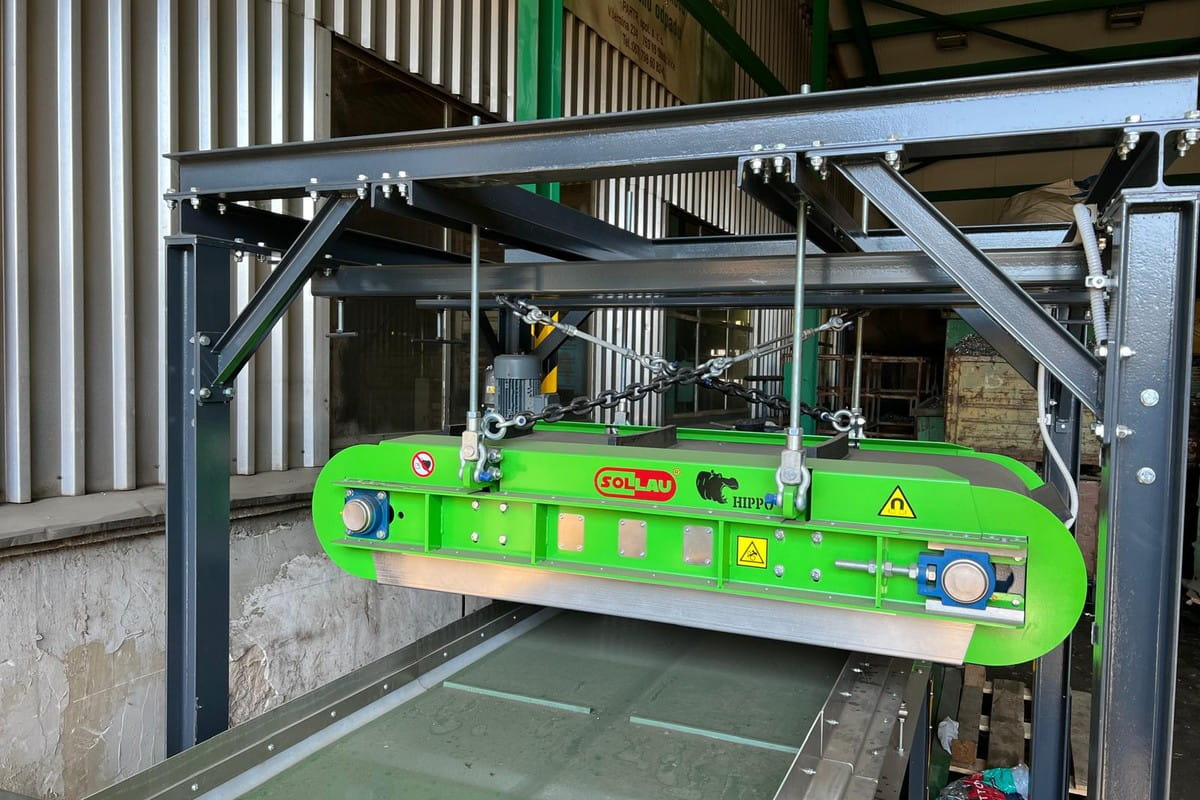
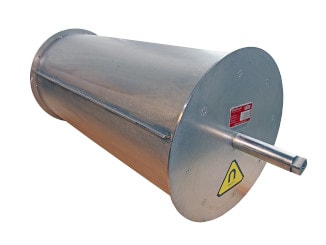
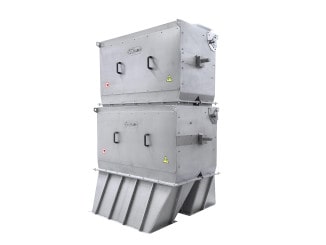
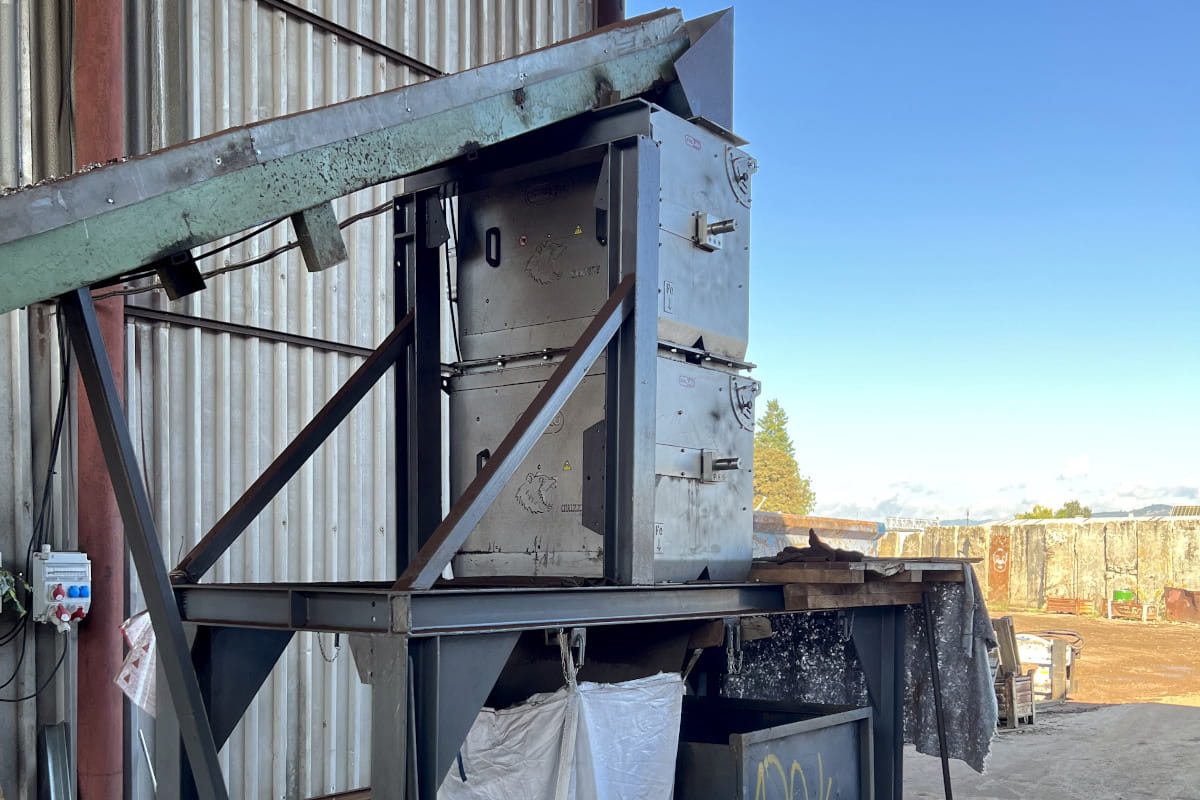
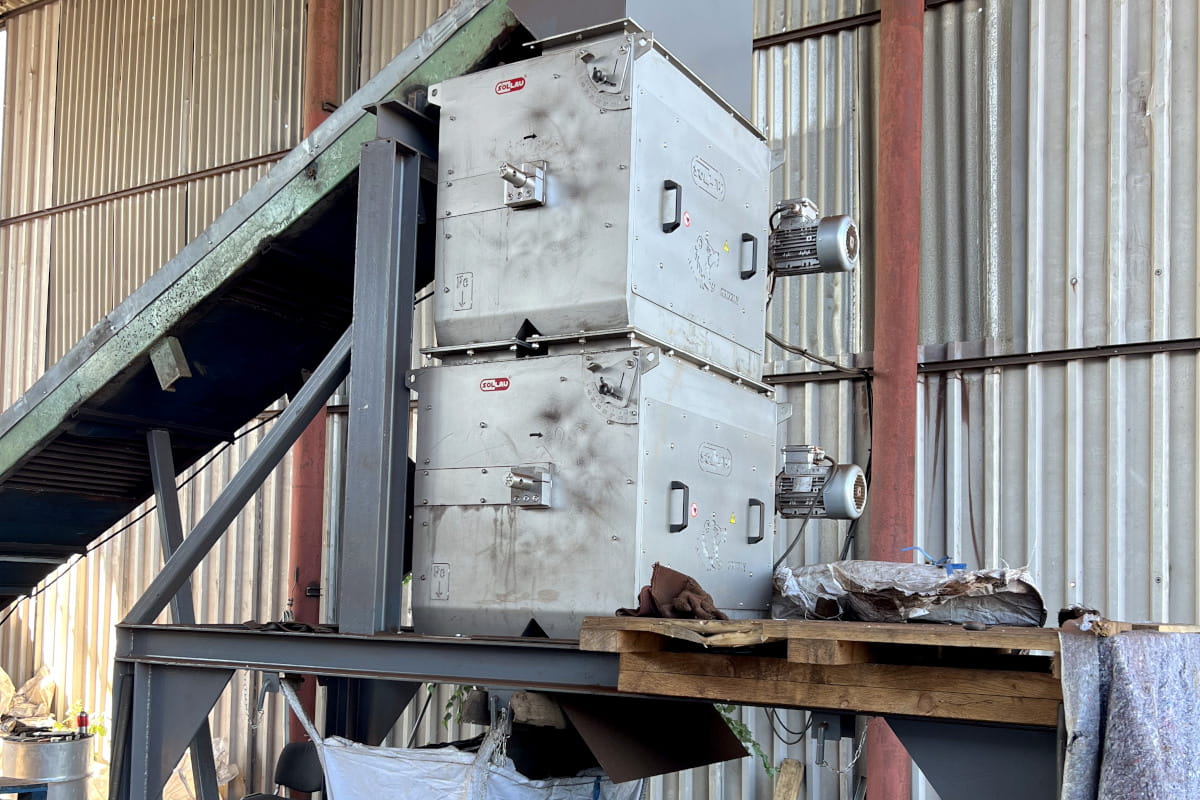
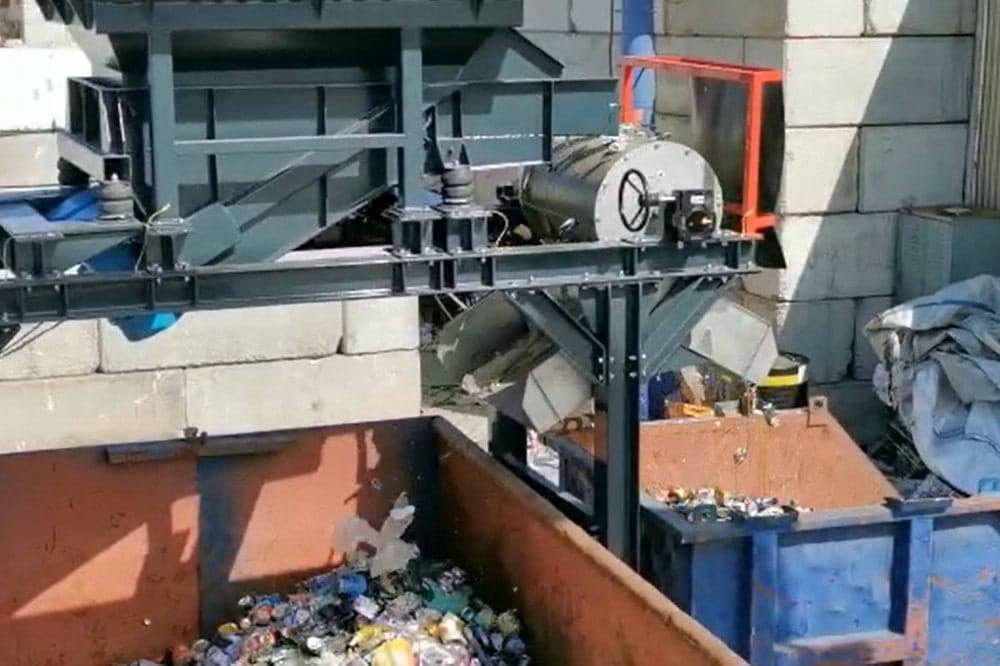
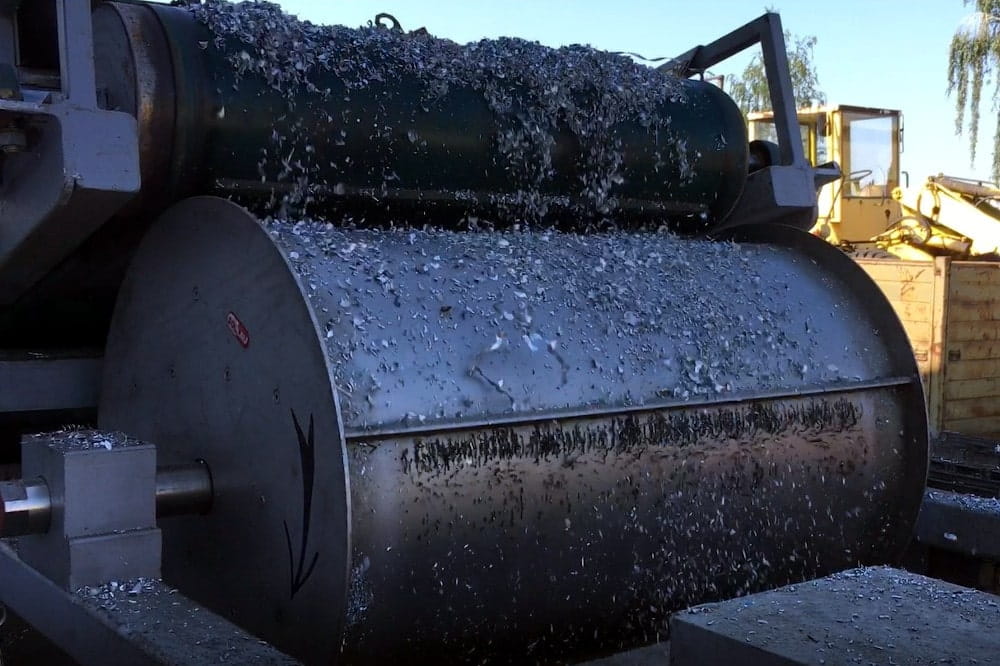
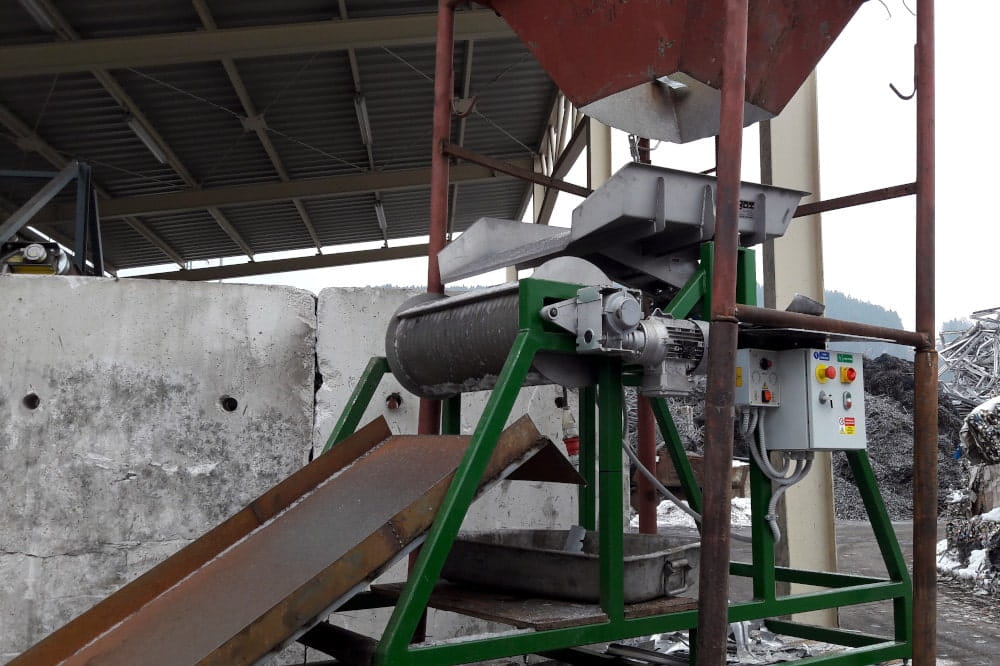
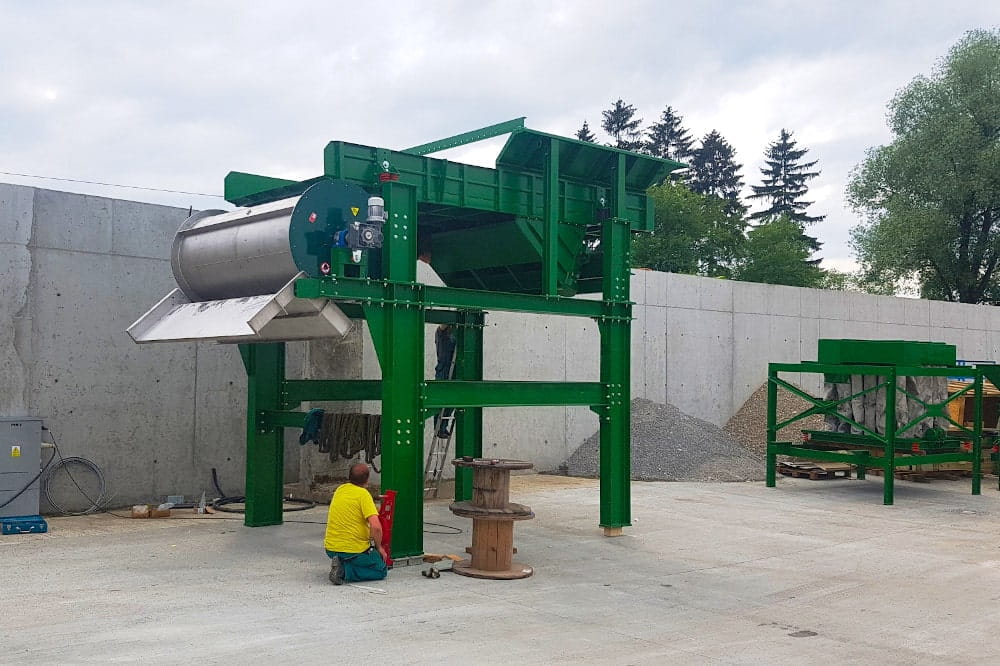
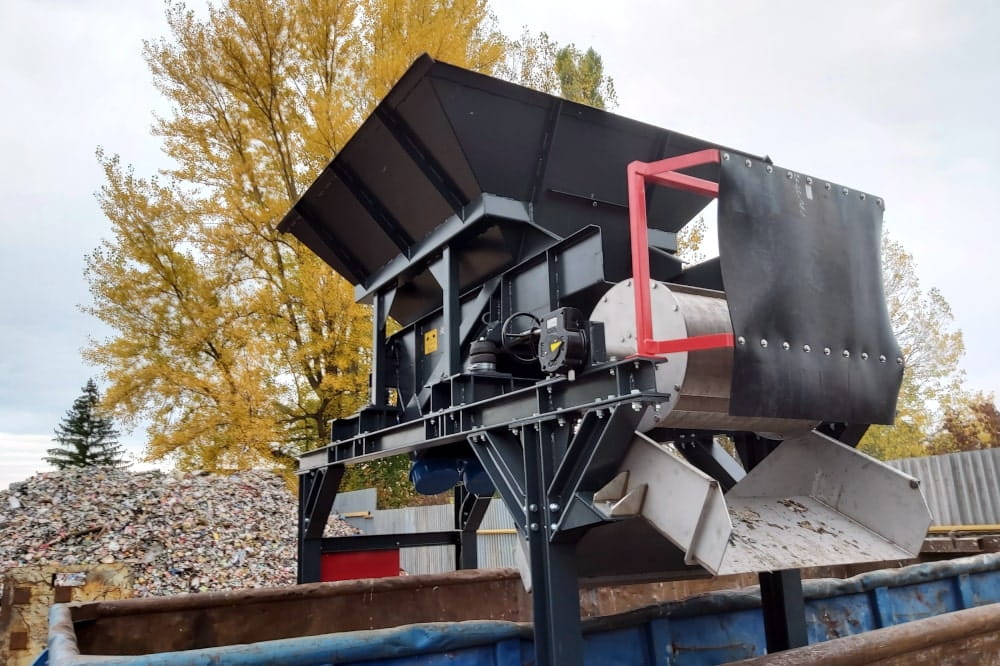
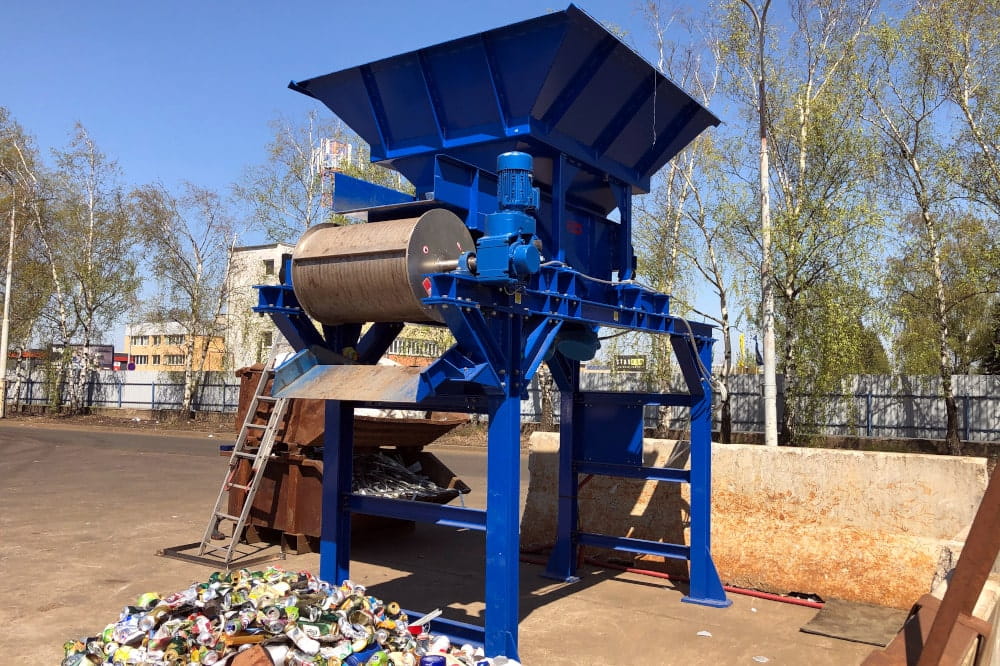
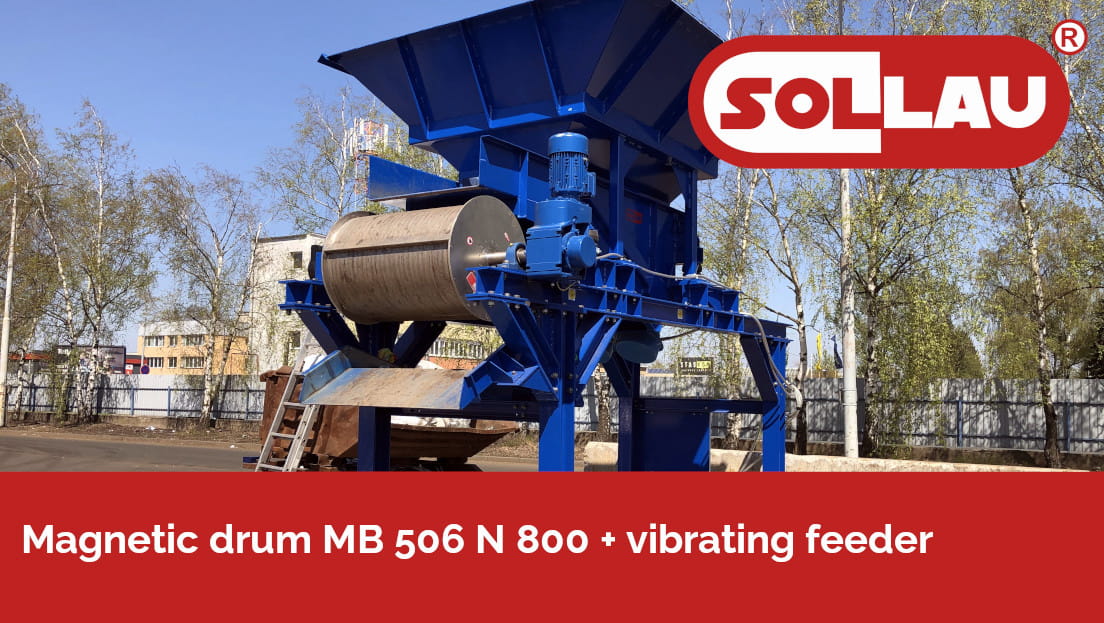
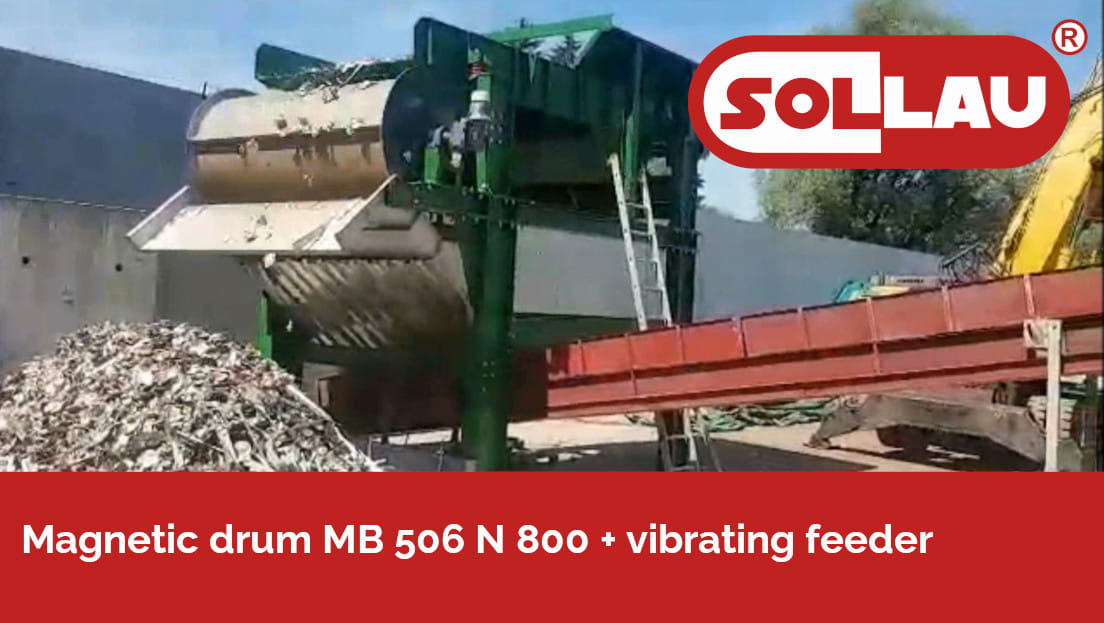
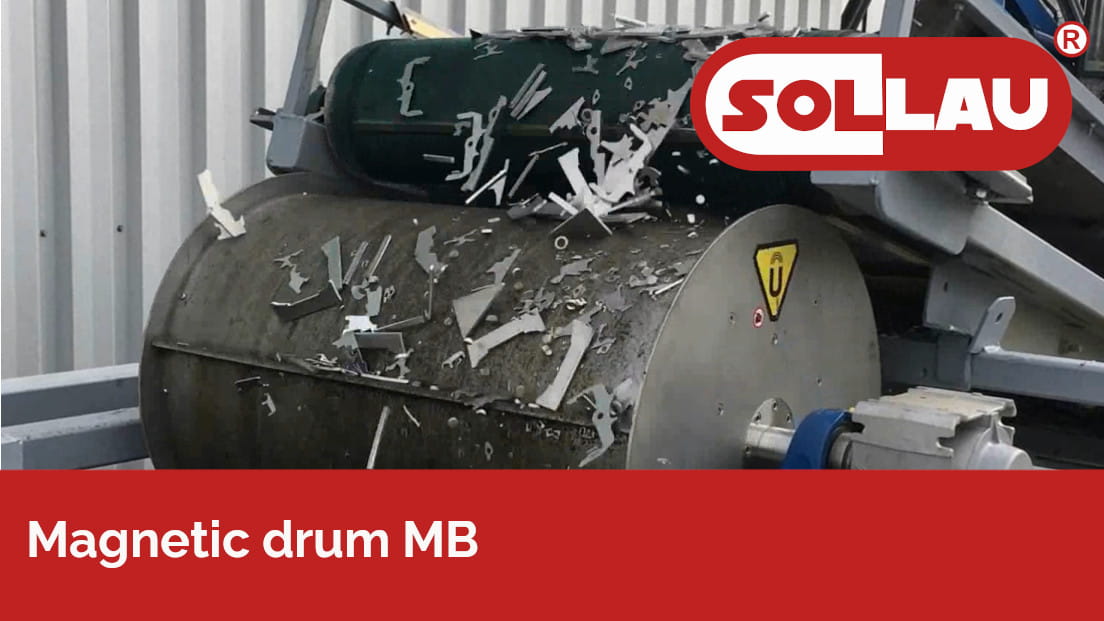
A magnetic drum is placed in the discharge behind the crusher or the vibrating feeder – the neodymium version captures iron from 0.5 mm. For abrasive and sharp material we supply drums with a replaceable manganese-steel shell. Where a single pass is not enough, a two-storey multi-drum separator VMBZ works – the second drum gives the fraction from the first a final clean-up. The complete solution is shown by our sorting line for the separation of magnetic cans.
What problems it solves: residual iron in the non-magnetic fraction = a damaged ECS rotor and a lower purchase price for non-ferrous metals.
Customer benefit: higher iron yield, a stable downstream process and less load on the ECS separator.
PHOTOS FROM PRACTICE
VIDEO FROM PRACTICE
Separation of non-ferrous metals – eddy current separators ECS
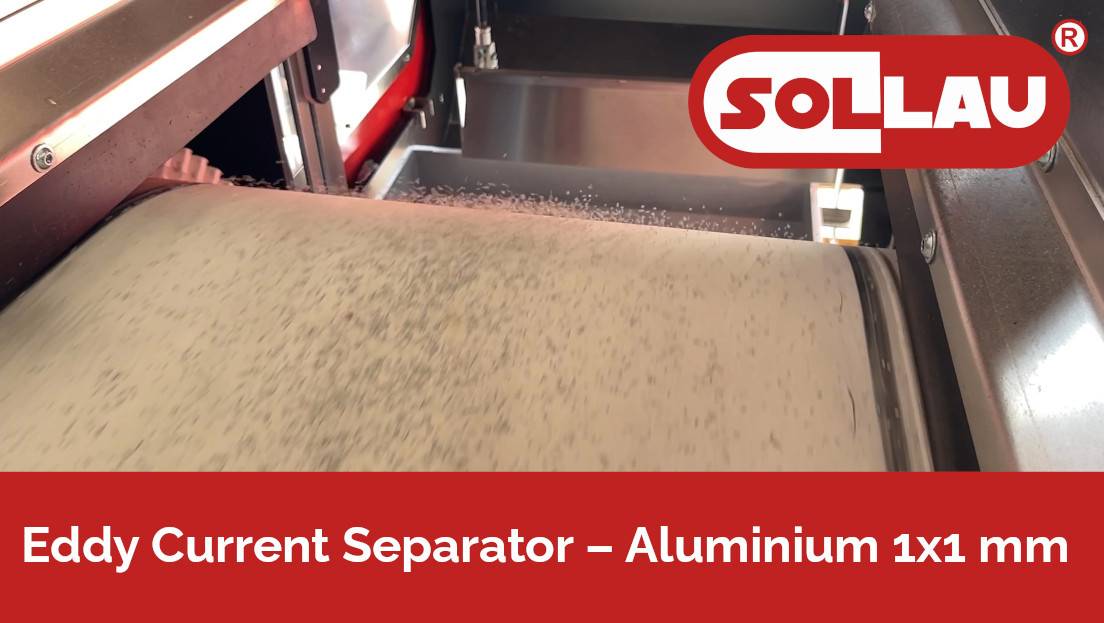
Aluminium, copper and brass are recovered from the non-magnetic fraction – the economic heart of the whole recycling process. The eddy current separator ejects conductive non-ferrous metals out of the material flow by means of eddy currents.
The following equipment is most often used for the separation of non-ferrous metals:
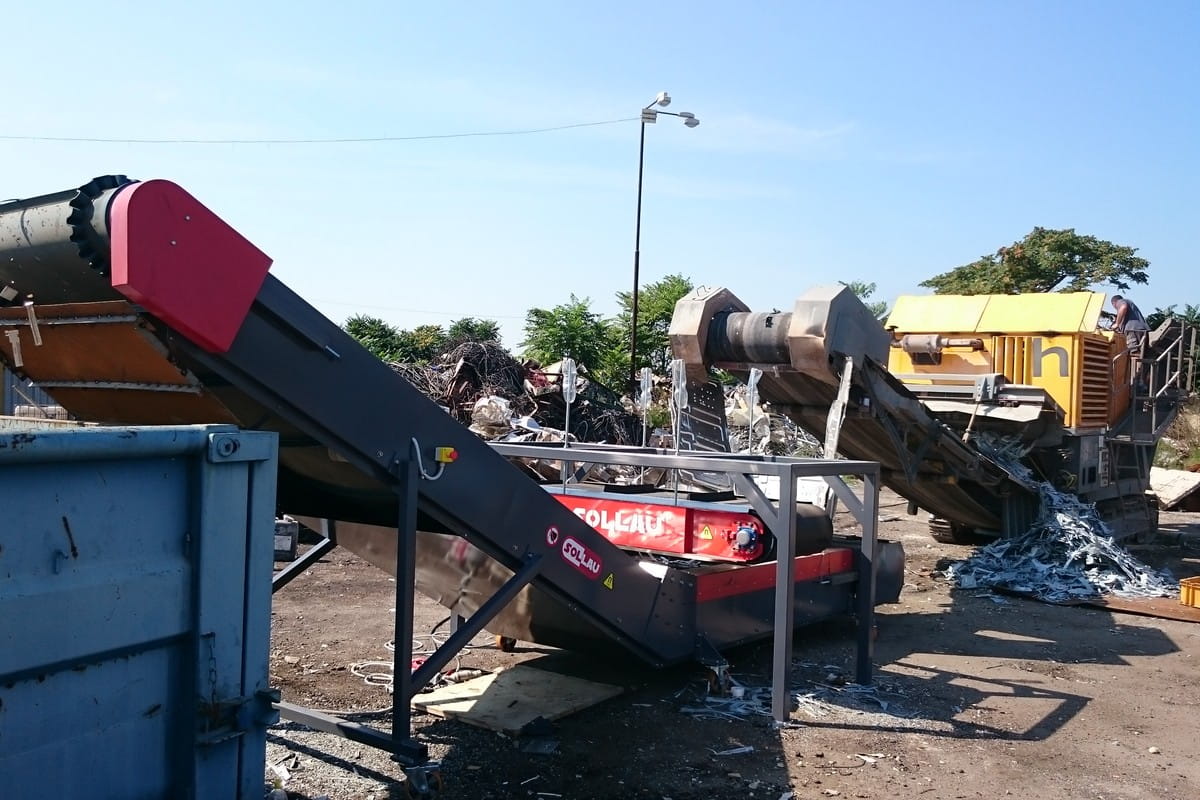
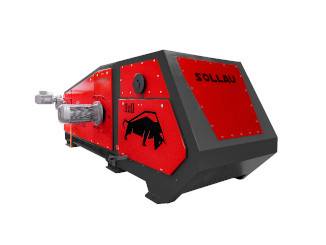
The ECS is placed at the end of the line after iron has been perfectly removed. The product ranges cover all applications: ECS-C RAM with a concentric rotor for coarse fractions from 50 mm at an attractive price, the eccentric ECS-E ZEBU and ECS-E BULL for fractions from as little as 1 mm (BULL, according to SOLLAU tests, with over 99 % efficiency and belt replacement within 6 minutes), and the 40-pole ECS-E BUFFALO for the finest fractions from 0.5 mm. The essential condition for efficiency is a uniform thin layer of material – ensured by an upstream vibrating spreading feeder.
What problems it solves: aluminium and copper in the residual fraction = a direct loss of the most valuable material; iron in the flow = rotor damage.
Customer benefit: a separate tradeable non-ferrous fraction – with a higher aluminium share the investment pays back within months.
PHOTOS FROM PRACTICE
Capturing stainless steel and weakly magnetic particles
Through crushing, pressing and heat, stainless steel becomes weakly magnetic – an ordinary magnet does not capture it, and in the copper or aluminium fraction it significantly lowers the purchase price.
The following equipment is most often used for capturing stainless steel:
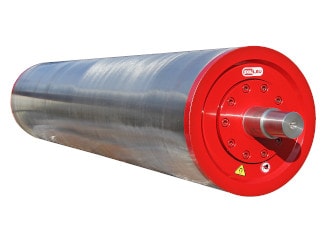
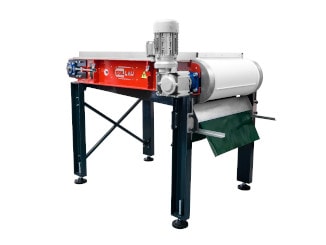
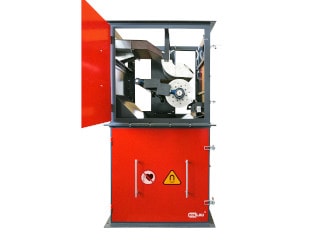
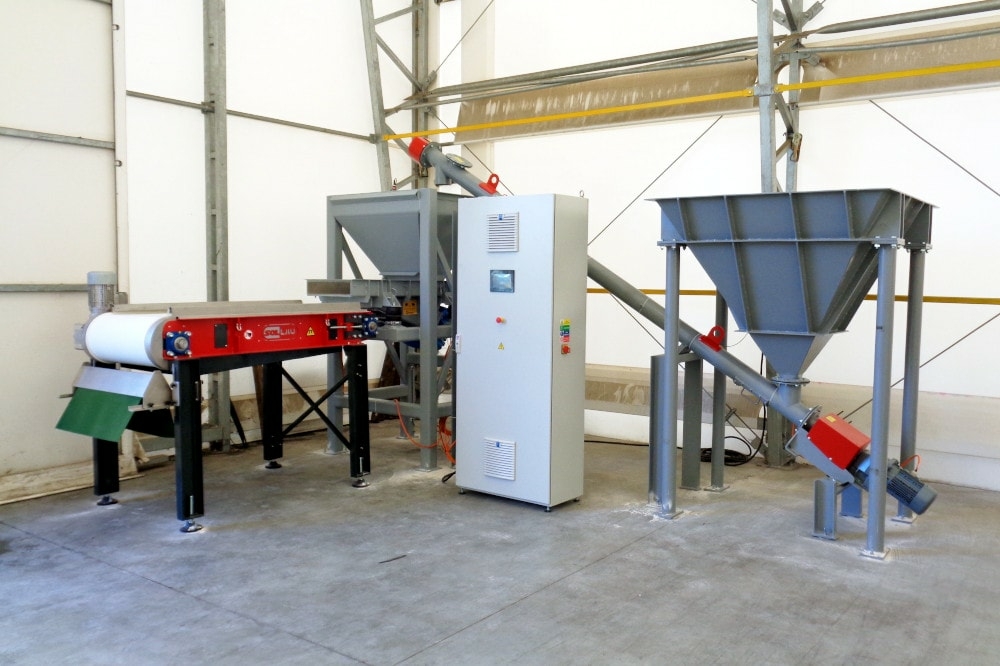
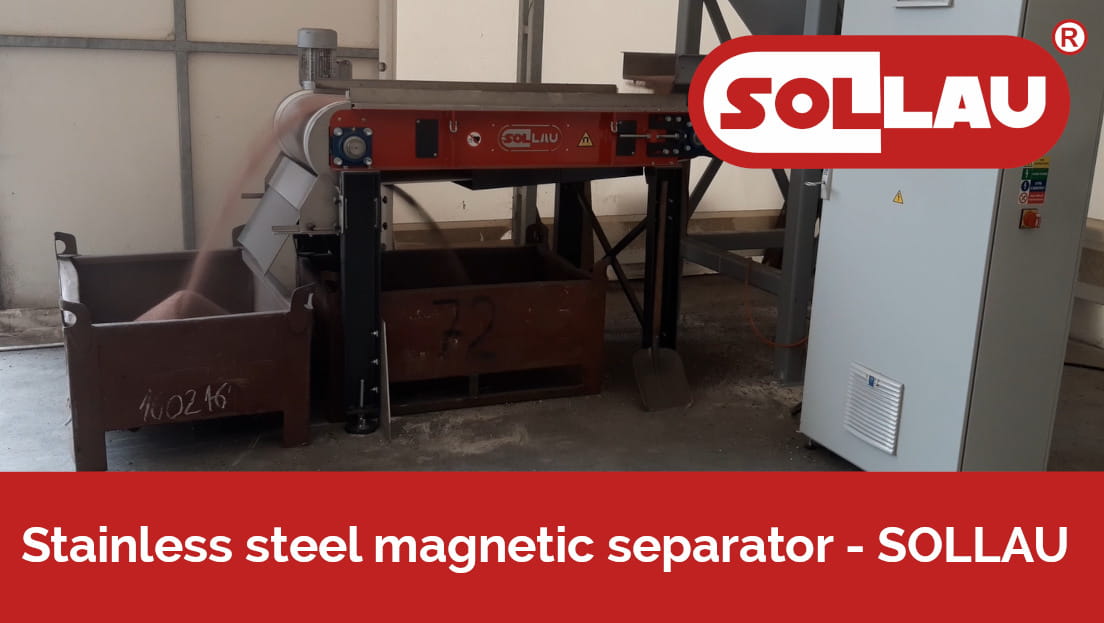
The radially polarised roller MV-R with an extremely strong field reliably captures weakly magnetic particles from 0.1 mm. Its field, however, reaches only about 10 mm above the surface – the material must therefore arrive in a thin, uniform layer via a vibrating feeder, ideally combined with screw dosing for fine fractions. Multi roll separators VMSV are used for repeated clean-up. The complete setup is shown by our sorting line for the separation of slightly magnetic stainless steel from non-ferrous metals.
What problems it solves: stainless steel in copper or aluminium = lower purity and purchase value of the non-ferrous fraction.
Customer benefit: capturing valuable corrosion-resistant steel as a separate fraction and a cleaner copper or aluminium output.
PHOTOS FROM PRACTICE
VIDEO FROM PRACTICE
Recycling of aluminium, cables, e-waste and metal chips
Specialised streams have their own requirements: aluminium must be freed of iron before melting (iron increases burn-off and contaminates the melt), copper is recovered from chopped cables, a mix of valuable metals from e-waste, and machining chips must be sorted by type of metal.
The following equipment is most often used for these applications:
Aluminium scrap (cans, profiles, chips) is cleaned by two-stage magnetic separation before charging into the furnace – an example of a complete solution is shown by our automated sorting line for aluminium wheel discs. With metal chips, a magnetic drum separates the ferrous chips from the aluminium or bronze ones – and two saleable fractions are created from what used to be mixed waste. A conveyor metal detector protects cable granulators and e-waste shredders from hard metal pieces.
What problems it solves: iron in the aluminium charge = higher burn-off and a contaminated melt; mixed chips = waste instead of saleable material.
Customer benefit: higher purchase value of clean fractions and protection of furnaces, presses and granulators.
VIDEO FROM PRACTICE
Sorting fine fractions and material preparation
The efficiency of magnets and ECS separators stands or falls with material preparation: even dosing, spreading into a thin layer and sorting by fraction size. Vibrating technology is therefore not an add-on but a condition for maximum separation efficiency.
The following equipment is most often used for material preparation and sorting:
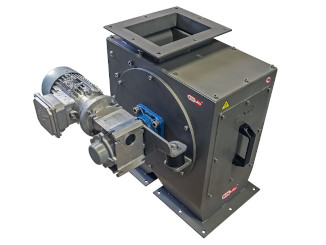
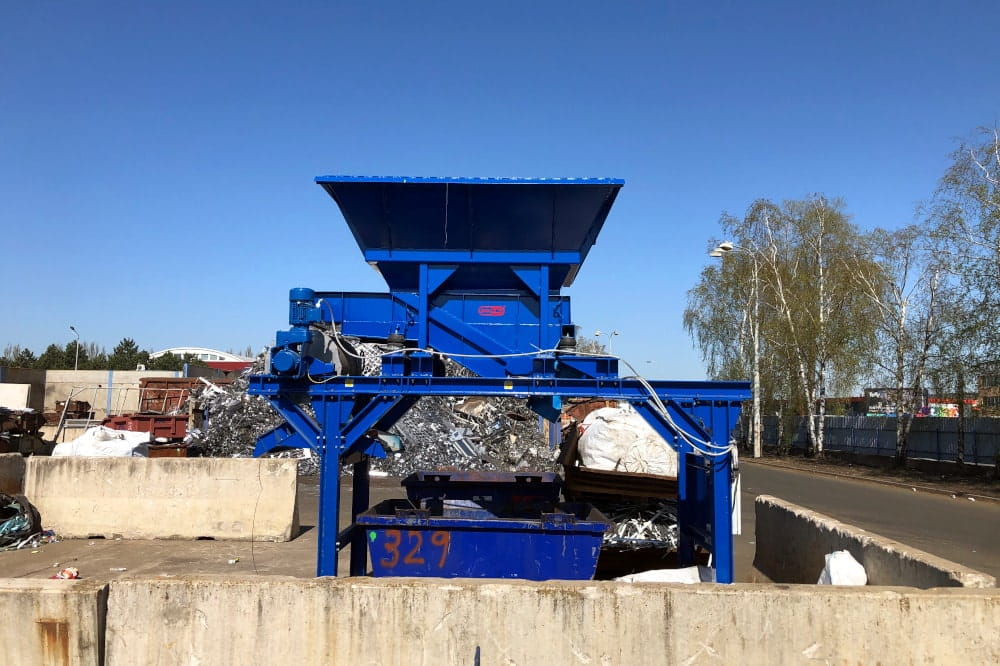
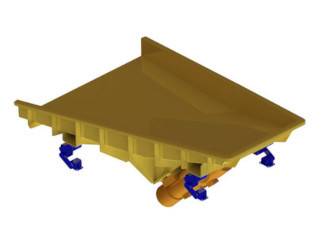
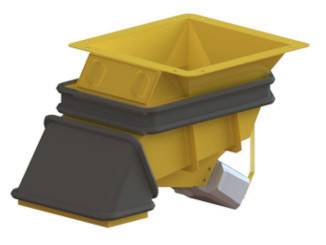
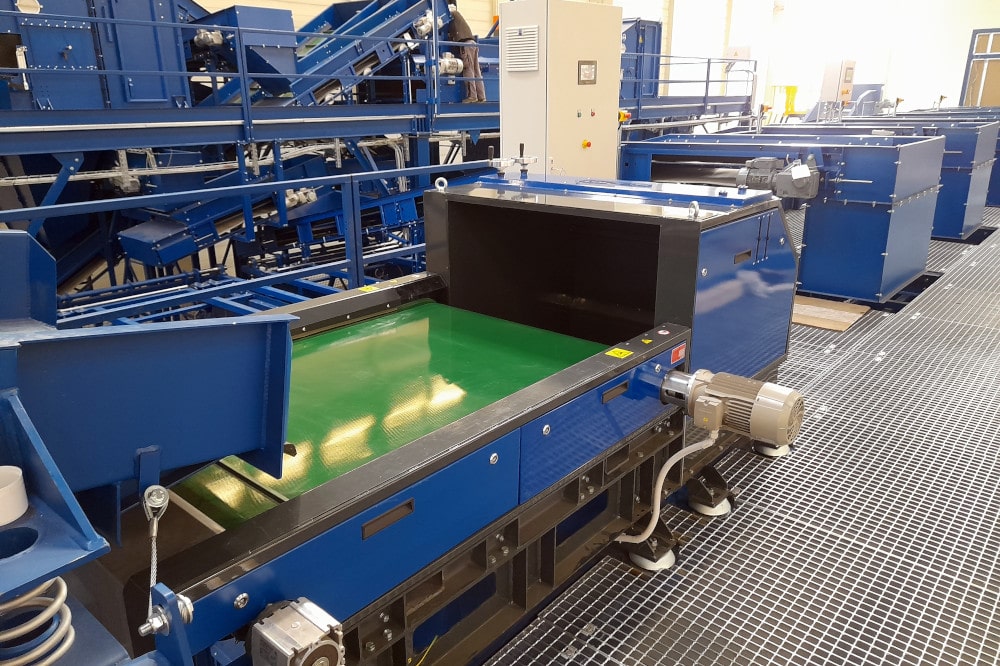
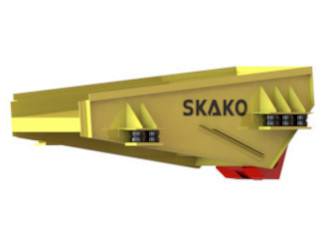
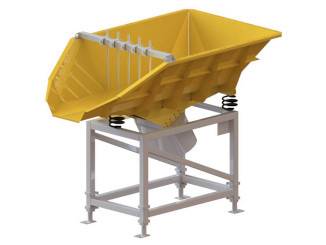
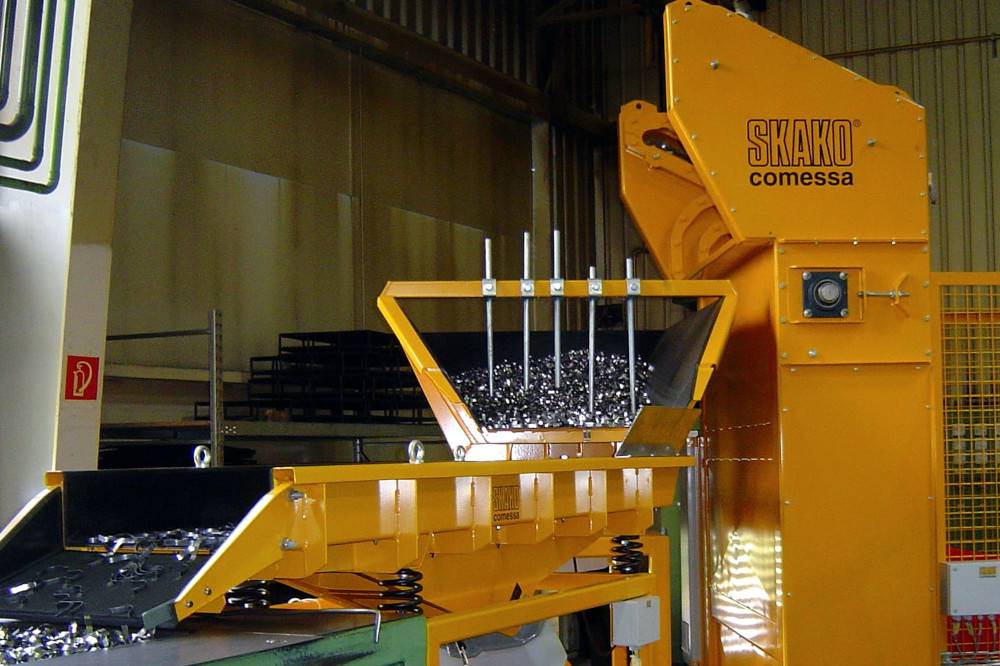
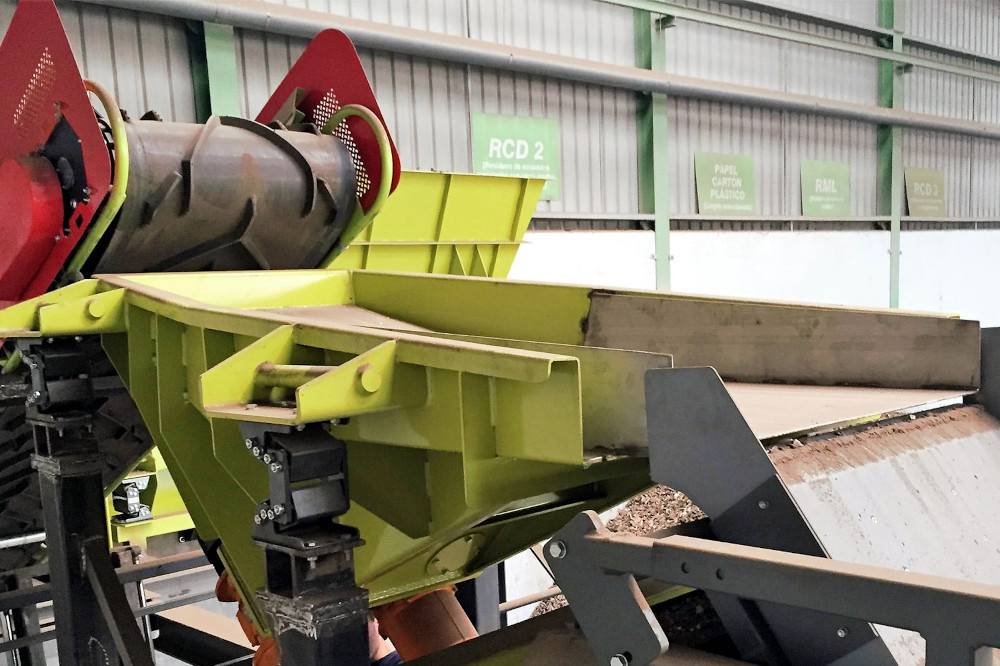
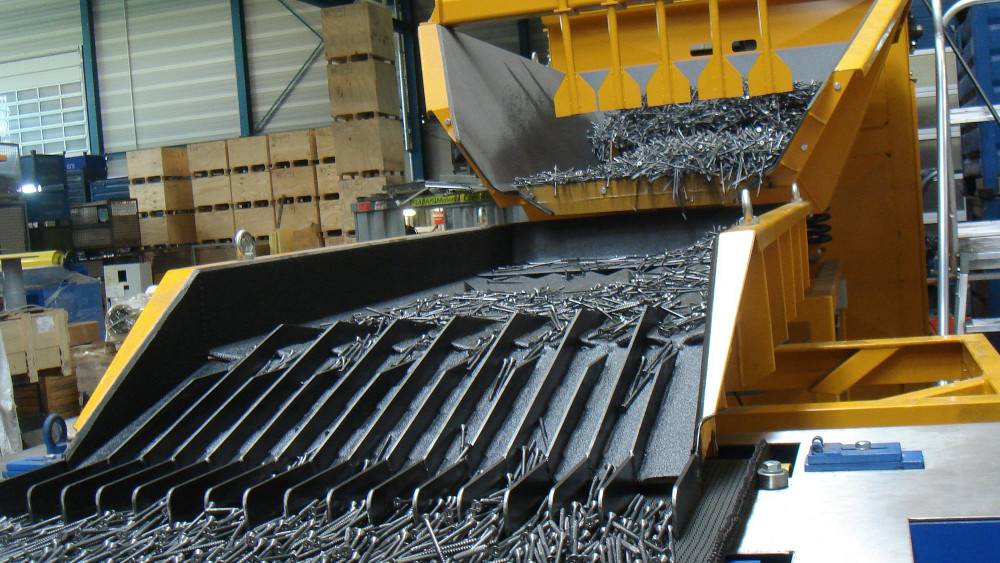
A spreading feeder with a capacity of up to 400 m³/h creates a uniform monolayer ahead of the ECS or MV-R, the heavy-duty feeder handles sharp and heavy scrap, and the hopper feeder doses smoothly from the hopper.
What problems it solves: a high or uneven layer = a drop in ECS and MV-R efficiency; an unsorted mix of fractions = losses of fine metals.
Customer benefit: maximum efficiency of all separation stages and stable line operation.
PHOTOS FROM PRACTICE
FREQUENTLY ASKED QUESTIONS
In two stages: first a magnetic separator (a DND-AC plate or a magnetic drum) removes the iron, then an eddy current separator ECS ejects the conductive non-ferrous metals from the material flow. Three fractions are created: iron, non-ferrous metals and the rest.
Iron pieces in the fast-rotating field of the ECS damage the protective shell of the rotor – the most expensive part of the separator. That is why a magnetic drum or a suspended plate is placed before every ECS, and for coarse material even two stages of magnetic separation.
Weakly magnetic stainless steel (after crushing and pressing) is captured by the stainless steel separator MV-R with a radially polarised roller – reliably from 0.1 mm. The condition is a thin layer of material on a vibrating feeder, because the roller's field reaches only about 10 mm.
Scrap electromagnet circular EMG-SM – it is manufactured in diameters from 850 to 2000 mm, has a 75 % duty cycle for continuous operation and handles material at temperatures up to 650 °C. The size is chosen according to the load capacity of the machine and the nature of the scrap.
The permanent self-cleaning plate DND-AC is sufficient for standard operations and installation heights up to about 500 mm. The suspended electromagnet DND-AC-E has a stronger and deeper field – it pays off with a high material layer, large working gaps and heavy pieces of iron.
It spreads the material into a uniform thin layer (a monolayer) across the entire width of the separator. Without it, the efficiency of both the ECS and the stainless steel separator MV-R drops significantly – the fine metals stay hidden in the layer and pass into the residue.
By two-stage magnetic separation – for example a suspended plate above the belt and a following magnetic drum (a two-storey VMBZ for demanding applications). Iron in the aluminium charge increases burn-off, contaminates the melt and damages the furnace.
We manufacture each unit to measure according to the conveyor width, line capacity, fraction and nature of the material, so the price varies by configuration. We will test your material FREE OF CHARGE within 3 days and recommend the optimal separation setup.
In a machining facility, mixed swarf was produced during turning parts made of bronze and cast iron. Although it contained valuable bronze, it ended up as ordinary waste –...
Separate the aluminum cans from the iron ones so that the maximum material uniformity (of both materials) is achieved. The aim is to prevent the contamination...
Our customer is a manufacturer of aluminum alloys of the highest quality. The alloys find application mainly in the automotive, engineering, electrotechnical...
Solution provided by SOLLAU s.r.o. company: a compact line consiting of spiral-chute conveyer, vibrating feeder, MVR-R 600 magnetic separator and complete wiring systém have...
REFERENCES SOLLAU is a proud supplier of magnetic separators to the following companies
CONTACTS Do you have questions about our products? Do not hesitate to contact us!
Our team of sales specialists is ready to provide you with full support and help you find the best solution for your needs in the field of magnetic separation. We offer not only standard solutions but also custom-made ones, so you need not worry even about more complex technical challenges. Just contact us and we will be glad to help you.
You can contact us by phone, e-mail or through our web form.
 Metal recycling covers the purchase and processing of ferrous scrap, shredding of end-of-life vehicles and mixed metal waste, separation of non-ferrous metals (aluminium, copper, brass), recycling of cables, e-waste and metal machining chips, as well as processing of slag from incinerators and smelters. It is a field where profit is decided by the purity and yield of the individual metal fractions.














 +420 773 323 773
 petr.zbranek@sollau.cz