We use cookies

We use cookies to analyze traffic, remember preferences and improve the usability of the website. To give your consent, click on the "I Agree" button.

Settings I agree

You can refuse consent at any time.

Skip to content Skip to menu

Our company is a specialist in field of magnetic separation

We develop, produce and apply devices for magnetic separation. Our magnetic separators are designed and manufactured exactly in a made-to-measure way as per your needs.

FIELD OF APPLICATION – PETROCHEMICAL AND GAS INDUSTRY

Petrochemical and gas industry Petrochemistry and the gas industry span everything from the extraction and transit of natural gas through refineries and polymer production to biogas plants. The whole chain shares one silent enemy: black powder – a mixture of iron oxides and sulfides formed by the corrosion of steel pipelines – along with fine metal impurities in media, granulates and lubricants.

This is a pressurized, explosion-prone industry: equipment must withstand pressures in the range of bar to tens of bar, high temperatures and ATEX zones. That is precisely why we manufacture our separators with full pressure certification – welding qualifications per PED 2014/68/EU, EN ISO 3834-2, EN 13480, EN 13445 and EN 1090 – and in explosion-proof and double-jacketed designs.

Did you know…? Up to half of the black powder particles in gas pipelines measure just 3–5 micrometers and a significant portion is even smaller – conventional cartridge and basket filters fail to capture them and quickly clog up. A magnetic separator captures particles as small as 1 µm and operates without any consumable material.

WHY ARE MAGNETIC SEPARATORS AND METAL DETECTORS USED IN PETROCHEMISTRY AND THE GAS INDUSTRY?

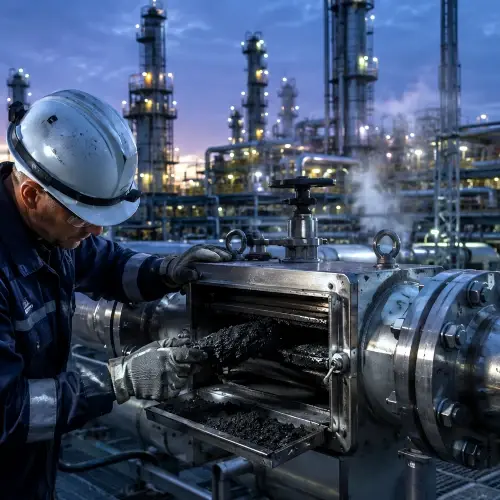
The corrosion of carbon steel reacting with water, H₂S and CO₂ continuously produces ferromagnetic particles that travel through the pipeline along with the medium. Add to this the wear of machinery, fittings and pelletizing heads. Magnetic separation removes these impurities continuously – with no pressure loss and no replacement inserts.

Capture of particles from 1 micron

Protection of machinery

Black powder erodes compressors, pumps, valves and gauges, plates heat exchangers and clogs filters – turbine compressors are sensitive even to particles around 1 µm. Dry iron sulfide is also pyrophoric: opening a fouled filter can cause it to ignite spontaneously. The equation holds: a clogged filter = downtime, a damaged compressor = an operational breakdown.

Product quality and process stability

Iron is a poison to FCC and hydrocracking catalysts – it blocks pores and shortens the service life of charges worth millions. FeS particles stabilize foaming in amine and glycol units, which means off-spec gas and chemical losses. In polymers, metal impurities damage pelletizing heads and lead to complaints from automotive and food-grade customers.

Improved efficiency and lower filtration costs

Single-use cartridges in contaminated streams are replaced as often as every 1–2 weeks – a magnetic separator is simply cleaned and keeps working, with no operating costs and no pressure loss. Capturing the ferromagnetic fraction also dramatically extends the service life of the downstream fine filtration: fewer replacements = less downtime and higher profit!

Introducing magnetic separation into petrochemical and gas operations protects compressors, pumps and catalysts, stabilizes process loops and eliminates the cost of single-use filtration inserts. This has a positive impact on the profitability and efficiency of the operation.

SOLLAU
Manufacturer of magnetic separators for the petrochemical industry

We are the manufacturers of these separators. We produce them at our plant in the Czech Republic, and thanks to this we can guarantee the highest quality and are able to adapt them to your requirements.

Czech product / Made in Czech Republic

WHERE IN PETROCHEMISTRY AND THE GAS INDUSTRY WILL YOU FIND OUR MAGNETIC SEPARATORS?

Black powder separation from oil pipelines, product pipelines and process streams

Black powder – magnetite, hematite and iron sulfides from pipeline corrosion – travels with crude oil, products and gas to terminals, metering stations and refineries. It erodes fittings, distorts flow measurement and degrades the product; fortunately, most of its mass is ferromagnetic.

The following equipment is most often used for black powder separation:

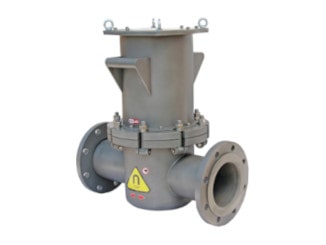
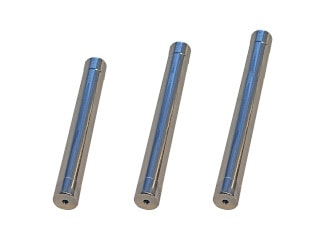
The MSP-BP separator with neodymium cores and an induction of up to 18,700 G is mounted between pipe flanges upstream of pumps, heat exchangers, metering points and loading terminals – it captures particles from 1 µm and, along with them, non-magnetic contaminants (asphaltenes, paraffin) bound to the ferromagnetic fraction. Pressure designs are welded per PED 2014/68/EU and EN 13480/13445.

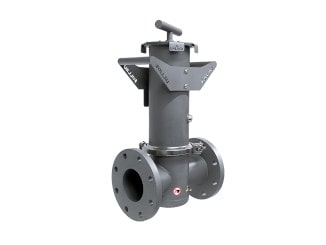
From practice: the magnetic filter MSP-S 150 N with 16,000 G in a DN150 pipeline ended the repeated damage to the pump's mechanical seal caused by particles from cavitation and erosion – zero pressure loss, cleaning during full operation (case study 2 April 2026). For vertical pressure pipelines we supplied the filter MSP-VT 250 N CRAB for DN 250, up to 120 °C and 25 bar (case study 19 February 2025).

Advantages of the MSP-BP black powder separators:

  • Magnetic induction up to 18,700 G, capture of ferromagnetic particles from 1 µm
  • No single-use inserts – zero operating costs, zero pressure loss
  • Pressure design with a full certification package PED / EN 13480 / EN 13445

Catalyst protection in refineries (FCC, hydrocracking, reforming)

Iron from the feed is irreversibly deposited on the surface of catalyst particles – it blocks pores, forms nodules, impairs fluidization and increases coke formation. Premature replacement of the catalyst charge is one of the most expensive items in refinery maintenance.

The following equipment is most often used to protect catalysts:

The separators are installed in the feed upstream of the reactor – the magnetic stage removes the iron oxides and sulfides that the desalter does not capture. The MX-MC matrix separator also polishes out sub-micron and weakly magnetic particles. A poisoned catalyst = lower yield and premature replacement of a charge worth millions – magnetic protection of the feed extends catalyst life and provides flexibility when purchasing heavier feedstocks.

Amine loops, glycol dehydration and process liquids

Iron sulfide is the main solid impurity in amine solutions and TEG glycol – colloidal FeS stabilizes foam, and foaming is one of the most common causes of an amine unit upset: off-spec gas, losses of both amine and glycol, and higher chemical consumption.

The following equipment is most often used in process loops:

Magnetic filters are placed on the rich amine upstream of the regenerator and on the rich glycol – continuous removal of FeS limits foaming and stabilizes unit operation. For hot media we supply double-jacketed designs (verified up to 150 °C) and, for higher contamination, the MSP-AC automatic cleaning without stopping the loop.

From practice: the MSP-S 50 N OCTOPUS filter ensured the purity of liquid ammonia in chemical production – microparticles from the wear of pipes and fittings caused deposits and complaints; after installation the problem disappeared with no reduction in flow and no pressure loss (case study 31 October 2025). Foaming amine = off-spec gas and an idle unit!

Polymer production – granulate and powder in pneumatic conveying

Petrochemical production of PE, PP, PVC or PET ends with pelletizing and pneumatic conveying to silos and dispatch. Wear of pelletizing-head knives, screws and machine fragments mean contaminated granulate – and a complaint from an automotive or food-grade customer.

The following equipment is most often used in polymer production:

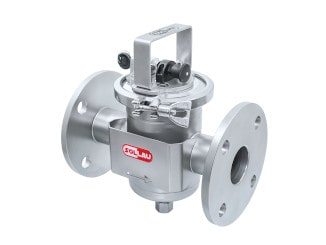
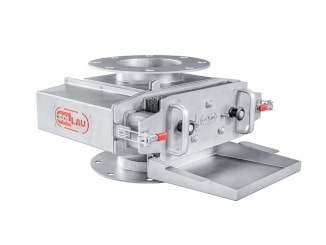
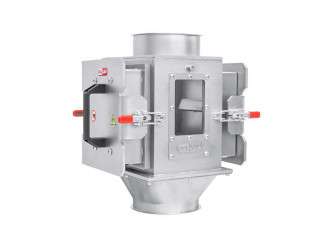
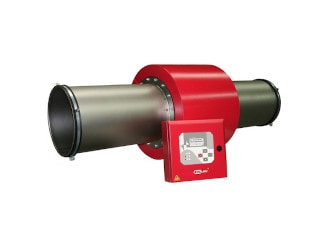
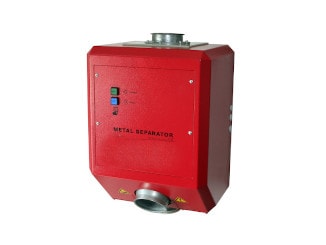
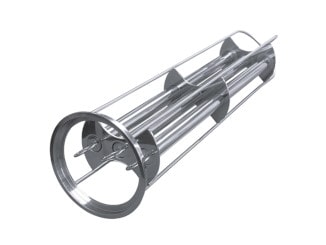
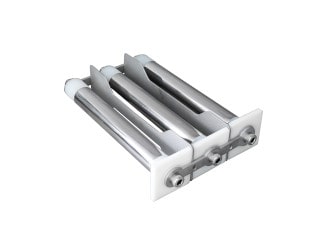
The MSP-S pipeline separator (flange connection, operation at 6–10 bar, double-jacketed protection of the magnetic cores) is fitted into the pneumatic conveying downstream of pelletizing and upstream of the silos; grate separators go into gravity chutes and ML chute magnets into pipelines of poorly flowing materials – in our case study the ML 250 N protects a rosin resin crusher (8 February 2024). Final inspection is provided by the METRON 05 PowerLine detector (up to DN 630, conveying speed up to 30 m/s) and QUICKTRON gravity detectors in ATEX design. A separate page, Plastics and Rubber Industry, is dedicated to granulate processors.

Granulate sorting and removal of angel hair

The friction of granules against the walls of pneumatic conveying pipes creates angel hair and streamers – thin plastic threads and agglomerates that clog filters, hoppers and valves and lead to the rejection of entire deliveries of granulate.

The following equipment is most often used for granulate sorting:

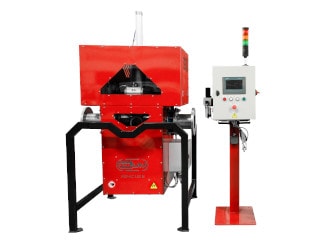
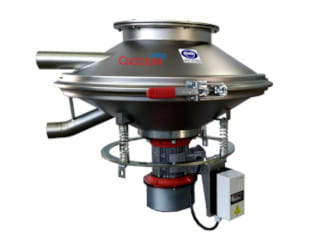
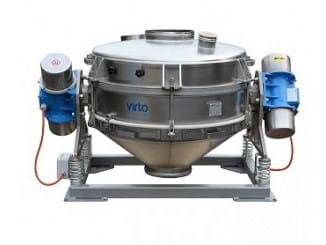
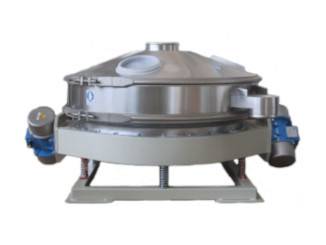
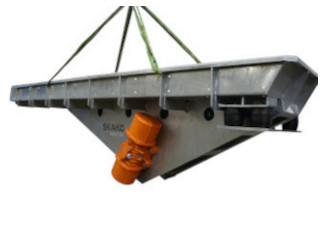
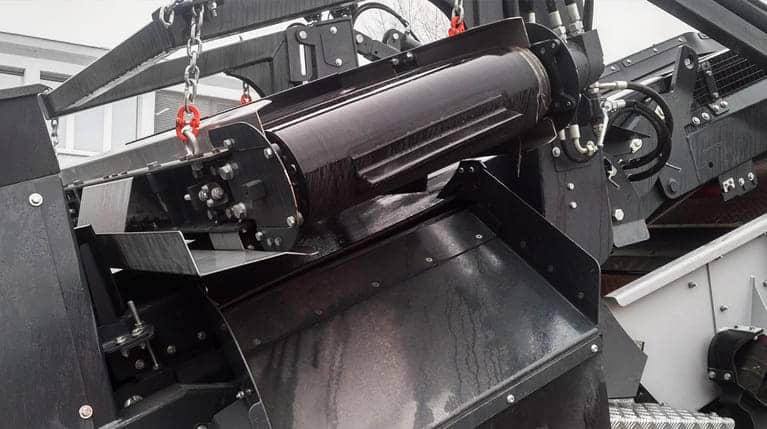
A check vibrating screen is placed downstream of the pneumatic conveying and upstream of silo filling or packaging: it removes threads, dust and agglomerates and calibrates the granulate to the required fraction. We supply screens in ATEX and FDA designs; the multi-frequency X-line handles even difficult and dusting materials. Angel hair in a silo = clogged conveying and a returned delivery.

Compressor and regulating stations, gas transit and biogas

At compressor and regulating stations, metering points and pig receivers, black powder damages compressors, fouls gauges and distorts custody-transfer measurement. In biogas plants, meanwhile, metal impurities in the substrate erode pumps, agitators and screw presses.

The following equipment is most often used in the gas industry and biogas:

Magnetic filters are installed at the inlets of compressor and regulating stations, at metering lines and downstream of pig receivers, where after pigging they capture the released black powder before it reaches the compressor. In biogas plants, magnetic separation protects the substrate inlet – in our case study the MSP-SC 80 N ORCA flow separator removed pipeline wear from a stream of liquid fermented biomass (11 January 2024).

Lubricants, hydraulic oils and auxiliary circuits

In the lubrication and hydraulic circuits of turbines, compressors and pumps, ferromagnetic wear forms the majority of suspended particles – it degrades the oil, bearings and seals. Magnetic filtration is the simplest way to clean the circuits continuously.

The following equipment is most often used in auxiliary circuits:

Magnetic filters are placed in the bypass branches of lubrication circuits and in the return lines of hydraulics; MSF magnets (9,000 G) double the efficiency of existing bag filters without any intervention in the technology. The benefit: longer service life of oils, bearings and fine filters, and fewer service interventions.
FREQUENTLY ASKED QUESTIONS

Black powder is a mixture of iron oxides and sulfides formed by the corrosion of steel pipelines carrying gas and petroleum products; up to half of the particles measure just 3–5 µm. It is reliably captured by the MSP-BP magnetic separator with an induction of up to 18,700 G and capture from 1 µm, installed between flanges upstream of sensitive equipment.

MSP-S separators work as standard at 6–10 bar; for more demanding applications we built the CRAB filter for DN 250, 120 °C and 25 bar. We weld pressure equipment with qualifications per PED 2014/68/EU, EN ISO 3834-2, EN 13480 and EN 13445 – including complete documentation for your pressure assembly.

Iron from the feed is irreversibly deposited on the catalyst surface and blocks pores – ordinary desalting does not remove iron oxides and sulfides. The solution is a magnetic filter (MSP-BP or MX-MC for sub-micron particles) installed in the feed upstream of the reactor.

Foam is most often stabilized by colloidal iron sulfide particles, which mechanical filters capture only with difficulty. Continuous removal of FeS with a magnetic filter (MSP-S, MSP-AC) on the rich amine or glycol significantly reduces foaming and stabilizes unit operation.

An MSP-S pipeline separator with double-jacketed protection of the magnets is fitted into the pneumatic conveying, and as final inspection a METRON 05 PowerLine metal detector for pipelines up to DN 630 and speeds up to 30 m/s. The magnet + detector combination covers both ferrous and non-ferrous metals.

Angel hair are thin plastic threads created by the friction of granules against the walls of pneumatic conveying pipes – they clog filters and hoppers and lead to complaints. They are removed by check sieving on C-line/X-line vibrating screens placed downstream of the pneumatic conveying, in ATEX and FDA designs.

Yes – the pneumatic conveying of powders and granulates falls into ATEX zones, and the standard measure against an ignition friction spark from foreign metal is a magnetic separator supplemented by a metal detector that stops the line. We supply magnetic separators, detectors and vibrating screens in certified explosion-proof design.

The price depends on the pipe DN, pressure, temperature and required certification (PED, ATEX, double jacket) – we manufacture every unit to measure, including pressure documentation. Free of charge and within 3 days we will test a sample of your medium or granulate and propose a solution; request a non-binding quotation.

CASE STUDIES

How the MSP-S 150 N magnetic filter with 16,000 G extended pump service life and stabilized operation (case study)

In one industrial plant, an unpleasant issue kept recurring over the long term: premature damage to the mechanical seal of the secondary pump. The cause was subtle, yet all...

Pure liquid ammonia thanks to the Pipeline magnetic separator MSP-S 50 N OCTOPUS (case study)

Initial situation
In chemical production using liquid ammonia, medium purity is crucial. Even tiny metal particles can degrade product quality, damage equipment and, in extreme...

Protecting the tempering system from pieces of rust by the application of the magnetic filter MSP-MC EKO 1" N SEA SNAKE (150 °C) (case study)

How the customer gained effective protection for its tempering system and significantly reduced the risk of damage to key components.

The customer operates a tempering system...

A Unique Solution for Vertical Pipes: MSP-VT 250 N - CRAB Magnetic Filter for DN 250, up to 120 °C and 25 bar (case study)

Initial state:

A company in the chemical industry was looking for an effective solution to remove ferromagnetic impurities from a liquid in the DN 250 vertical pipe. Commonly...

Grinder protection and reduction of maintenance costs in rosin resin processing (case study)

Initial status

Our customer has been engaged in the production of resins and binders for more than 100 years. His product range includes hard and soft resins, polyurethane...

How to remove ferrous metals from fermented biomass? (case study)

Initial status

Our customer specializes in the production of fermented biomass. In production, they faced a problem with the presence of small ferrous particles (particularly...

CONTACTS
Do you have questions about our products? Do not hesitate to contact us!

Our team of sales representatives is ready to provide you with full support and help you find the best solution for your magnetic separation needs. We offer not only standard solutions but also tailor-made solutions, so you need not fear even more complex technical challenges. Just contact us and we will be glad to help.

You can contact us by phone, e-mail or via our web form.

Petr Zbranek

Petr Zbranek

Sales representative the world
+420 773 323 773
petr.zbranek@sollau.cz

Kamil Kornel

Kamil Kornel

Sales representative the world
+420 773 843 832
kamil.kornel@sollau.cz

DO YOU NEED TO GET ORIENTED?

That's why we've prepared a clear overview page just for you.

Top