Our company is a specialist in field of magnetic separation
We develop, produce and apply devices for magnetic separation. Our magnetic separators are designed and manufactured exactly in a made-to-measure way as per your needs.
FIELD OF APPLICATION – AUTOMOTIVE INDUSTRY
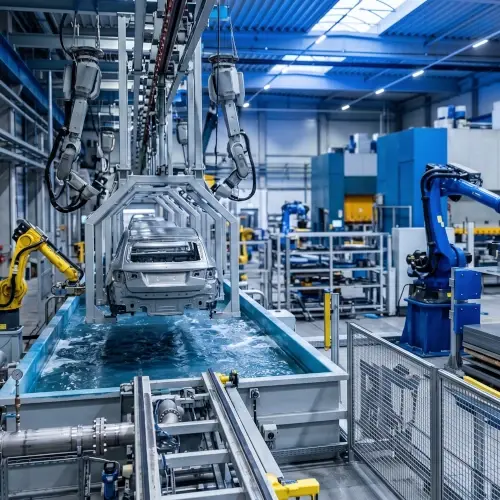
The automotive industry includes press shops and body shops, paint shops, machining of engines and gearboxes, plastic injection moulding plants, tyre production, foundries and, more recently, battery production for electric vehicles. All these operations share a single enemy: metal contamination, which causes paint defects, damaged tools and short circuits of battery cells.
Did you know that…? In the cathode materials of lithium batteries, the content of magnetic impurities is monitored at the level of parts per billion – a common working limit is less than 50 ppb. A single iron microparticle can deposit on the anode as a dendrite, puncture the cell separator and cause an internal short circuit.
WHY ARE MAGNETIC SEPARATORS AND METAL DETECTORS USED IN THE AUTOMOTIVE INDUSTRY?
Iron particles are generated by the abrasion of conveyors and hangers, by welding (weld balls), grinding, machining and mould changes. They circulate in baths, emulsions, granulates and powders – and each of them can mean a reject, a complaint or a damaged machine.
Quality of the final product
Iron particles in pretreatment and cataphoresis baths cause craters and graininess of the paint – a defect means re-sanding and repainting the car body. Metal inclusions in plastic parts, impurities in machined workpieces or contamination of battery materials lead to rejects and complaints.
Protection of machinery
Double feeding of stuck-together sheets (double blanking) destroys pressing tools worth millions; metal particles in cooling circuits wear out pumps, nozzles and tempering systems of injection moulding plants; hard fragments damage expensive injection moulds and kneaders. The equation applies: a captured particle = a saved tool and no line downtime.
Fewer complaints and success in audits
Customers in the automotive chain require demonstrable contamination control – magnetic separation with a test report of the measured induction is exactly the evidence an OEM auditor wants to see. Less contamination = fewer complaints, stable deliveries and a maintained position in the supply chain.
Introducing a magnetic separator into the production process in the automotive industry helps to significantly improve the quality of the final product, protect machinery and reduce the number of quality complaints. This has a positive impact on the profitability and efficiency of production.
SOLLAU Manufacturer of magnetic separators for the automotive industry
We are the manufacturers of these separators. We produce them in our plant in the Czech Republic, which allows us to guarantee the highest quality and adapt them to your requirements.
WHERE IN THE AUTOMOTIVE INDUSTRY WILL YOU FIND OUR MAGNETIC SEPARATORS?
Paint shops – car body pretreatment and cataphoresis (KTL)
Weld balls from the body shop, grinding dust and abrasion from conveyors circulate in the degreasing, phosphating, rinsing and cataphoretic painting (KTL/e-coat) baths. Iron adheres to the car body and creates a crater or grain in the paint – followed by sanding and repainting. Barrier and centrifuge filters clog quickly with fine iron and require shutdowns.
The following equipment is most commonly used in paint shops:
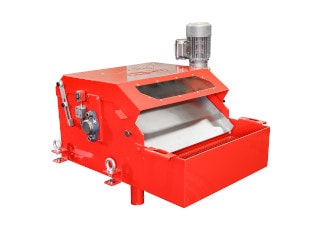
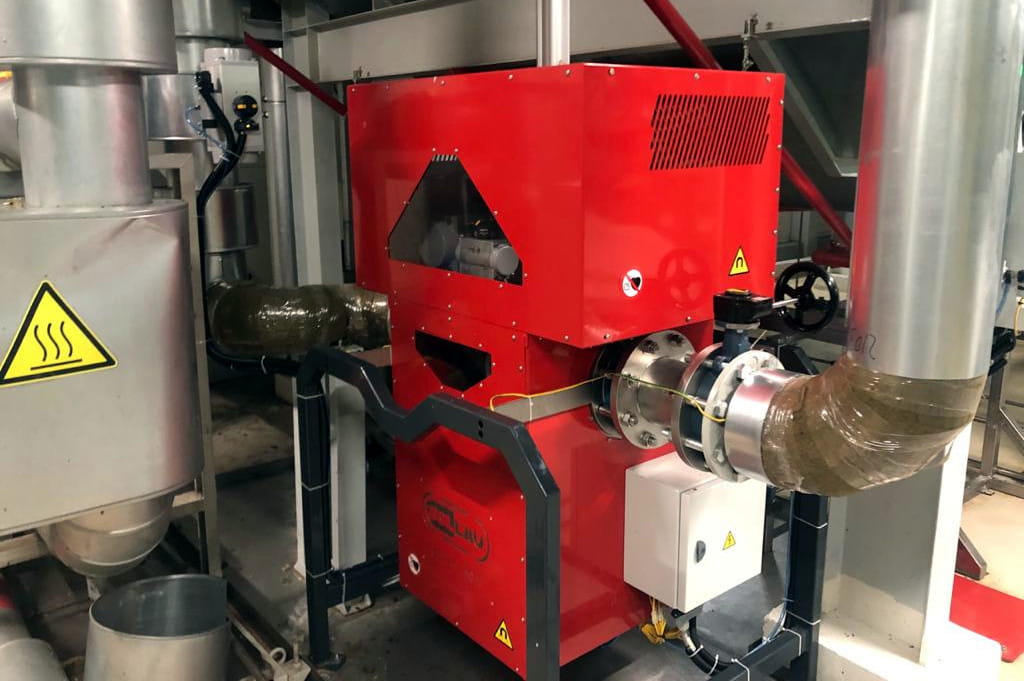
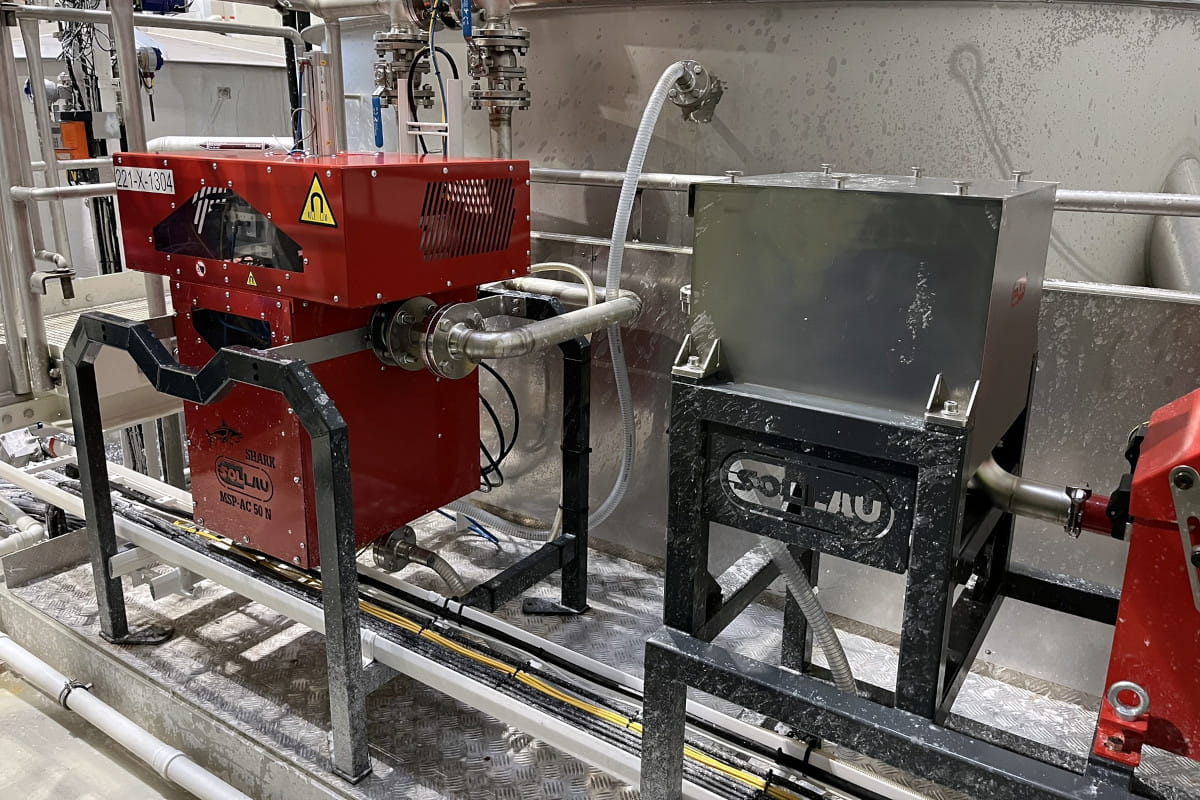
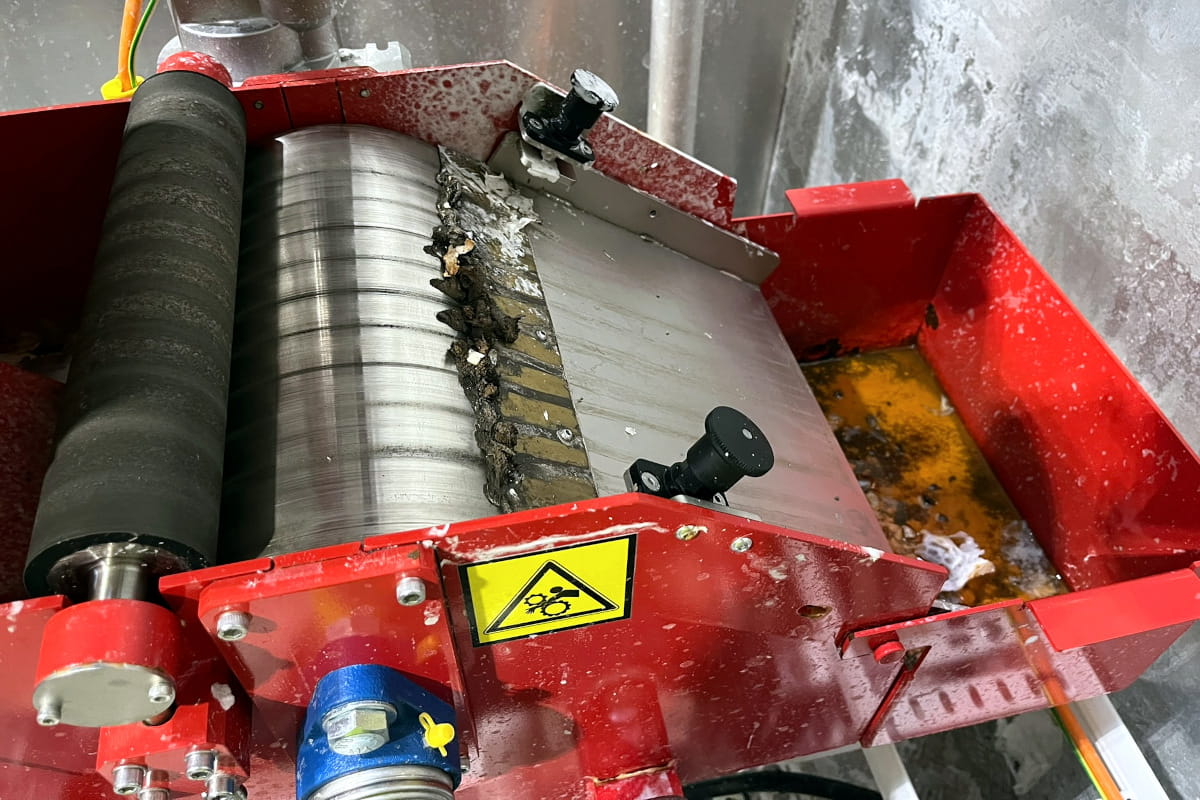
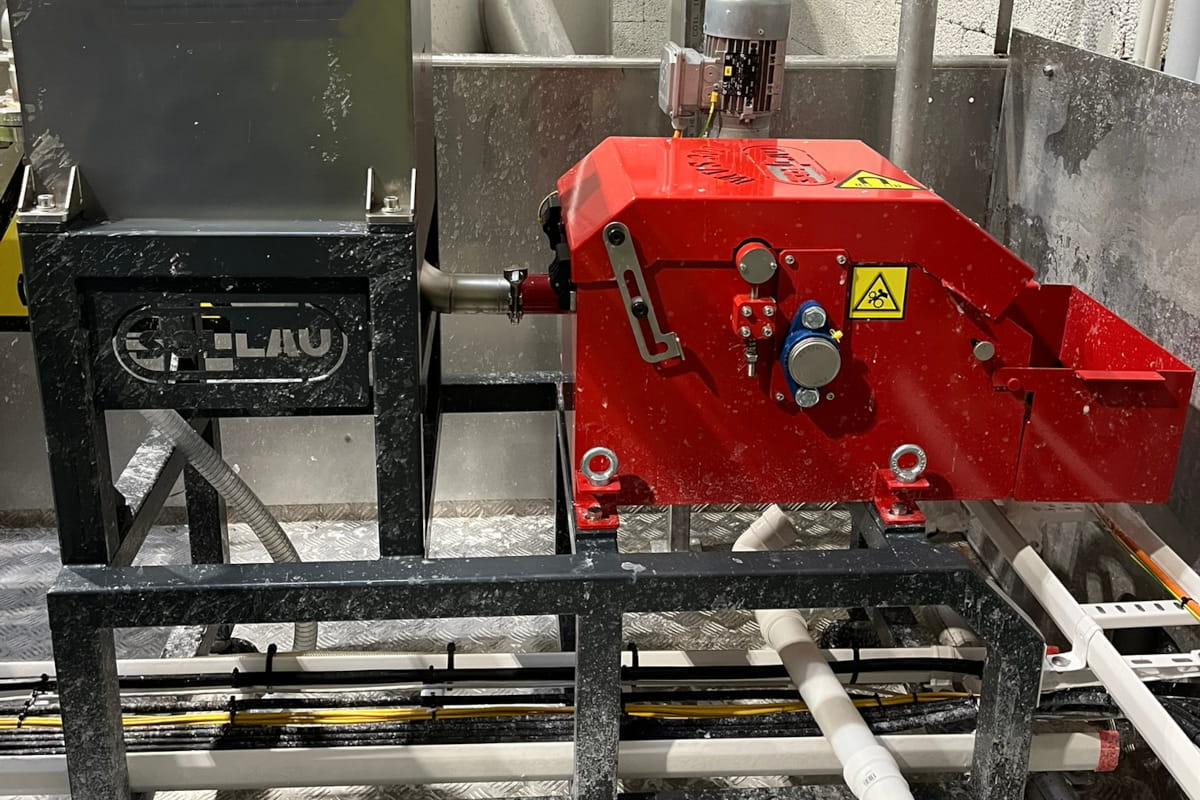
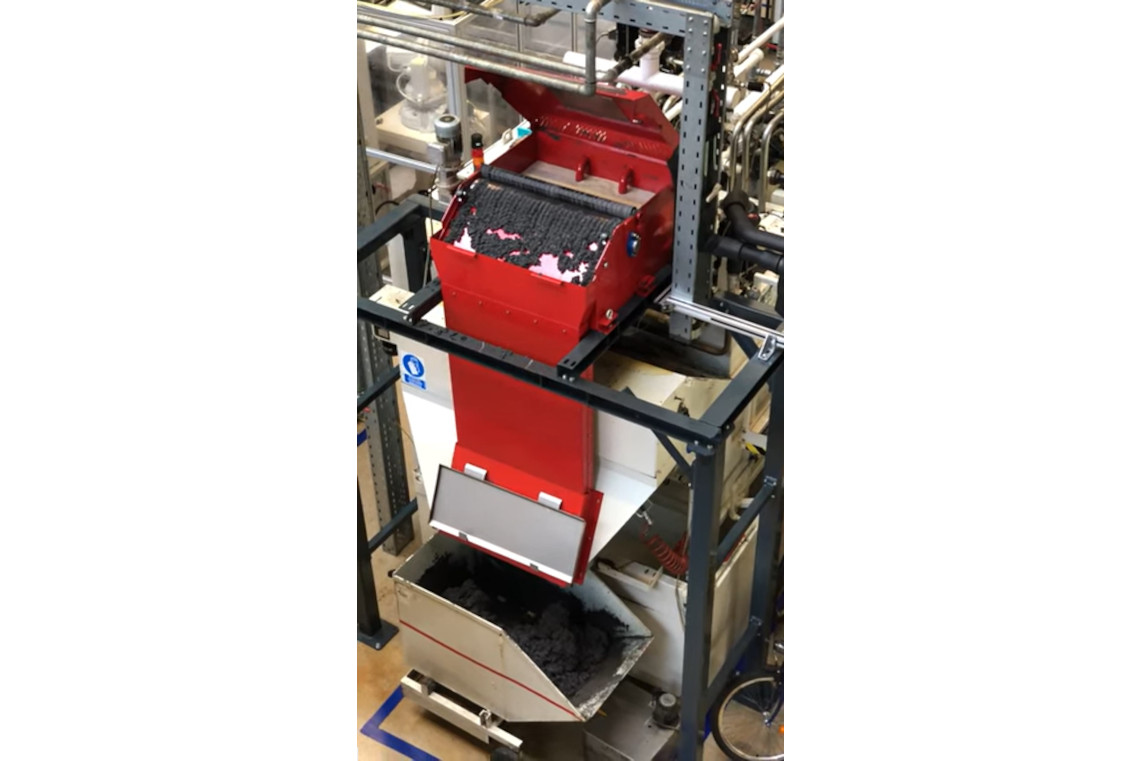
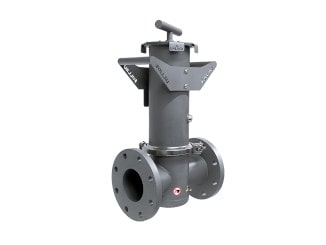
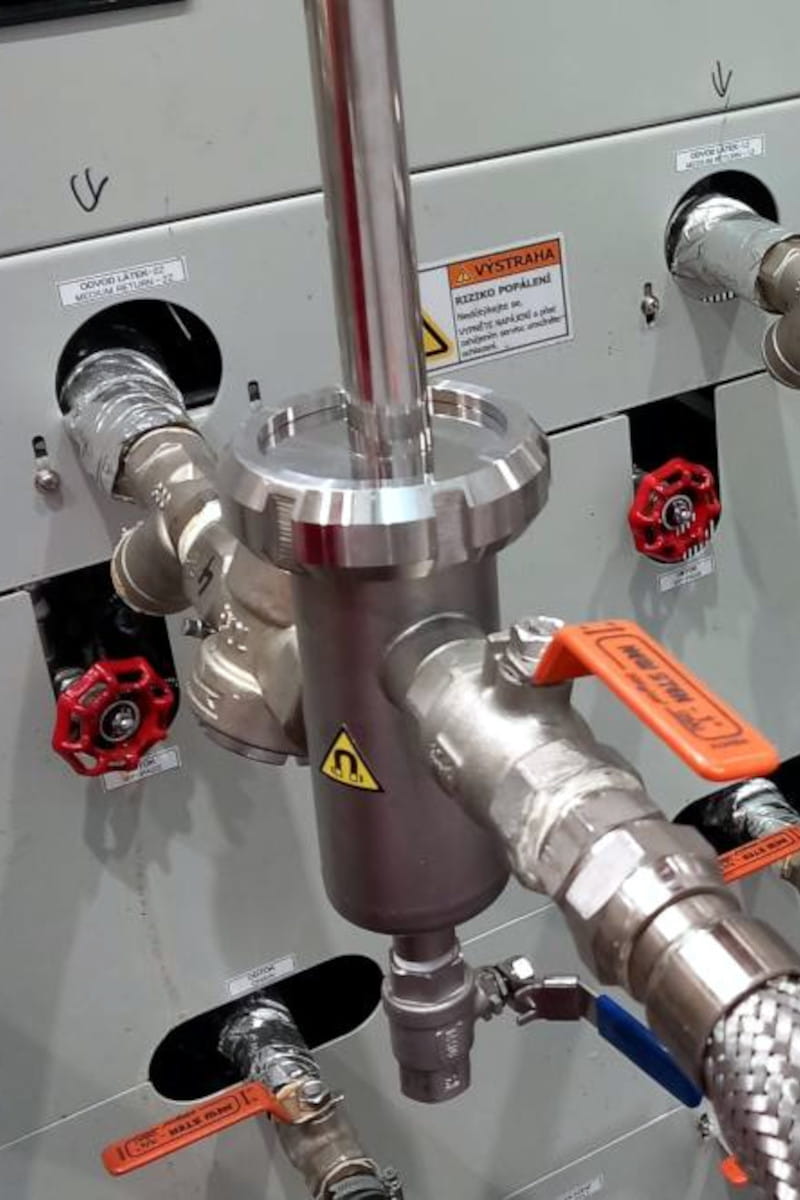
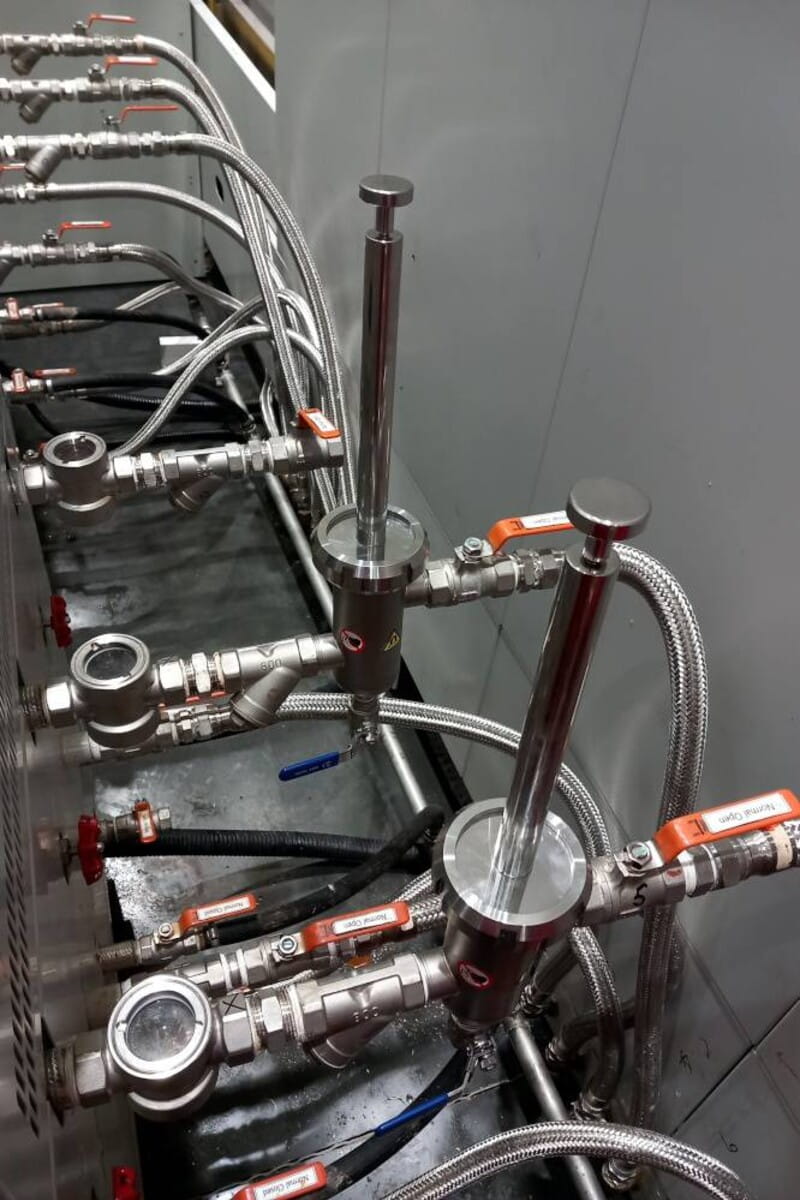
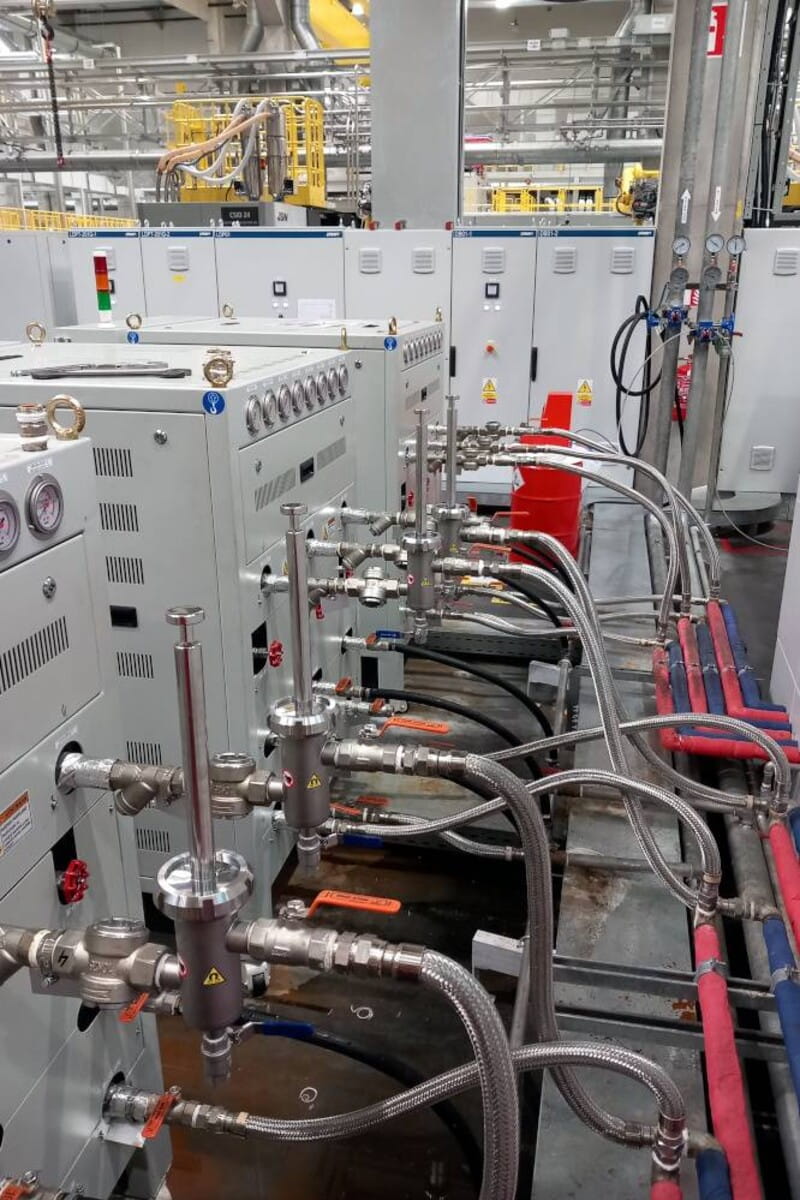
The MSP-AC flow-through separator with automatic cleaning without interrupting operation is installed in the circulation circuits of individual baths (bypass or main branch) – ideal for a 24/7 painting line with connection to its control system.
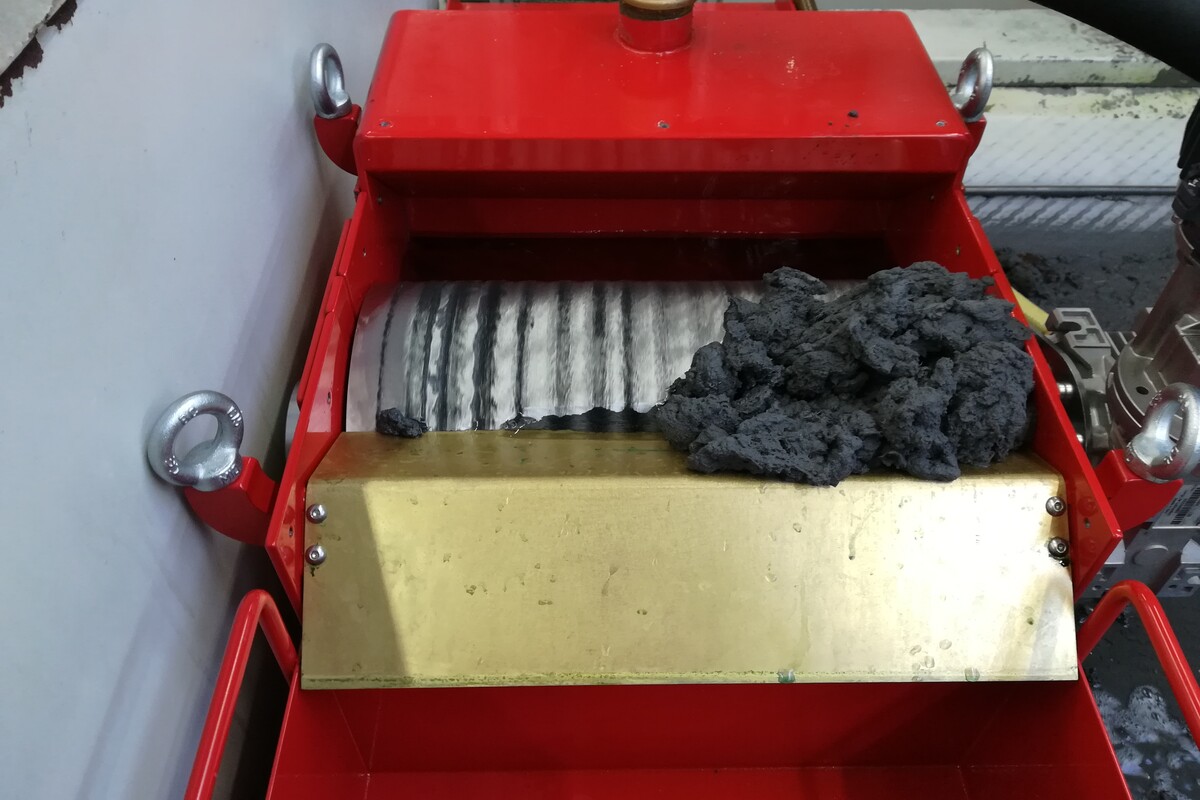
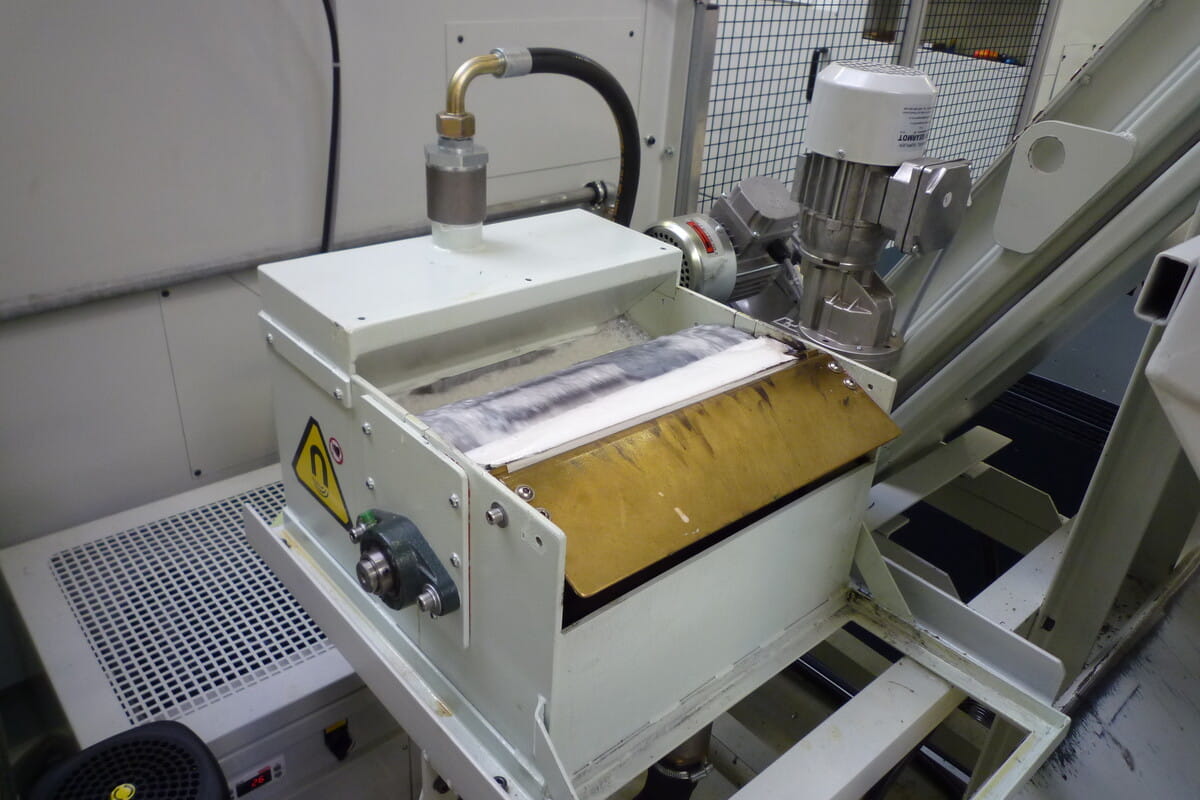
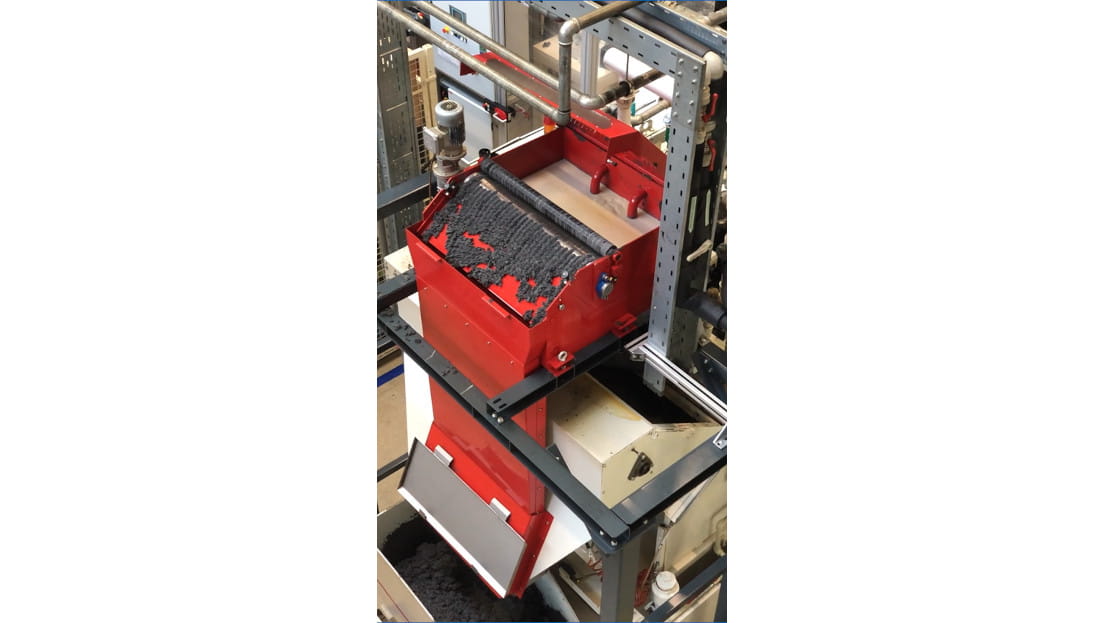
The MVS coolant separators work as a second separation stage – or as separation of the waste material from the MSP-AC magnetic filter. The captured metal impurities, together with the rinsing medium, are further cleaned in a separation vessel. As a result, only the metal contaminants are captured and the rinsing liquid can be reused. The costs of ecological disposal of contaminants are eliminated.
Advantages of the MSP-AC flow-through separators:
Automatic cleaning without stopping the line – suitable for continuous paint shop operation
Capture of ferromagnetic particles from 1 µm, no consumable filters
Integration into the control system of an automated line
PHOTOS FROM PRACTICE
VIDEO FROM PRACTICE
Sheet metal press shops and body shops
Oiled sheet metal blanks stick together in stacks – the stacker or robot then picks up two sheets at once and double blanking destroys a pressing tool worth millions. The second challenge is the continuous removal of oily stampings and offcuts from the presses.
The following equipment is most commonly used in press shops:
The MC magnetic sheet separator is mounted on the sides of the stack at the press or robotic stacker: it induces the same polarity in adjacent sheets, the sheets repel each other and "fan out", so only the top piece is picked up. Ferrite models handle sheets up to 3 mm and stacks up to 530 mm high; for thicker and oiled sheets we supply a neodymium version. In our case study, the MC-F 330 sheet separator separates polished sheets of 0.3–0.8 mm in a fully automated operation with a vacuum manipulator.
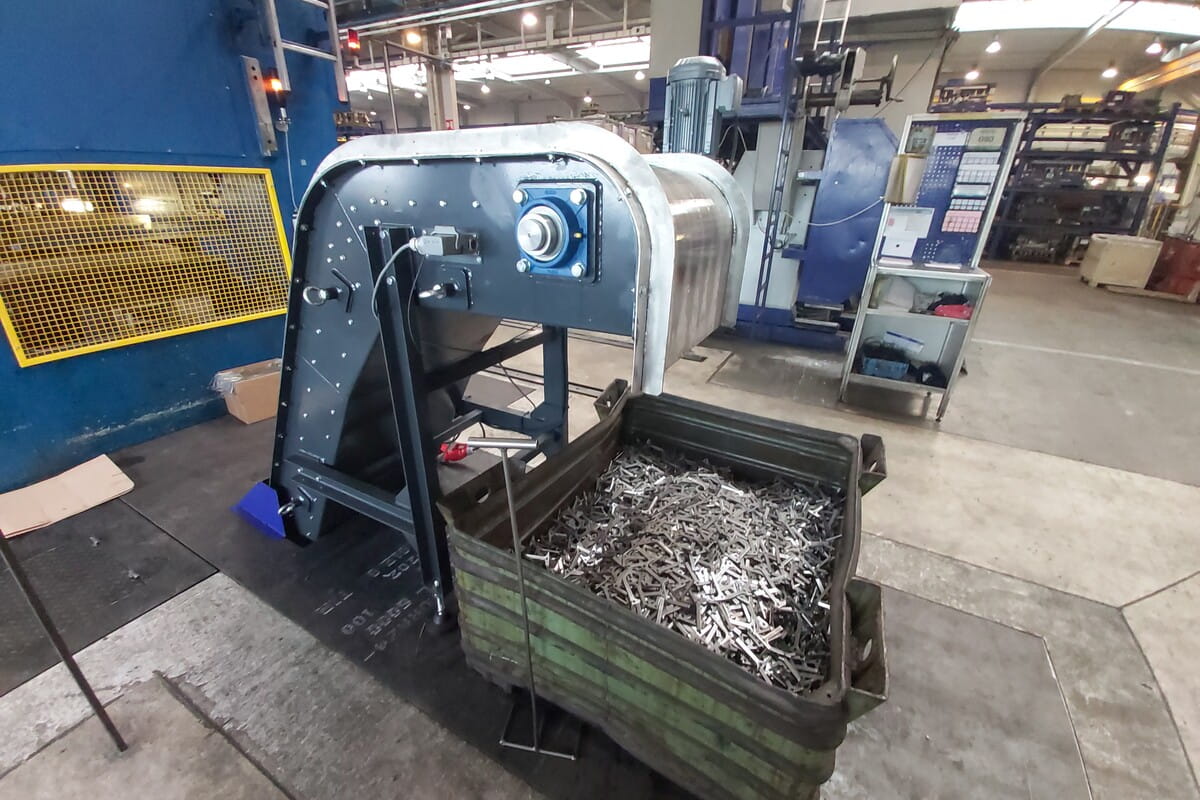
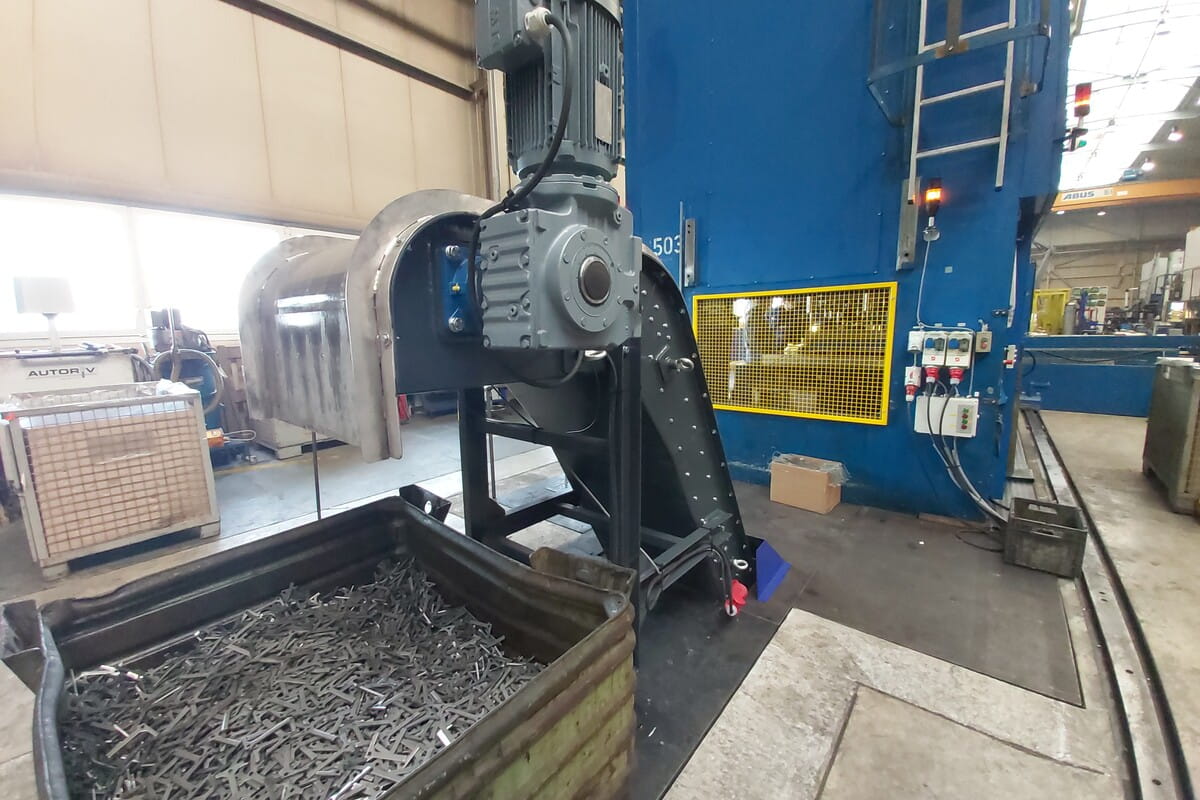
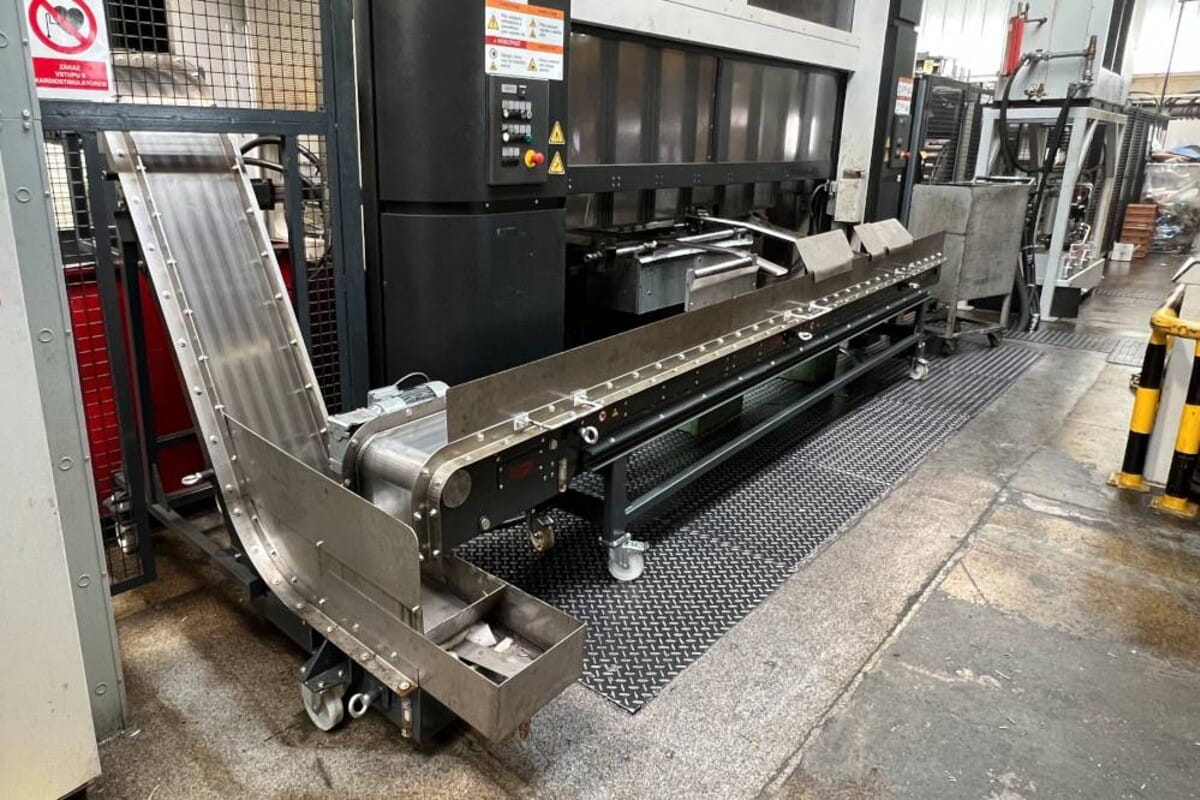
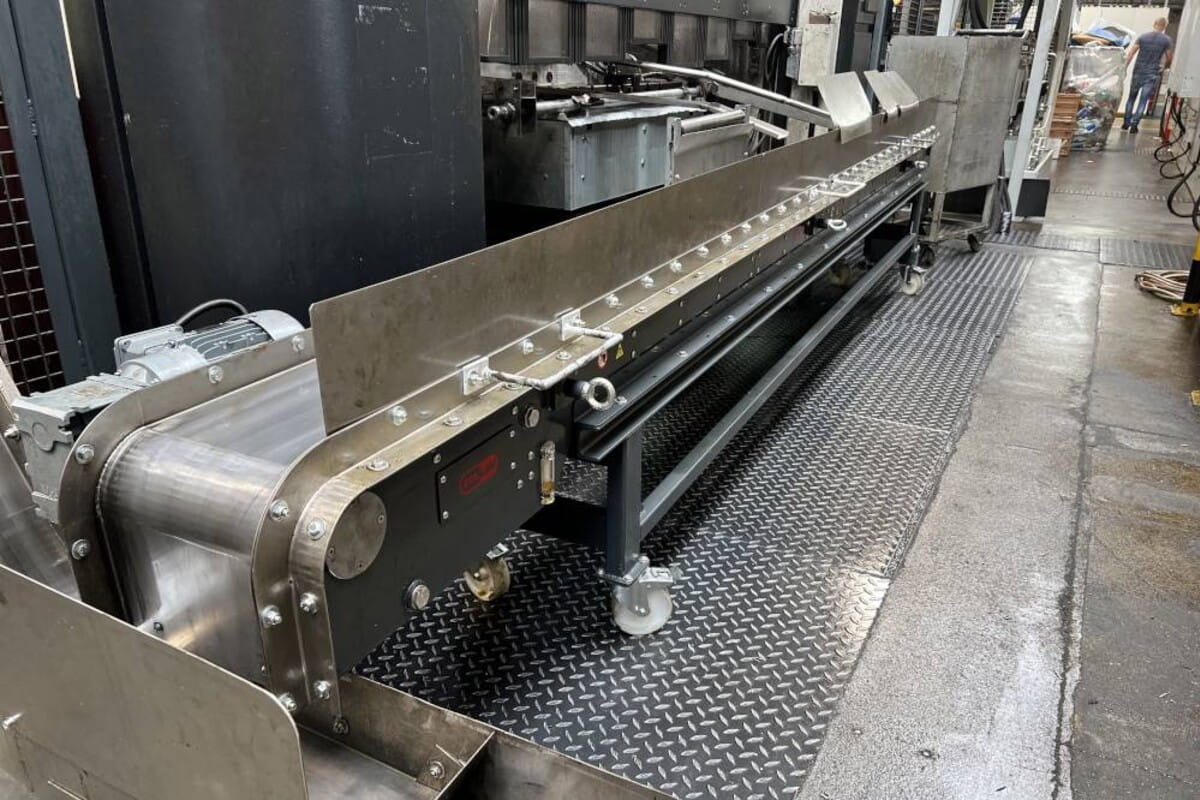
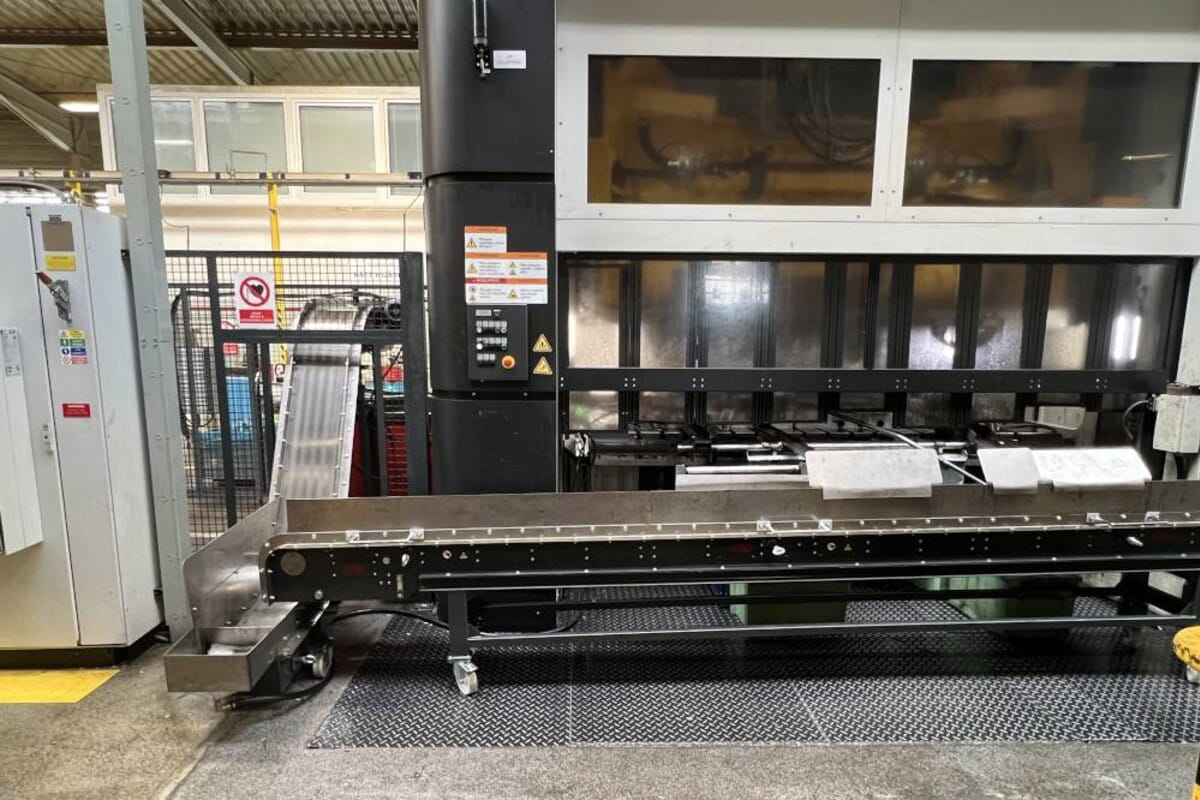
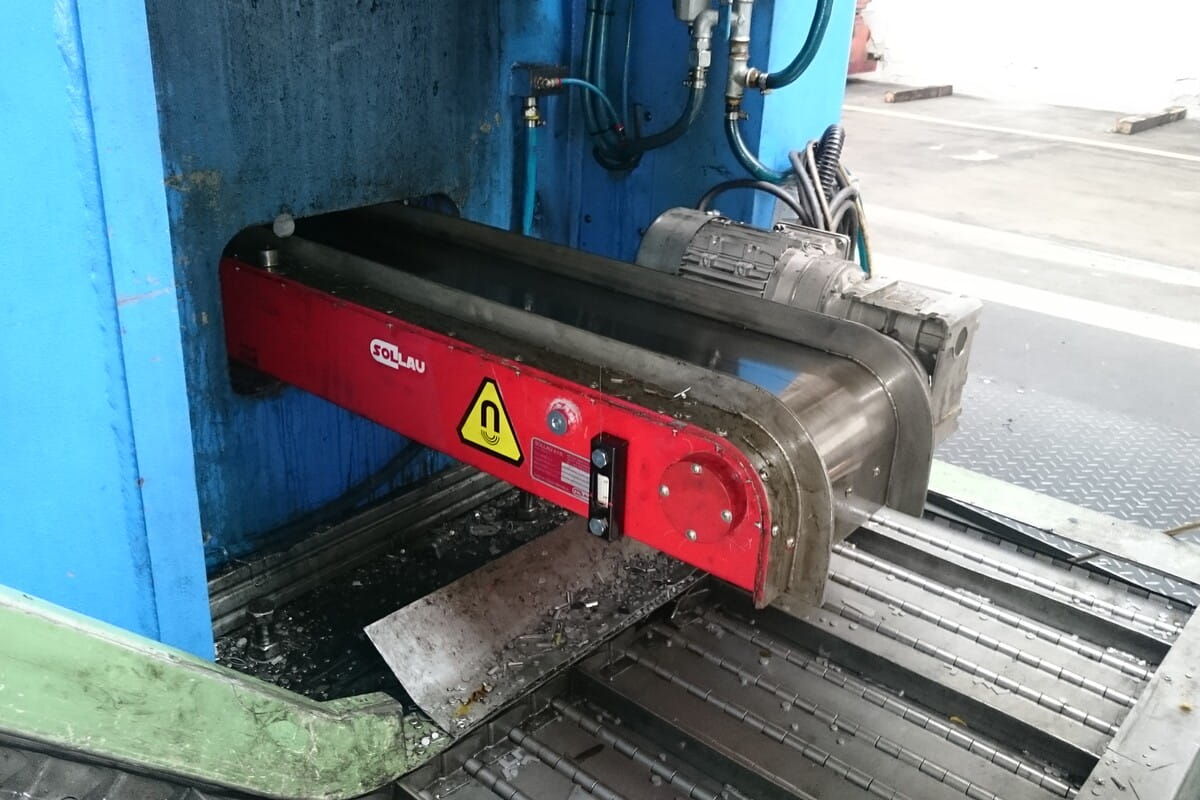
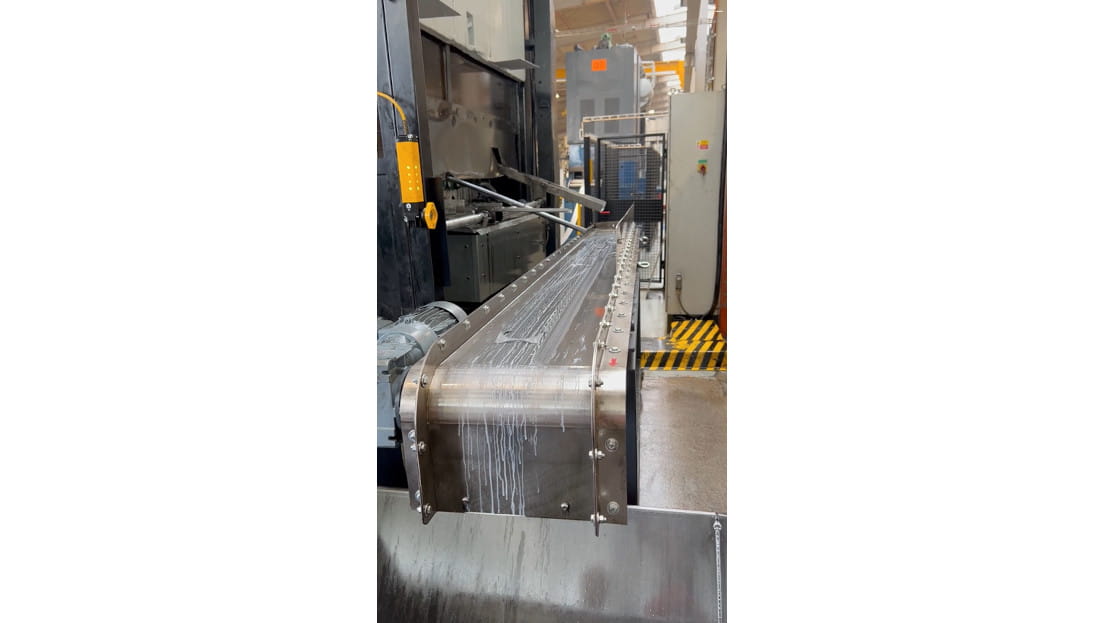
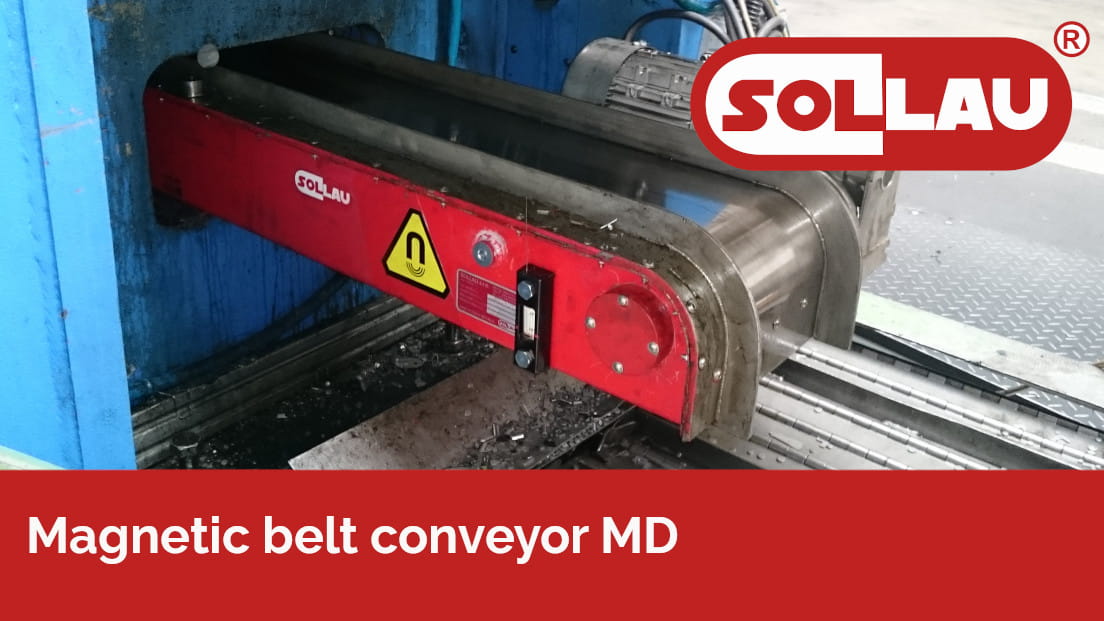
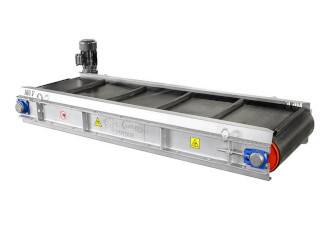
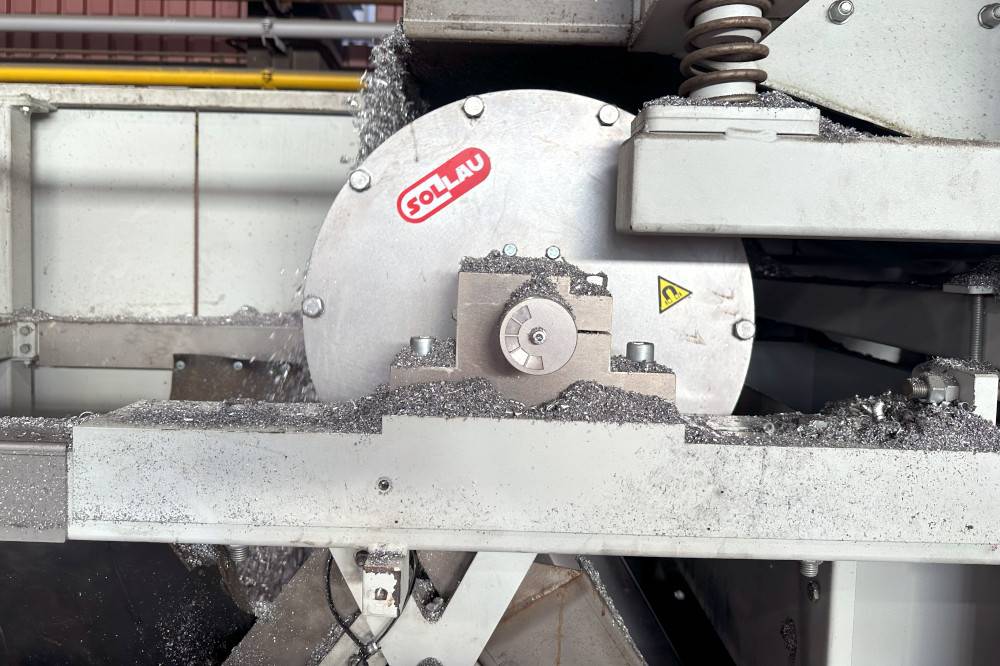
Stampings and waste from the press are removed by the MD magnetic conveyor – it holds oily parts with a magnetic field, so they do not slip even on a steep incline. In our installation, a system of a straight and an angled conveyor transports stampings at a press rate of 45–60 pcs/min, is mobile between presses and collects the emulsion, which it returns to the press. Handling of sheet bundles and stampings is speeded up by lifting magnets.
Double blanking = a destroyed pressing tool and a stopped line!
PHOTOS FROM PRACTICE
VIDEO FROM PRACTICE
Machining of engines, gearboxes and chassis parts
CNC machining of engine blocks, cylinder heads and gearboxes generates fine chip and grinding abrasion in cooling emulsions and cutting oils. This destroys pumps and nozzles, shortens tool life and reduces machining quality.
The following equipment is most commonly used in machining:
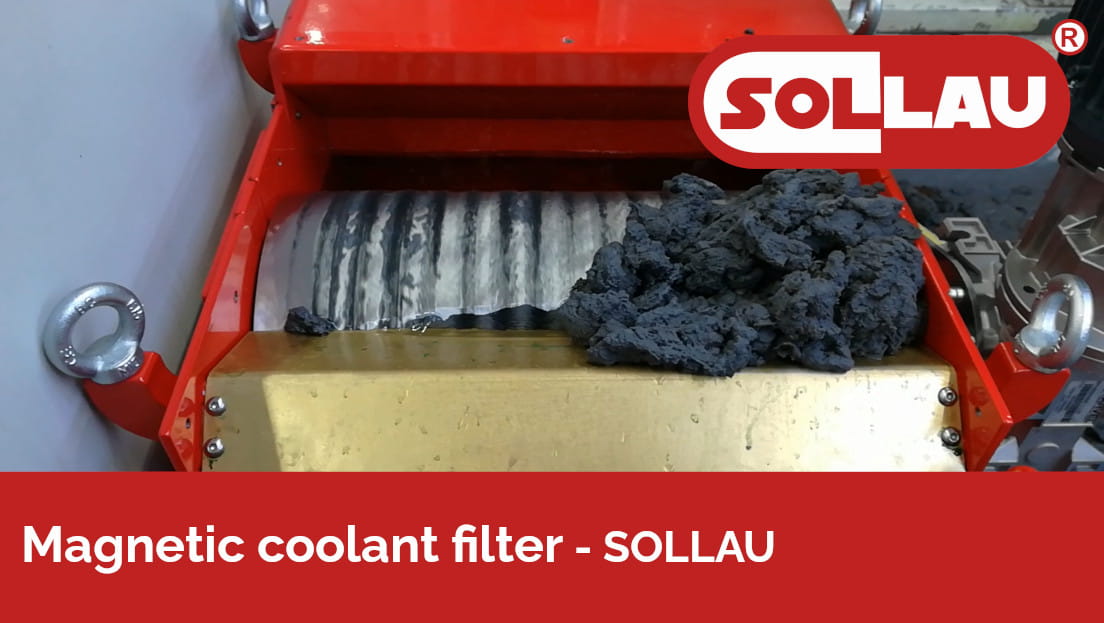
The MVS coolant separator is installed at the coolant tank of the machine tool and continuously, without operator intervention, discharges the captured particles into a collection container; flow-through separators belong in the circuits of central fluid management systems.
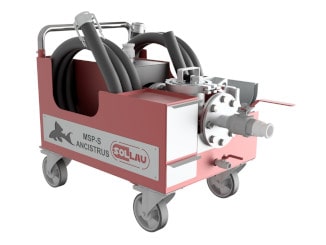
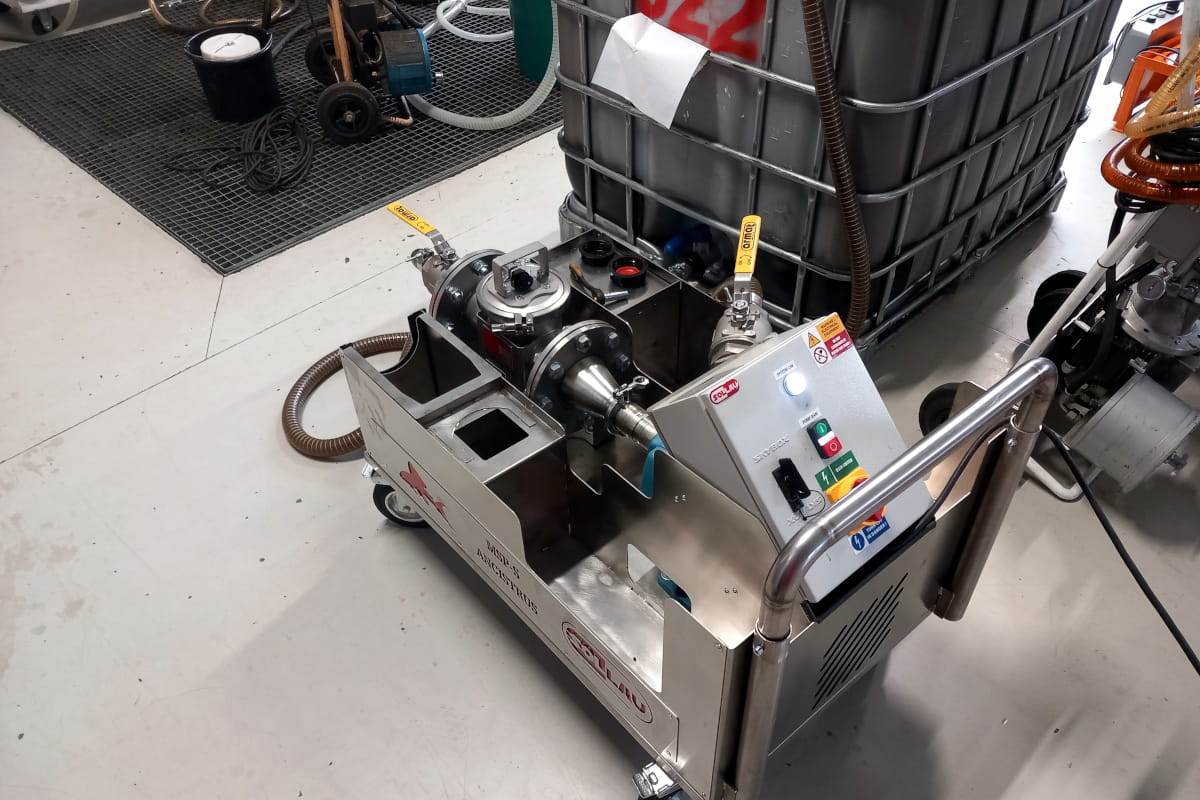
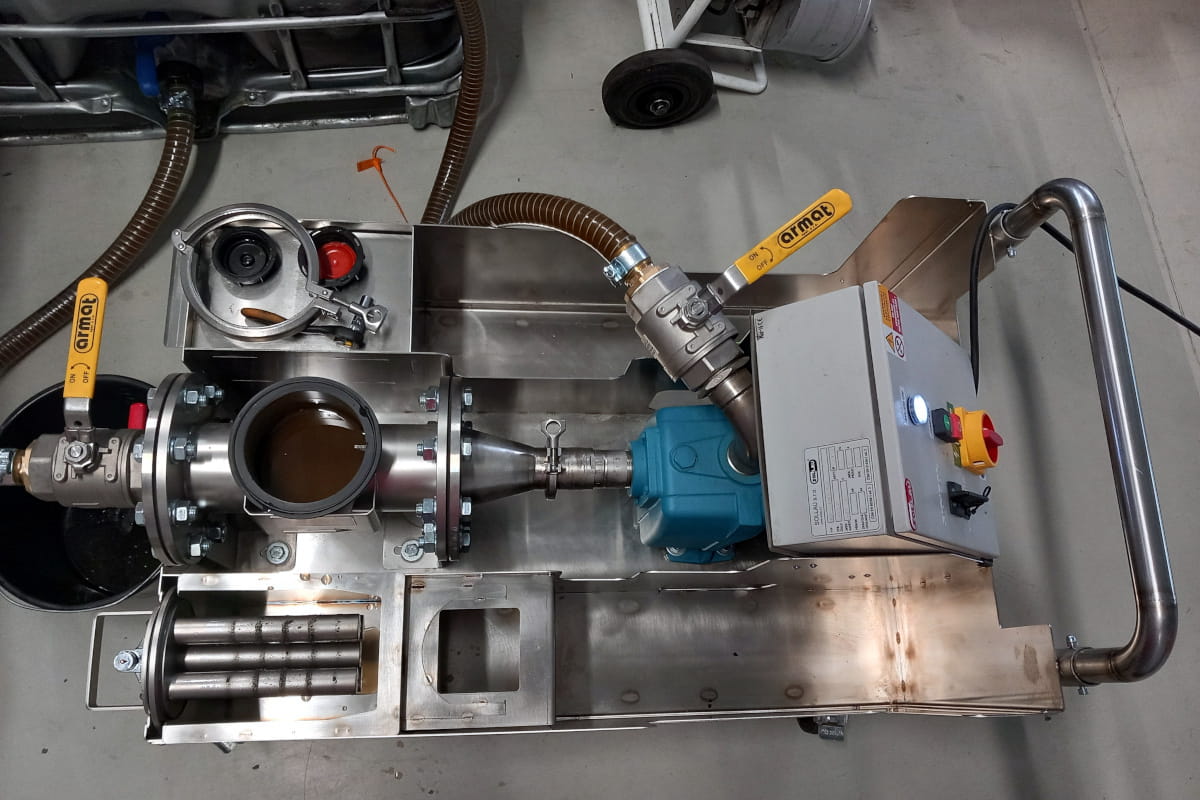
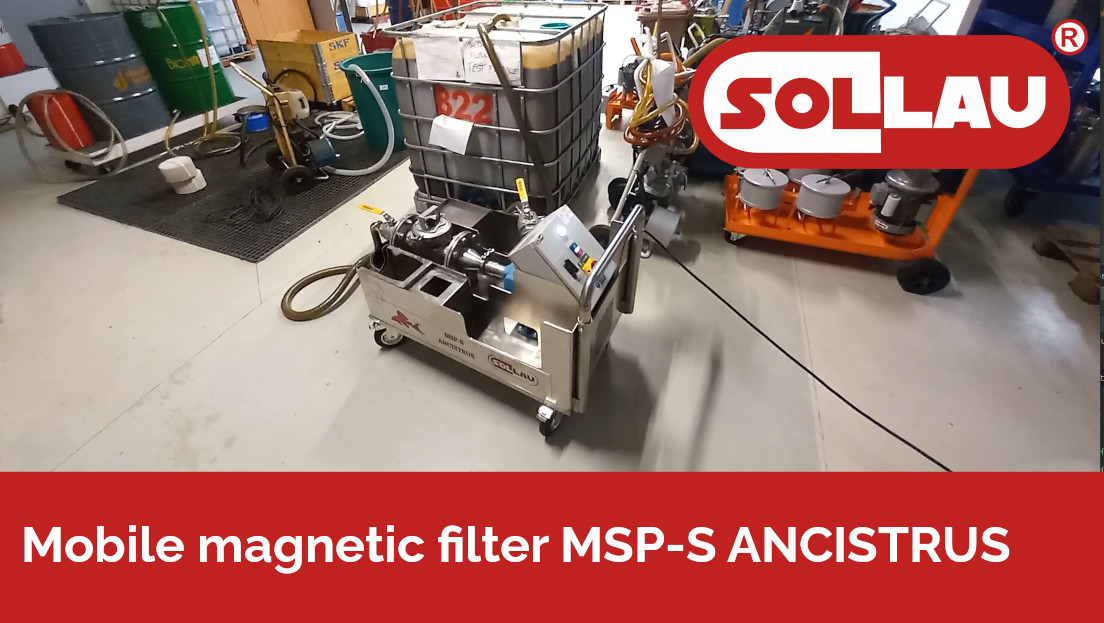
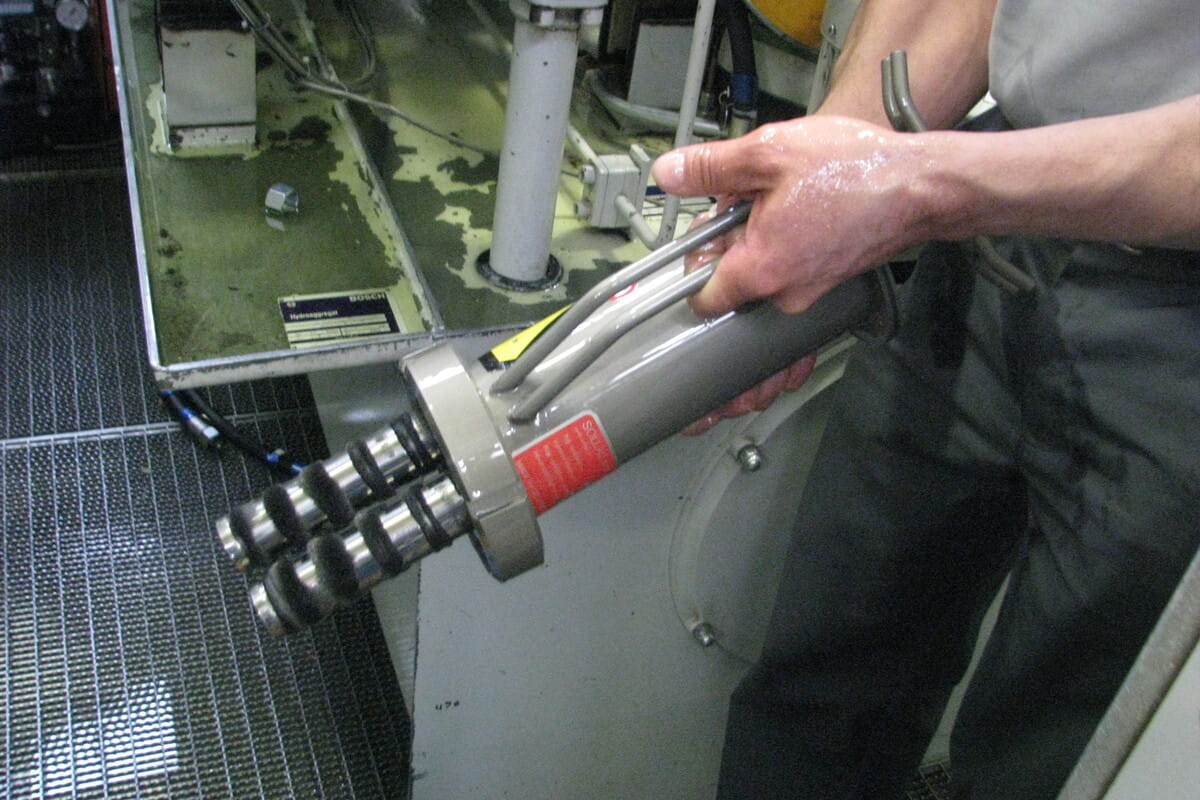
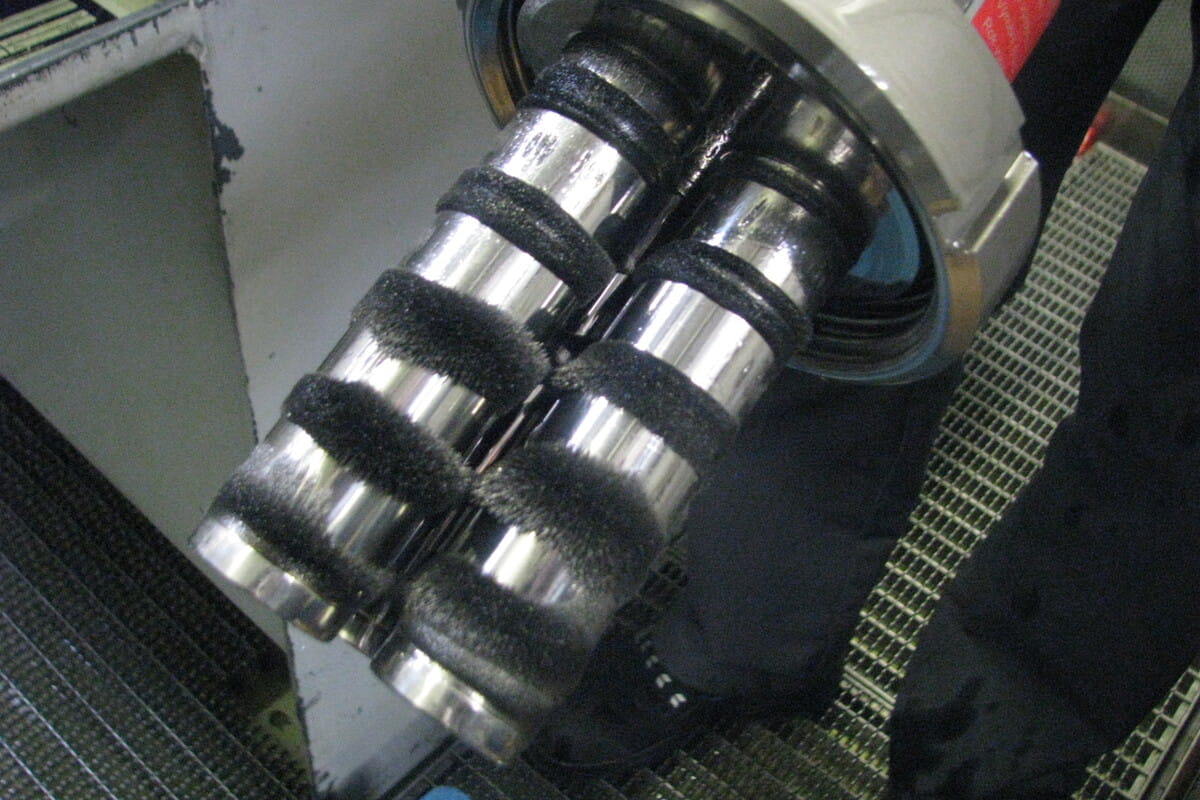
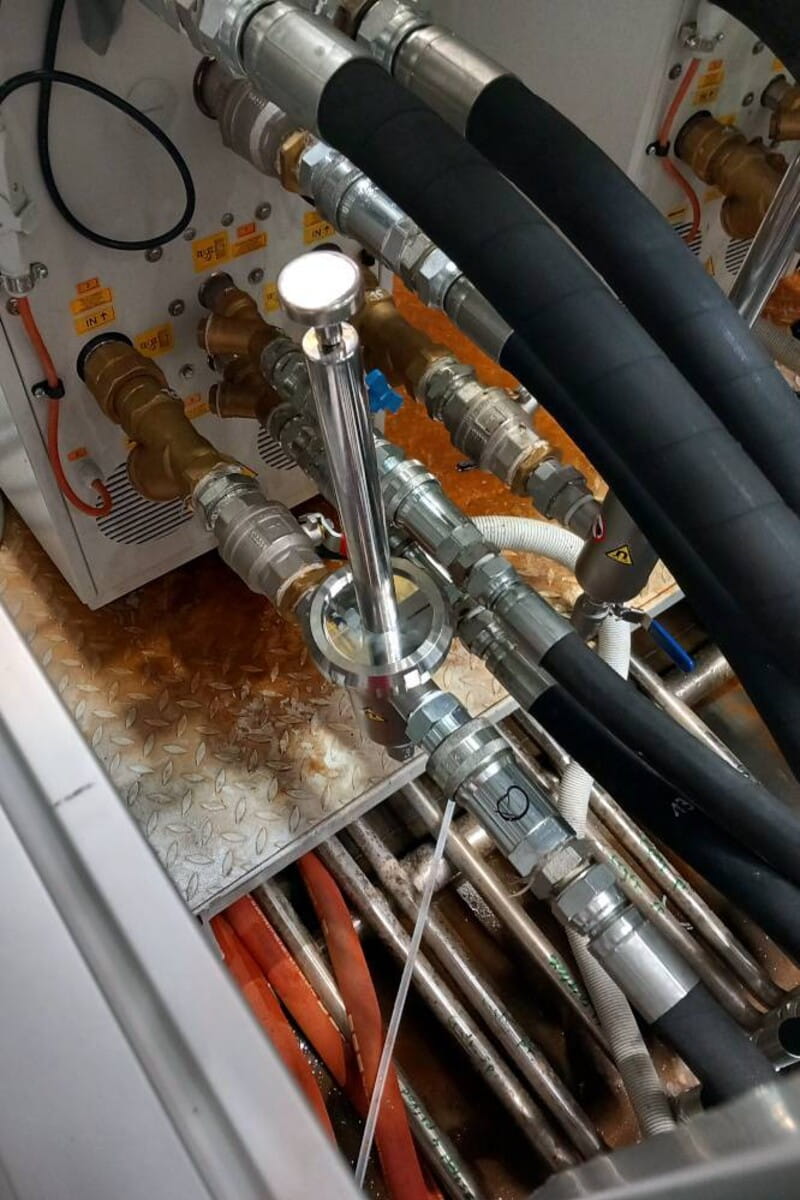
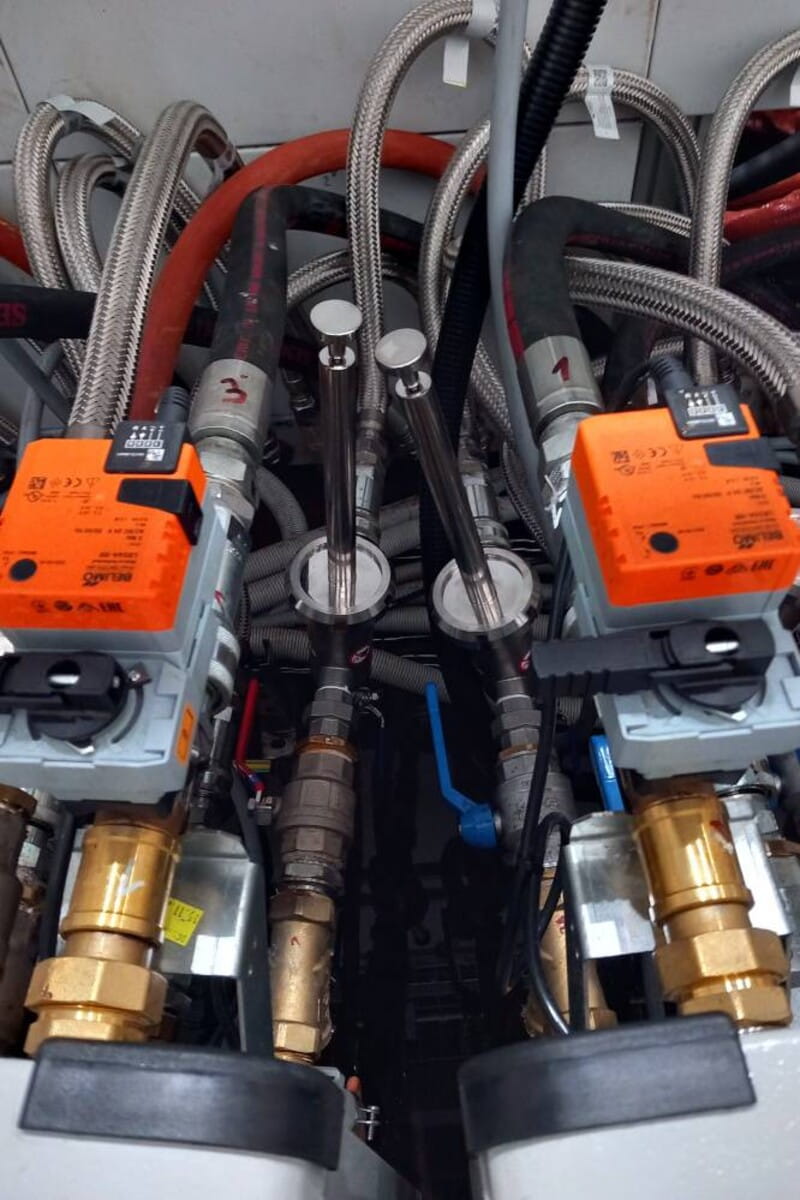
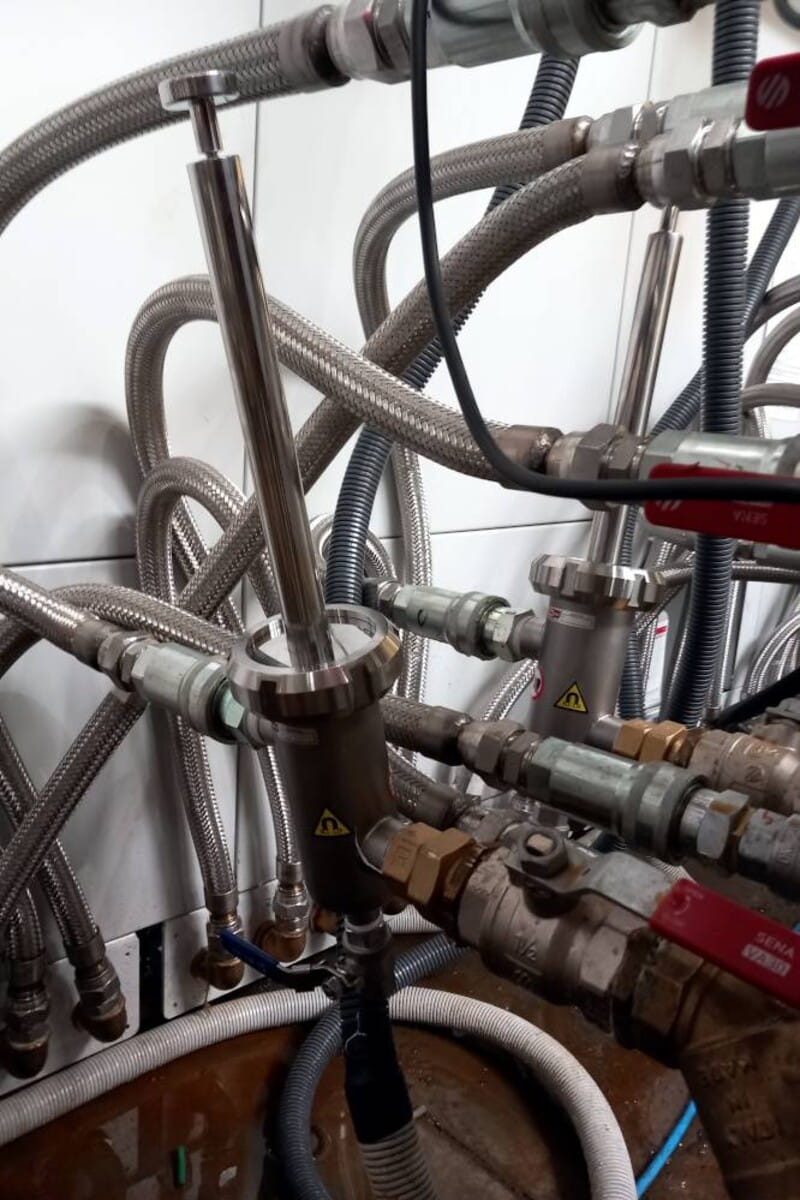
MSP-S ANCISTRUS is a mobile flow-through magnetic filter with neodymium magnets (16,000 G on the core), a pump and quick couplings, designed to capture ferromagnetic particles from as little as 1 micron from engineering oils and emulsions. You simply connect it to the machine or its tank and clean the liquid. It extends the service life of cutting, grinding and cooling fluids when machining components, thereby reducing the costs of their purchase and ecological disposal, improves the surface of machined parts and extends tool life – all without production downtime, as the circuits can also be cleaned outside operating hours.
Results from practice: emulsion service life extended by 38 % and internally cooled drills by 72 % – return on investment within months.
PHOTOS FROM PRACTICE
VIDEO FROM PRACTICE
Plastic injection moulding plants for automotive
Bumpers, interior panels and headlights are injection moulded from granulates and recyclates, where every metal particle means a damaged mould or a defective part. A hidden risk is also posed by the mould tempering circuits, which get clogged with rust.
The following equipment is most commonly used in injection moulding plants:
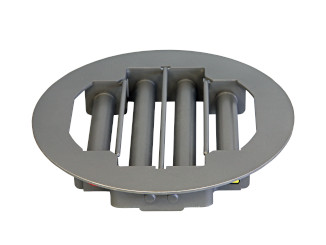
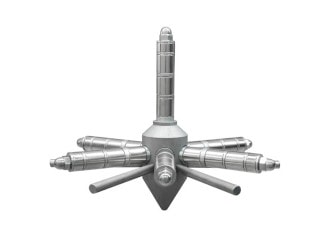
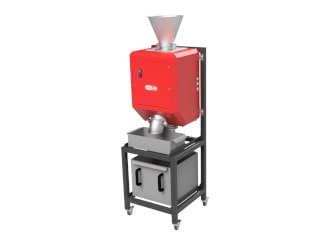
The TM separators (neodymium, 9,000 G on the core) and SM star-shaped magnets are inserted directly into the hoppers of injection moulding machines; the MSU mobile unit (magnet + free-fall detector) serves several machines.
Flow-through magnetic filters (e.g. MSP-MC EKO 1" N in a version up to 150 °C) protect the tempering circuit of injection moulds from rust, which used to wear out rings and pistons.
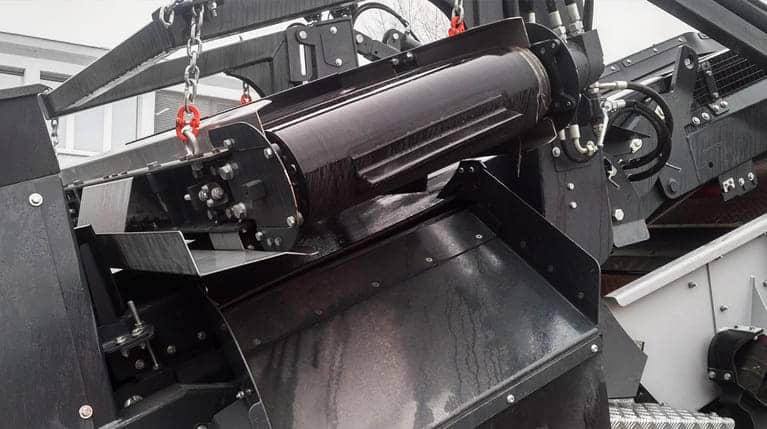
Engine blocks, cylinder heads and gearbox housings are cast in moulding sands that are regenerated in a closed circuit – iron fragments from knock-out would destroy the mills and the quality of new moulds.
The following equipment is most commonly used in foundries:
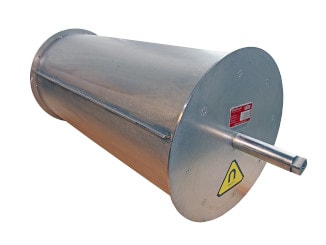
The drums are installed on the sand return conveyors behind the knock-out grid, the DND-AC plates above the belts. For abrasive materials we supply drums with a manganese steel shell – in our study from an aluminium foundry, since the installation of the MB 406 F 800 the customer has recorded no wear-through of the shell.
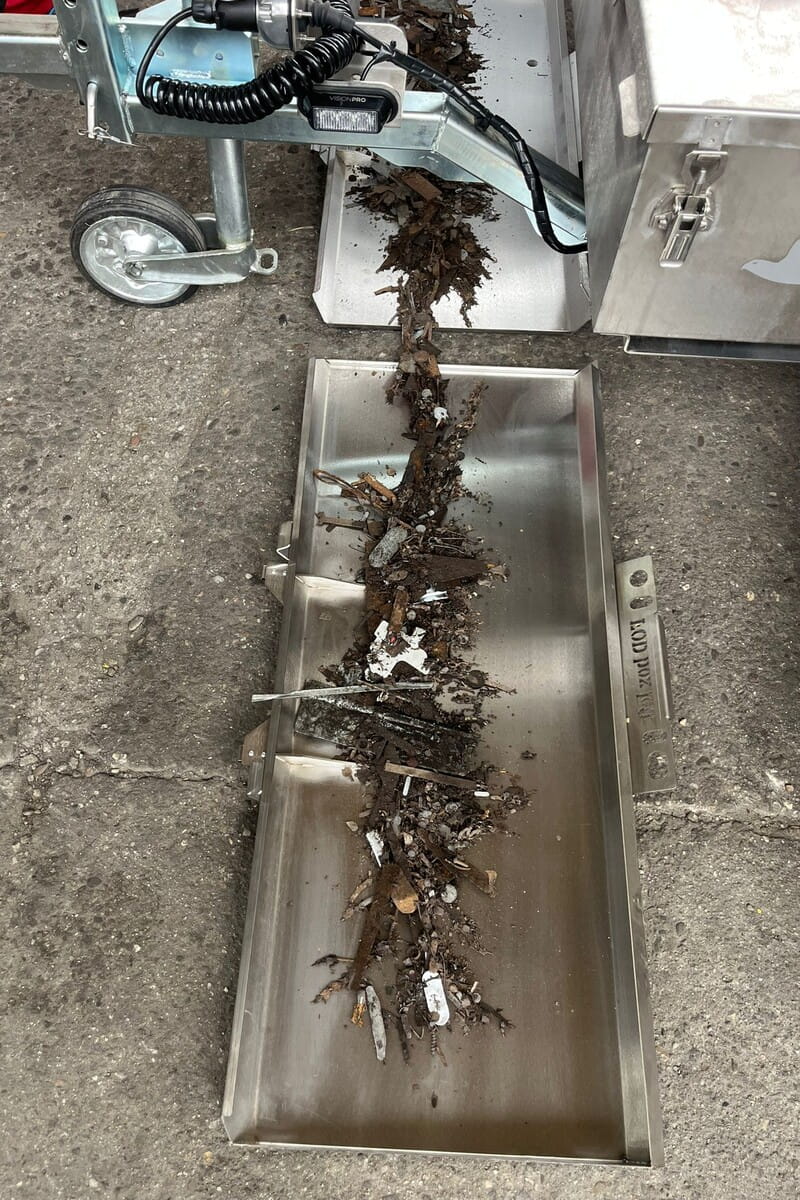
Chips, weld balls and wire fragments on the floors of halls and logistics areas mean punctured forklift tyres and a safety risk; press shops also produce tonnes of saleable sheet metal waste every day.
The following equipment is most commonly used for maintenance and waste management:
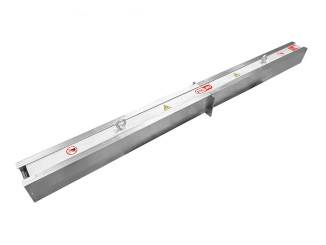
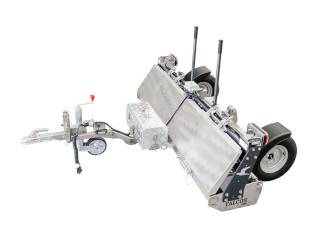
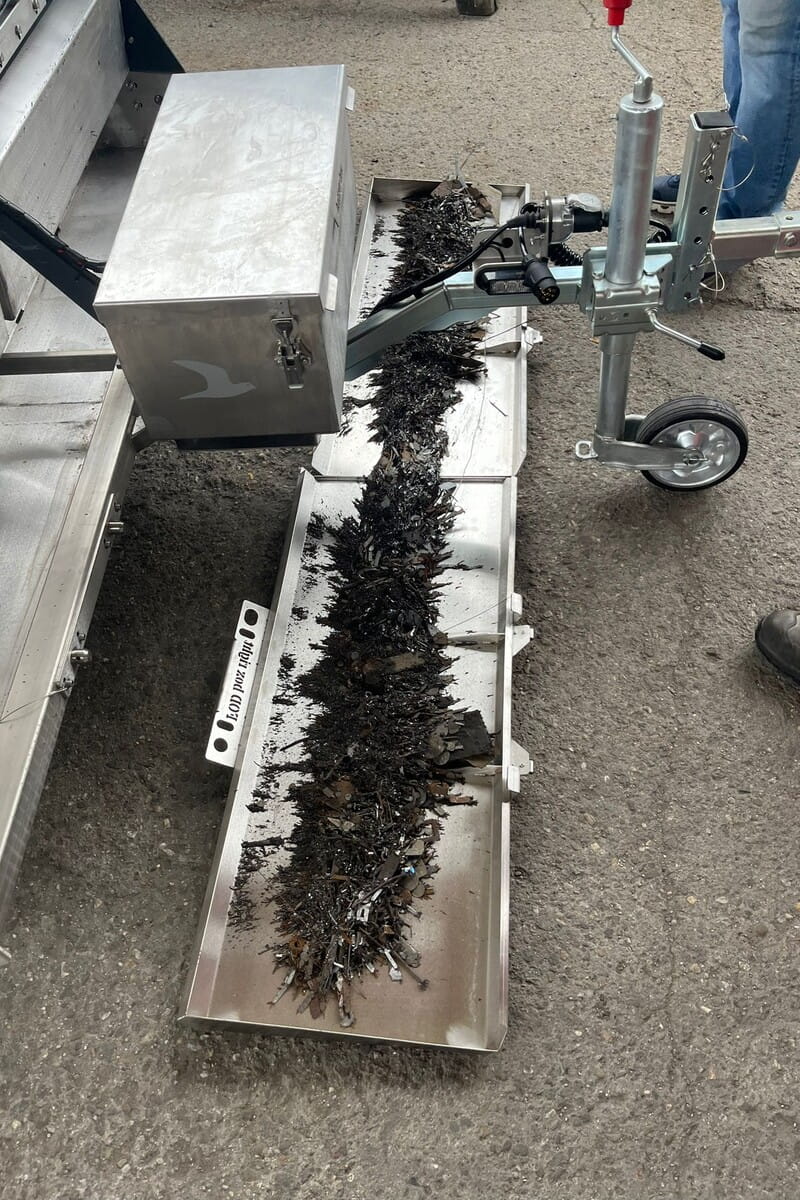
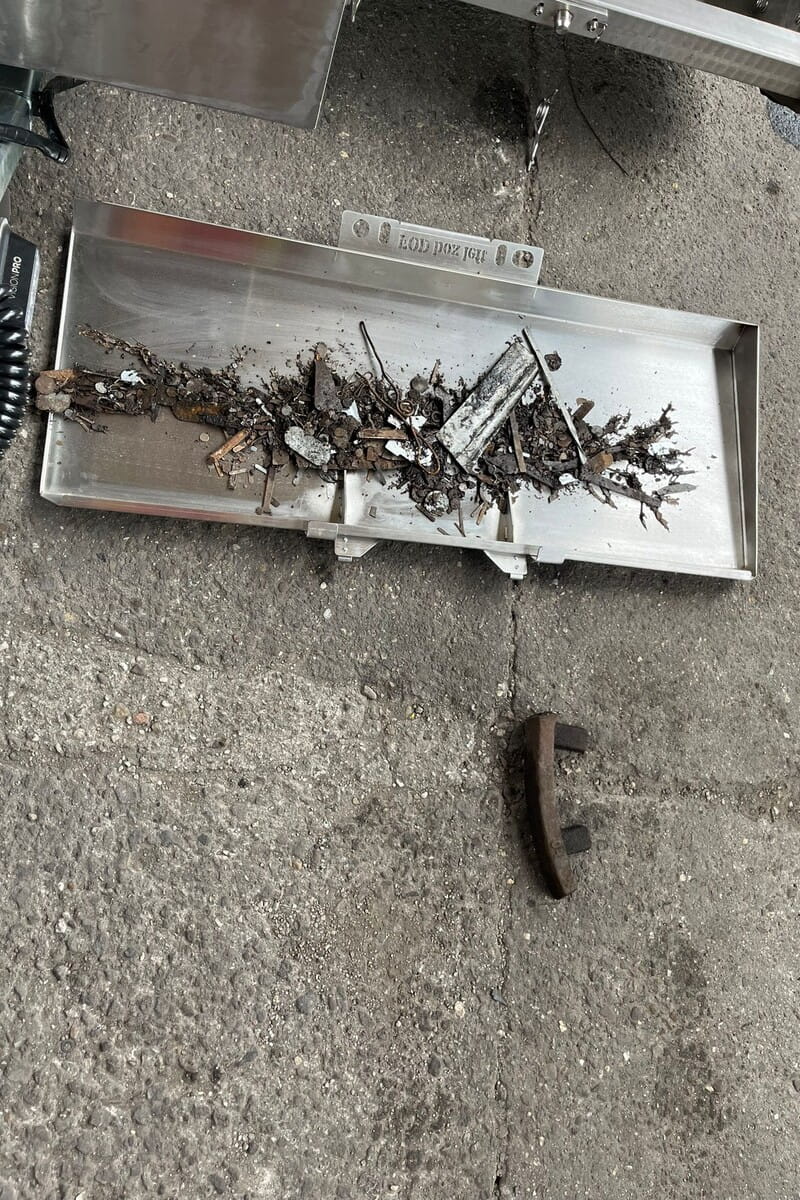
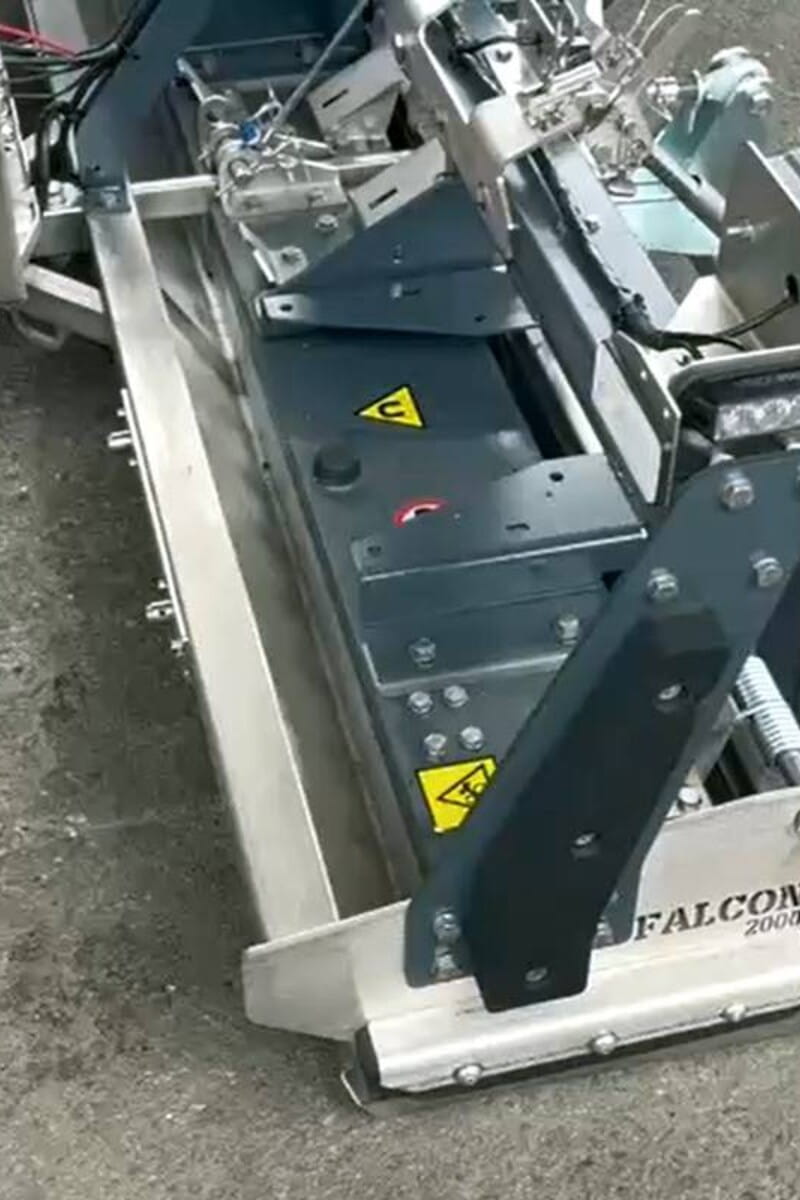
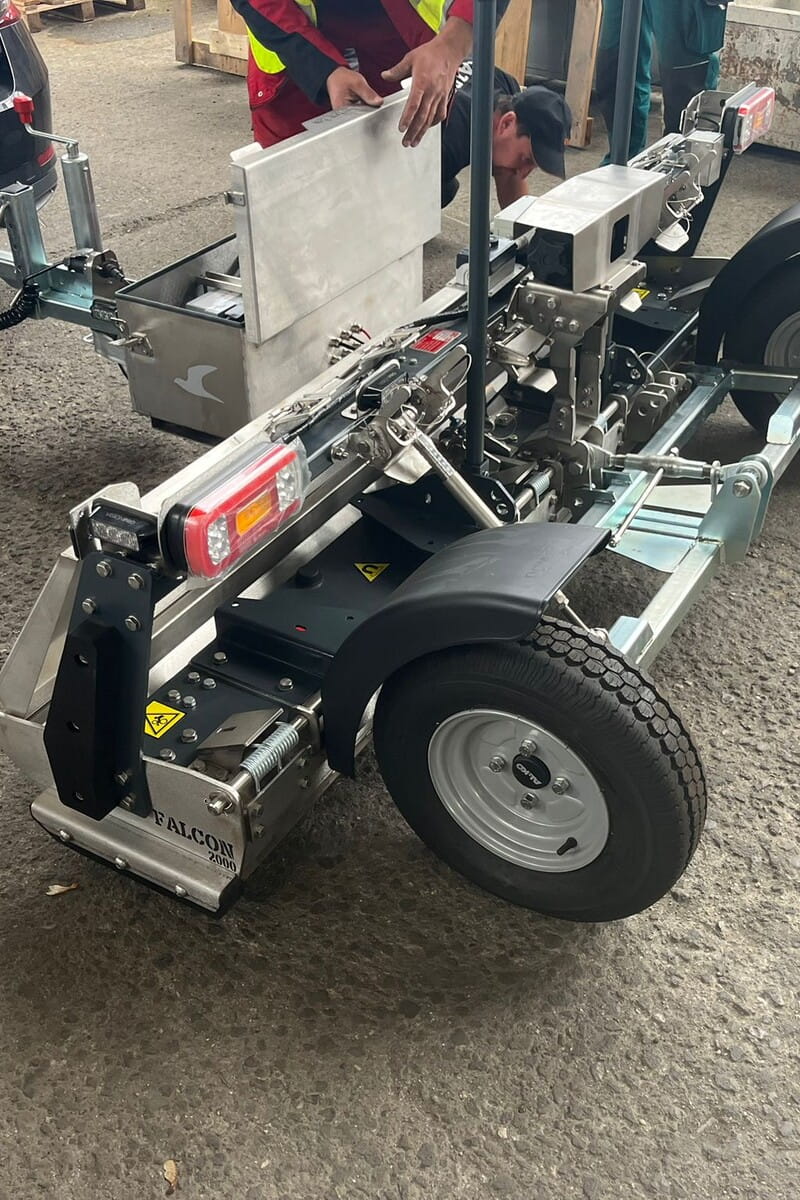
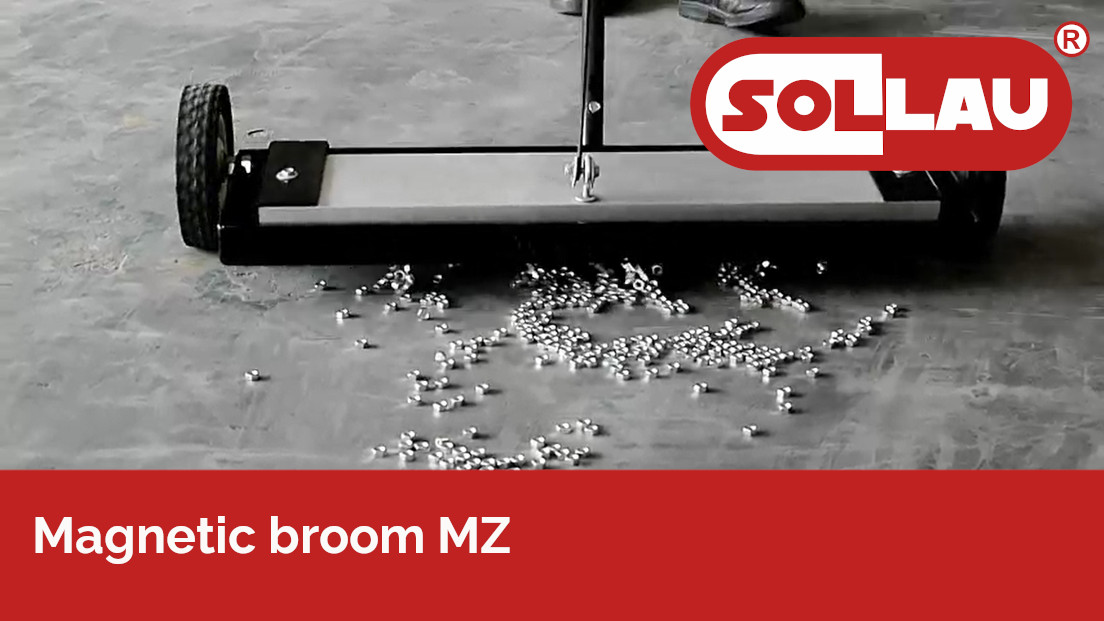
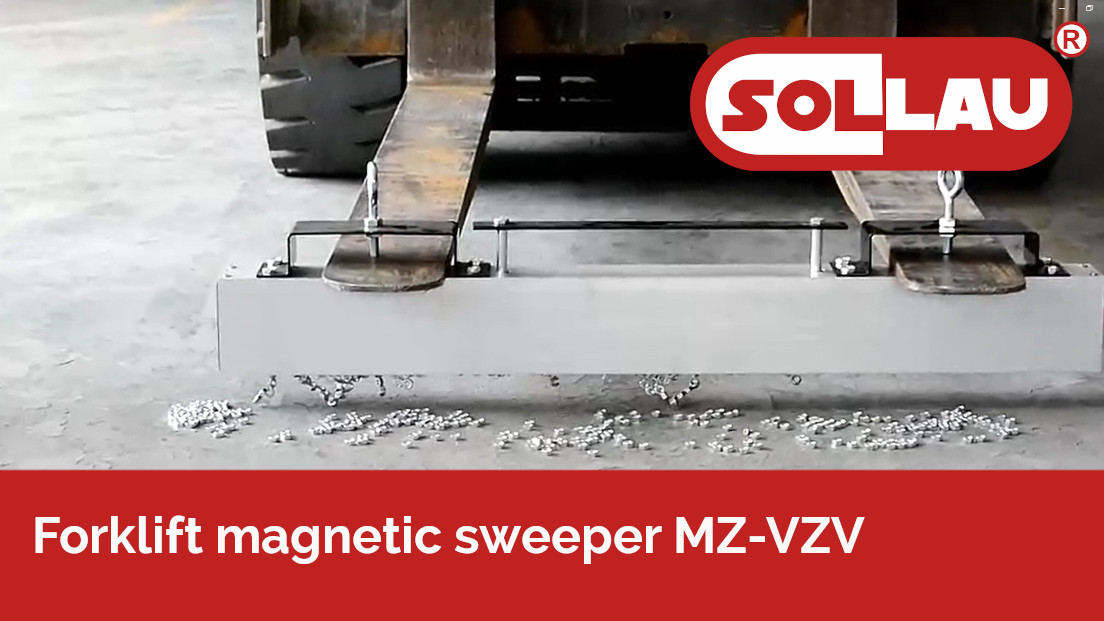
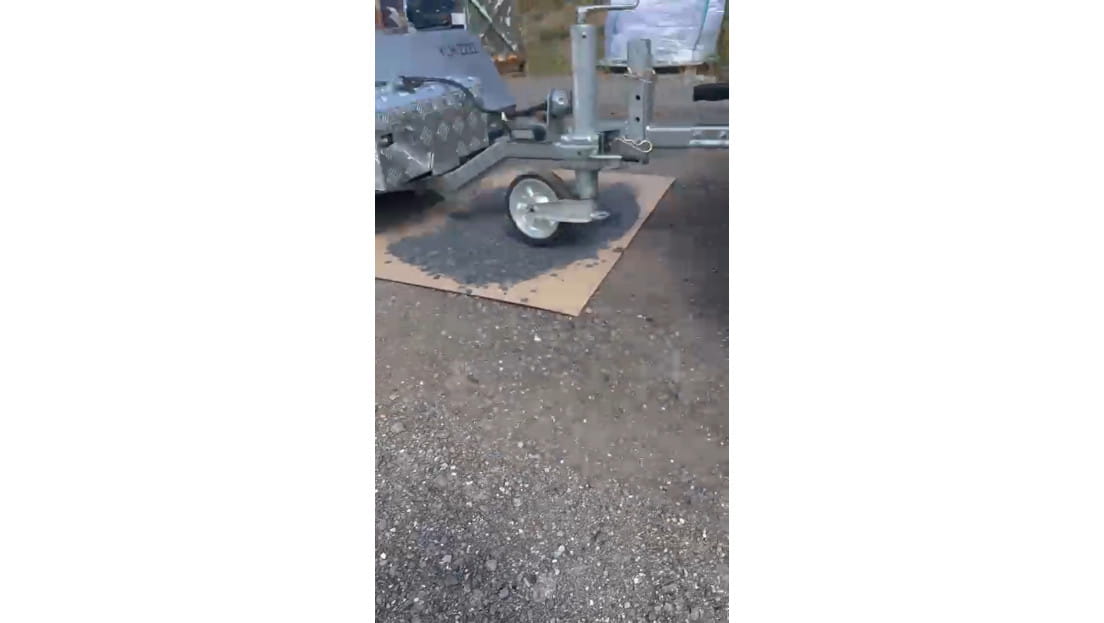
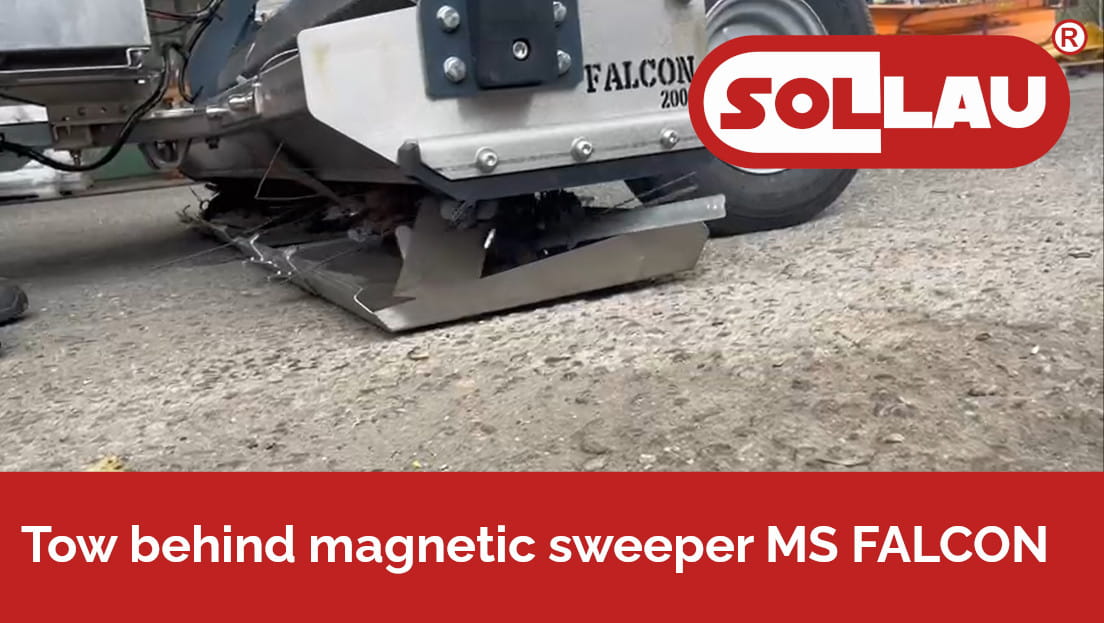
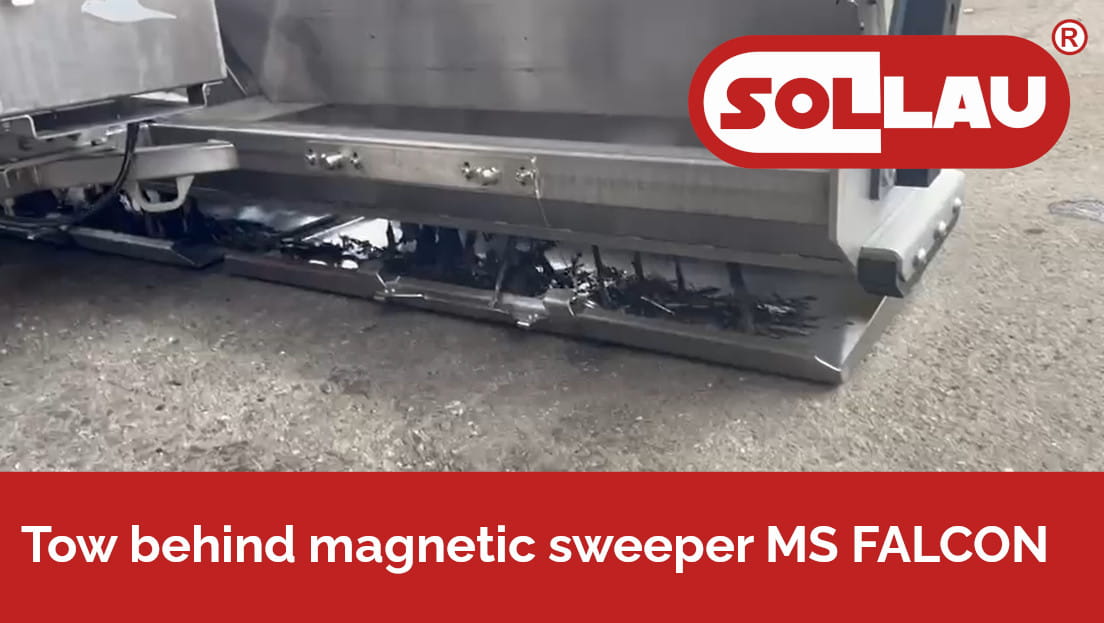
Hanging sweepers – manual, in a forklift version or towed behind a vehicle – clean halls and outdoor areas. Magnetic sweepers capture all metal impurities, keeping outdoor roads and car parks clean and safe. Prevent unnecessary tyre punctures!
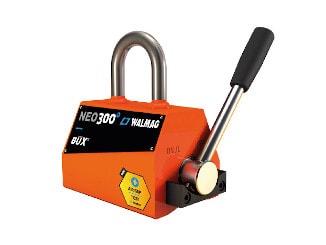
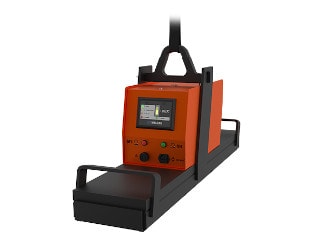
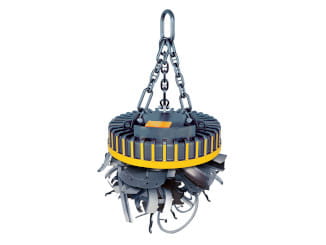
The plant's scrap management (containers with cut-outs and offcuts) is handled by the EMG-SM scrap electromagnet on a crane or manipulator; the sorted waste feeds into recycling and waste processing.
Magnetic sheet separators MC are mounted on the sides of the sheet stack; they induce the same polarity in the sheets – the sheets repel each other and the robot always picks up only the top piece. Ferrite models handle sheets up to 3 mm and stacks up to 530 mm; for oiled and thicker sheets we supply a neodymium version.
The most effective solution is the MVS magnetic coolant separator installed at the machine tank – it continuously and without operator intervention captures particles from 10 µm with an efficiency of up to 98 %. In our practice, it extended the service life of the emulsion by 38 % and of internally cooled drills by 72 %.
The MD magnetic conveyors hold ferromagnetic parts with a magnetic field on a stainless steel sliding plate – oily stampings do not slip even on a steep incline into the container. The system can be fitted with wheels and shared between several presses, including the collection and return of the emulsion.
The price depends on the application – bath flow rate, sheet stack width, pipe DN or the required level of cleanliness. We manufacture each device to measure and test your material free of charge within 3 days (bath, emulsion, granulate or battery powder); ask for a non-binding quotation.
In an engineering company where metal is cut, machined and moved every day, metal waste is everywhere. Chips, fragments, pieces of wire, welding residues – not only in the...
In one industrial plant, an unpleasant issue kept recurring over the long term: premature damage to the mechanical seal of the secondary pump. The cause was subtle, yet all...
Our customer is a manufacturer of aluminum alloys of the highest quality. The alloys find application mainly in the automotive, engineering, electrotechnical...
Our customer is engaged in sheet metal stamping. He was interested in the possibility of using magnetic conveyors for transporting stamped metal pieces.
Our customer processes 0,3 – 0,8 mm steel sheets. The sheets are stacked - the height of the sheet stack is 300 mm. Sheets of 400 x 800 mm are most often...
REFERENCES SOLLAU is a proud supplier of magnetic separators to the following companies
CONTACTS Do you have questions about our products? Do not hesitate to contact us!
Our team of sales representatives is ready to provide you with full support and help you find the best solution for your needs in the field of magnetic separation. We offer not only standard solutions but also tailor-made ones, so you do not need to worry about even the more complex technical challenges. Just contact us and we will be happy to help you.
You can contact us by phone, by e-mail or via our web form.
 The automotive industry includes press shops and body shops, paint shops, machining of engines and gearboxes, plastic injection moulding plants, tyre production, foundries and, more recently, battery production for electric vehicles. All these operations share a single enemy: metal contamination, which causes paint defects, damaged tools and short circuits of battery cells.




















 +420 773 323 773
 petr.zbranek@sollau.cz