4. 2. 2026
Magnetic separator vs. metal detector: which system solves which problem?
Metal contaminants in materials are not only a matter of quality, but also a risk of damage to technology, unplanned downtime, and unnecessary material losses. In practice, the following question often arises: is a magnetic separator sufficient, or is it necessary to use a metal detector?
The correct answer depends not only on the type of metal, but also on where in the process you want to capture it and what losses you can afford.
How does a magnetic separator work?
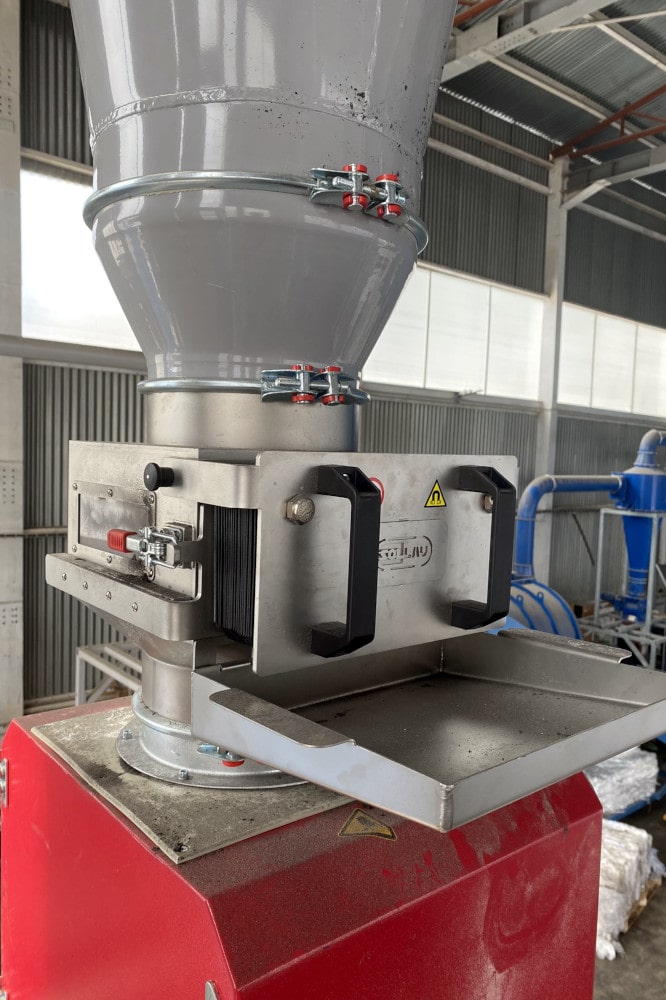
A magnetic separator primarily captures ferromagnetic particles. The separator is therefore an ideal first line of defense—it captures metal before it reaches sensitive parts of the technology.
Its main advantages include simple operation, low maintenance costs, and the possibility of installation at various points in the process, such as in pipes, free fall, or on conveyors.
How does a metal detector work?
A metal detector checks for a wider range of contaminants. In addition to ferrous particles, it can also detect non-ferrous metals and often stainless steel. It is mainly used where the final purity of the product and compliance with quality or legislative requirements are crucial – typically before packaging or shipping.
However, it is important to note that a metal detector usually rejects not only metal but also some of the non-contaminated material. For example, in free-fall applications, it opens the rejection flap for a short moment, and everything that passes through at that moment goes into the waste – both metal and good material.
We recommend a combination of a magnetic separator and a metal detector
If metal detection relied solely on a detector, frequent contamination would result in repeated material rejection and thus significant losses of good product. This is economically and operationally disadvantageous.
Therefore, in practice, a magnetic separator is installed first to capture most ferromagnetic contaminants. The metal detector then only deals with residual contamination and does not need to switch on as often. The result is lower material losses, a more stable process, and greater protection of the technology.
Every operation has its own specifics. We will be happy to help you choose a solution that makes technical and economic sense. Please do not hesitate to contact us.