10. 8. 2026
Nail in pallet wood: how to protect chippers and saw blades
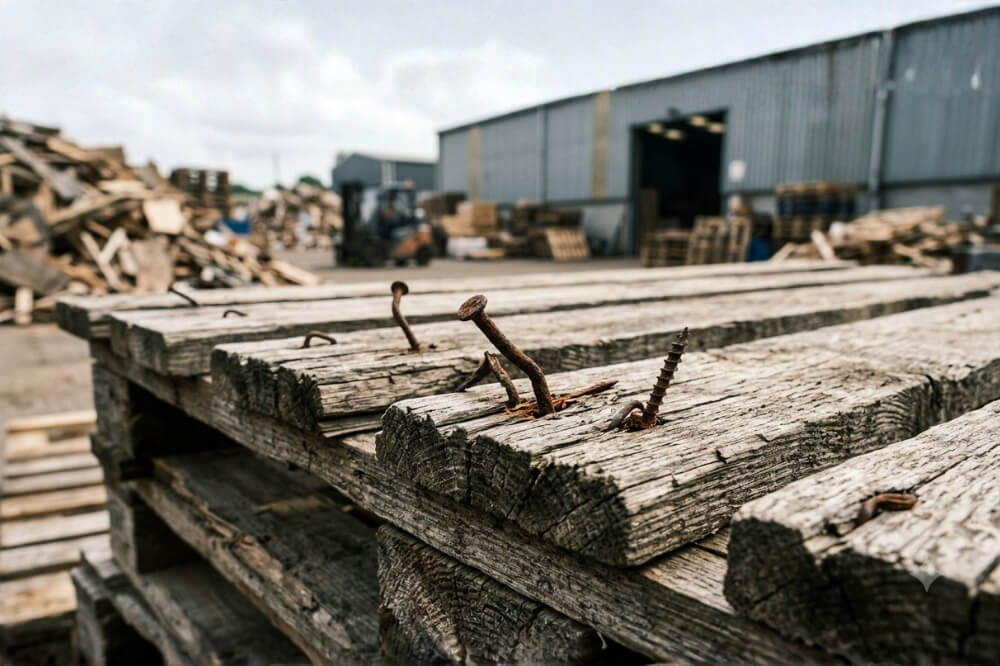
Nails, screws and metal staples in pallet or demolition wood pose a significant risk to crushers, chippers and saw blades. Every metal impact can damage the cutting edge, shorten blade service life and cause unplanned line downtime. Effective metal separation from wood therefore helps reduce maintenance costs while protecting downstream equipment.
Metal separation from wood ahead of the crusher
The first stage of protection is a magnetic plate installed above the conveyor ahead of the crusher. Its task is to capture larger ferromagnetic objects – whole nails, screws or metal staples, for example – before the material enters the cutting chamber.
Magnetic separator for wood chips downstream of the crusher
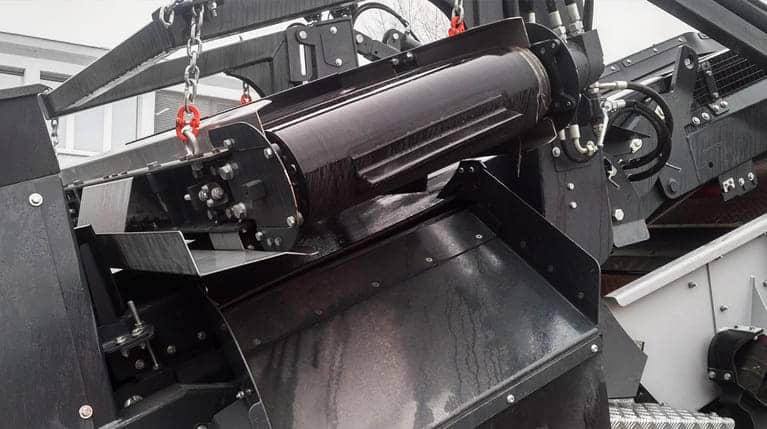
Even a powerful magnetic plate may not capture metal hidden deep inside a piece of wood. After crushing, however, nails and other metal parts are released. A second separation stage – a magnetic drum – is therefore installed downstream of the crusher.
How metal separation from wood extends blade service life
The benefit of two-stage separation can be shown with a simple example. If a plant replaces damaged blades once every two weeks and each replacement means two hours of downtime, then over 48 operating weeks this amounts to roughly 48 hours of lost production time per year.
If separation extends the replacement interval to six weeks, downtime drops to approximately 16 hours per year. The difference is 32 hours of production time, on top of which come lower blade consumption and a reduced maintenance workload. The actual result depends on the volume of wood processed, the share of metal contaminants and the cost of downtime on the specific line.
Every plant works with a different type of wood, line capacity and level of metal contamination. Contact us and we will propose suitable positioning and design of magnetic separators for your operation.