21. 10. 2026
Non-ferrous metals below 20 mm in IBA: what a 4-pole rotor misses
Where the metals in the mineral fraction actually sit
European incinerators produce around 20 million tonnes of bottom ash a year, containing 2 to 5 % non-ferrous metals, according to a Waste Management World review. The headline figure is not what matters — particle size is.
The smaller the particle, the shorter its exposure to the changing field. A coarse rotor with few poles cannot put enough energy into fine aluminium or copper, and those metals leave with the mineral residue.
Pole count sets the smallest recoverable particle
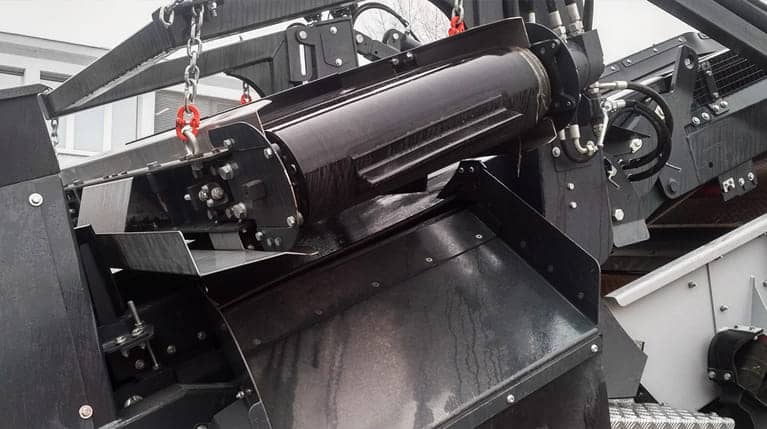
The eddy current separator ECS range combines both rotor concepts. The concentric RAM has 4 poles and suits coarse waste. The eccentric ZEBU and BULL run 12 and 18 poles and recover metals from 1 mm. The forty-pole BUFFALO goes from 0.5 mm.
None of the ten manufacturers we compared offers a 4-to-40-pole span within one range. You therefore need not combine two suppliers depending on the fraction in front of you.
Rotor choice alone is not enough. Thorough ferrous removal and even material spreading belong upstream. Residual iron heats up in the rotor field and burns through the belt.
Before you decide from a catalogue
Yield depends on particle size, moisture and conductivity. A catalogue figure will not settle it, and we do not use one as evidence.
We offer verification on your own material instead: a free test with the result within 3 working days. On the ECS-E BULL and BUFFALO models delivery includes a 3-year warranty with 3 service inspections; on RAM and ZEBU the warranty is 1 year.
Not sure what is leaving with your bottom ash? Write to us.